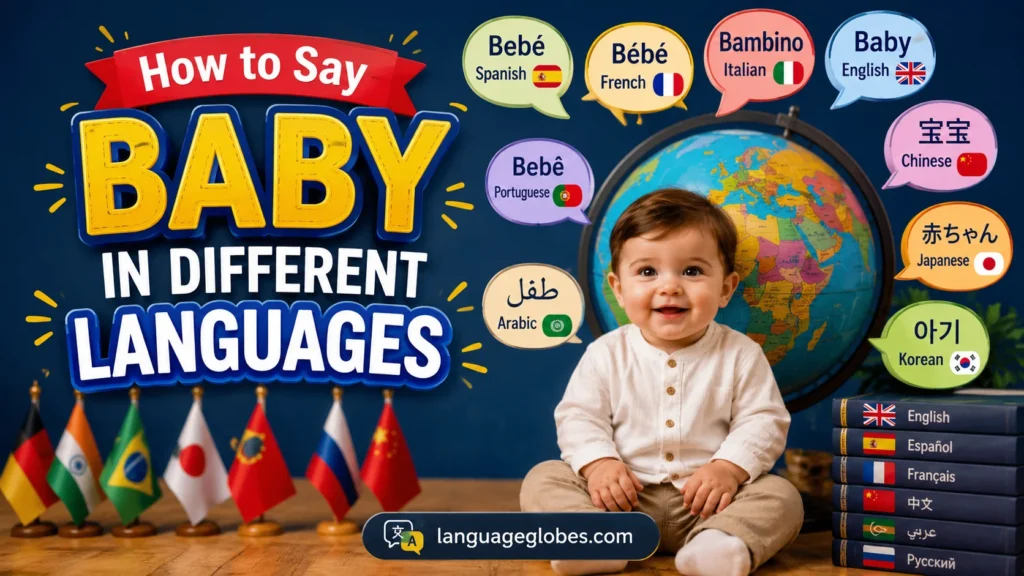
Whether you are curious about the word baby or exploring different languages, this guide helps. Across cultures worldwide, a baby represents love, hope, and new beginnings. From a tiny newborn to growing children, these cherished members bring joy to every family. Understanding how to say baby in languages reveals fascinating examples of linguistic diversity.
It also highlights the importance of naming, affection, and family values across different societies. Learning these translations can deepen appreciation for cultural diversity and meaningful communication. Whether you are traveling, studying languages, creating multilingual content, or connecting with international friends, these words are useful. This comprehensive guide explores baby in 70 languages spoken across Europe, Asia, Africa, the Middle East, and other regions.
You will discover accurate pronunciations, spellings, example sentences, and cultural contexts behind each common word. The topic supports language learning, encourages curiosity, and helps readers understand cultures more deeply. Many terms carry emotional meaning, function as endearment, and express care, affection, and love for loved ones. Exploring learning baby in different languages offers an engaging, practical, and heartwarming journey through world languages and global vocabulary.
Also read this: How to Say Bear in Different Languages
Interesting Facts About Baby
- The word “baby” is one of the first words many children learn and recognize.
- Nearly every language has a unique word for baby, reflecting local culture and traditions.
- Many languages use special affectionate forms of the word baby when speaking to loved ones.
- Parents often create nicknames based on their language’s word for baby.
- The concept of caring for babies exists in every society, making it one of the most universal human experiences.
- Some languages have separate words for newborns, infants, and young children.
- The word baby is frequently used in songs, literature, and everyday conversations worldwide.
- Learning family-related vocabulary is often recommended for beginner language learners.
- Many cultures celebrate a baby’s birth with unique ceremonies and traditions.
- The word baby can also be used figuratively to describe something cherished or important.
How to Say Baby in Different Languages
Below are translations of the word “baby” from around the world, including pronunciation and example usage.
European Languages
Europe is home to many language families, including Romance, Germanic, Slavic, and Celtic languages. Although these languages developed differently over centuries, they all have unique words for expressing family relationships and affection. The word “baby” often reflects warmth, tenderness, and care throughout European cultures.
| Language | Country/Region | Translation | Pronunciation | Example Sentence |
| 🇺🇸 American English | USA | Baby | BAY-bee | The baby is sleeping. |
| 🇬🇧 British English | UK | Baby | BAY-bee | The baby is sleeping. |
| 🇦🇺 Australian English | Australia | Baby | BAY-bee | The baby is smiling today. |
| French | 🇫🇷 France | Bébé | bay-BAY | Le bébé dort. |
| Spanish | 🇪🇸 Spain | Bebé | beh-BEH | El bebé está durmiendo. |
| Portuguese | 🇵🇹 Portugal | Bebê | beh-BEH | O bebê está dormindo. |
| Italian | 🇮🇹 Italy | Bambino | bam-BEE-no | Il bambino dorme. |
| German | 🇩🇪 Germany | Baby | BAH-bee | Das Baby schläft. |
| Dutch | 🇳🇱 Netherlands | Baby | BAH-bee | De baby slaapt. |
| Swedish | 🇸🇪 Sweden | Bebis | BEH-bis | Bebisen sover. |
| Norwegian | 🇳🇴 Norway | Baby | BAH-bee | Babyen sover. |
| Danish | 🇩🇰 Denmark | Baby | BAY-bee | Babyen sover. |
| Finnish | 🇫🇮 Finland | Vauva | VOW-va | Vauva nukkuu. |
| Icelandic | 🇮🇸 Iceland | Barn | Bartn | Barnið sefur. |
| Polish | 🇵🇱 Poland | Niemowlę | nye-MOV-leh | Niemowlę śpi. |
| Czech | 🇨🇿 Czech Republic | Miminko | mee-MIN-ko | Miminko spí. |
| Slovak | 🇸🇰 Slovakia | Bábätko | BAA-bet-ko | Bábätko spí. |
| Hungarian | 🇭🇺 Hungary | Baba | BAH-bah | A baba alszik. |
| Romanian | 🇷🇴 Romania | Bebeluș | beh-beh-LOOSH | Bebelușul doarme. |
| Greek | 🇬🇷 Greece | Μωρό | mo-RO | Το μωρό κοιμάται. |
| Russian | 🇷🇺 Russia | Малыш | ma-LYSH | Малыш спит. |
| Ukrainian | 🇺🇦 Ukraine | Немовля | ne-MOV-lya | Немовля спить. |
| Belarusian | 🇧🇾 Belarus | Дзіця | DZI-tsya | Дзіця спіць. |
| Serbian | 🇷🇸 Serbia | Беба | BEH-ba | Беба спава. |
| Croatian | 🇭🇷 Croatia | Beba | BEH-ba | Beba spava. |
Asian Languages
Asia contains thousands of languages spoken by billions of people. From East Asia to South Asia and Southeast Asia, family plays a central role in many cultures. Words for baby often carry deep emotional and cultural significance, reflecting respect, love, and nurturing traditions.
| Language | Country/Region | Translation | Pronunciation | Example Sentence |
| Chinese (Mandarin) | 🇨🇳 China | 宝宝 | bao-bao | 宝宝在睡觉。 |
| Cantonese | 🇭🇰 Hong Kong | BB | bee-bee | BB瞓緊覺。 |
| Japanese | 🇯🇵 Japan | 赤ちゃん | aka-chan | 赤ちゃんが寝ています。 |
| Korean | 🇰🇷 South Korea | 아기 | ah-gee | 아기가 자고 있어요. |
| Hindi | 🇮🇳 India | बच्चा | bach-cha | बच्चा सो रहा है। |
| Urdu | 🇵🇰 Pakistan | بچہ | bach-cha | بچہ سو رہا ہے۔ |
| Bengali | 🇧🇩 Bangladesh | শিশু | shi-shu | শিশু ঘুমাচ্ছে। |
| Punjabi | 🇮🇳 India/Pakistan | ਬੱਚਾ | bach-cha | ਬੱਚਾ ਸੌ ਰਿਹਾ ਹੈ। |
| Gujarati | 🇮🇳 India | બાળક | bal-ak | બાળક સૂઈ રહ્યું છે. |
| Marathi | 🇮🇳 India | बाळ | baal | बाळ झोपले आहे. |
| Tamil | 🇮🇳 India | குழந்தை | ku-lan-thai | குழந்தை தூங்குகிறது. |
| Telugu | 🇮🇳 India | శిశువు | shi-shu-vu | శిశువు నిద్రపోతోంది. |
| Kannada | 🇮🇳 India | ಮಗು | ma-gu | ಮಗು ಮಲಗಿದೆ. |
| Malayalam | 🇮🇳 India | കുഞ്ഞ് | kunj | കുഞ്ഞ് ഉറങ്ങുന്നു. |
| Sinhala | 🇱🇰 Sri Lanka | බබා | ba-baa | බබා නිදාගෙන සිටී. |
| Nepali | 🇳🇵 Nepal | बच्चा | bach-cha | बच्चा सुतिरहेको छ। |
| Thai | 🇹🇭 Thailand | เด็กทารก | dek-taa-rok | เด็กทารกกำลังนอนหลับ |
| Vietnamese | 🇻🇳 Vietnam | Em bé | em-bay | Em bé đang ngủ. |
| Indonesian | 🇮🇩 Indonesia | Bayi | bah-yee | Bayi sedang tidur. |
| Malay | 🇲🇾 Malaysia | Bayi | bah-yee | Bayi sedang tidur. |
| Filipino | 🇵🇭 Philippines | Sanggol | sang-gol | Natutulog ang sanggol. |
| Khmer | 🇰🇭 Cambodia | ទារក | tea-rok | ទារកកំពុងដេក។ |
| Lao | 🇱🇦 Laos | ເດັກນ້ອຍ | dek-noi | ເດັກນ້ອຍນອນຢູ່. |
| Mongolian | 🇲🇳 Mongolia | Хүүхэд | huu-khed | Хүүхэд унтаж байна. |
| Burmese | 🇲🇲 Myanmar | ကလေး | ka-lay | ကလေးအိပ်နေသည်။ |
African Languages
Africa is one of the most linguistically diverse continents in the world, with thousands of languages spoken across its regions. Family and community are highly valued in many African cultures, and babies are often seen as blessings who bring joy and continuity to families.
| Language | Country/Region | Translation | Pronunciation | Example Sentence |
| Swahili | 🇹🇿 Tanzania/Kenya | Mtoto | m-TO-to | Mtoto analala. |
| Zulu | 🇿🇦 South Africa | Ingane | in-GAH-neh | Ingane ilele. |
| Xhosa | 🇿🇦 South Africa | Usana | oo-SA-na | Usana lulele. |
| Afrikaans | 🇿🇦 South Africa | Baba | BAH-bah | Die baba slaap. |
| Yoruba | 🇳🇬 Nigeria | Ọmọ | oh-MO | Ọmọ náà ń sùn. |
| Igbo | 🇳🇬 Nigeria | Nwa | NWA | Nwa ahụ na-ehi ụra. |
| Hausa | 🇳🇬 Nigeria | Jariri | ja-REE-ree | Jariri yana barci. |
| Somali | 🇸🇴 Somalia | Ilmo | IL-mo | Ilmuhu wuu hurdaa. |
| Amharic | 🇪🇹 Ethiopia | ሕፃን | hi-tsan | ሕፃኑ ተኝቷል። |
| Oromo | 🇪🇹 Ethiopia | Daa’ima | daa-ee-ma | Daa’imni rafaa jira. |
| Shona | 🇿🇼 Zimbabwe | Mwana | mwa-na | Mwana akarara. |
| Kinyarwanda | 🇷🇼 Rwanda | Uruhinja | oo-roo-HIN-ja | Uruhinja ruryamye. |
| Luganda | 🇺🇬 Uganda | Omwana | oh-MWA-na | Omwana yeebase. |
| Sesotho | 🇱🇸 Lesotho | Lesea | le-SE-a | Lesea le robetse. |
| Tswana | 🇧🇼 Botswana | Lesea | le-SE-a | Lesea le robetse. |
Middle Eastern Languages
The Middle East has a rich linguistic heritage that stretches back thousands of years. Languages spoken in this region have influenced literature, science, trade, and religion across the world. Family values remain important throughout Middle Eastern cultures, making words related to children especially meaningful.
| Language | Country/Region | Translation | Pronunciation | Example Sentence |
| Arabic | 🌍 Middle East | طفل | tifl | الطفل نائم. |
| Persian (Farsi) | 🇮🇷 Iran | نوزاد | noo-zad | نوزاد خواب است. |
| Turkish | 🇹🇷 Turkey | Bebek | beh-BEK | Bebek uyuyor. |
| Hebrew | 🇮🇱 Israel | תינוק | tee-nok | התינוק ישן. |
| Kurdish | 🌍 Kurdistan Region | Zarok | za-rok | Zarok razaye. |
| Azerbaijani | 🇦🇿 Azerbaijan | Körpə | kur-peh | Körpə yatır. |
| Armenian | 🇦🇲 Armenia | Երեխա | ye-re-kha | Երեխան քնած է։ |
| Georgian | 🇬🇪 Georgia | ბავშვი | bav-shvi | ბავშვი სძინავს. |
| Pashto | 🇦🇫 Afghanistan | ماشوم | ma-shoom | ماشوم ویده دی. |
| Dari | 🇦🇫 Afghanistan | طفل | tifl | طفل خواب است. |
Additional Languages Around the World
The world contains many additional languages spoken across Oceania, indigenous communities, and multilingual nations. Learning these translations broadens our understanding of global communication and highlights the incredible diversity of human language.
| Language | Country/Region | Translation | Pronunciation | Example Sentence |
| Hawaiian | 🇺🇸 Hawaii | Pēpē | PEH-peh | Ke hiamoe nei ka pēpē. |
| Maori | 🇳🇿 New Zealand | Pēpi | PEH-pee | Kei te moe te pēpi. |
| Samoan | 🇼🇸 Samoa | Pepe | PEH-peh | O loo moe le pepe. |
| Tongan | 🇹🇴 Tonga | Pepe | PEH-peh | Oku mohe a e pepe. |
| Fijian | 🇫🇯 Fiji | Gone | GO-neh | E moce tiko na gone. |
| Tahitian | 🇵🇫 Tahiti | Pēpē | PEH-peh | Te moe ra te pēpē. |
| Irish | 🇮🇪 Ireland | Leanbh | LAN-iv | Tá an leanbh ina chodladh. |
| Welsh | 🏴 Wales | Babi | BA-bi | Mae’r babi yn cysgu. |
| Scottish Gaelic | 🏴 Scotland | Leanabh | LAN-av | Tha an leanabh na chadal. |
| Breton | 🇫🇷 Brittany | Baban | BA-ban | Kousket emañ ar baban. |
| Basque | 🇪🇸 Spain | Haurtxoa | howr-CHO-a | Haurtxoa lo dago. |
| Esperanto | 🌍 International | Bebo | BEH-bo | La bebo dormas. |
FAQs
What does the word baby mean across different languages and cultures?
The word baby often represents innocence, love, and new beginnings across cultures worldwide. In many societies, it reflects deep family values, care, and affection for the youngest humans. This simple term carries strong emotional meaning tied to birth, hope, and joy.
How do you say baby in different languages around the world?
To say baby in different languages, you explore rich linguistic diversity and global vocabulary. Each language offers unique pronunciations, spellings, and cultural contexts that show how people express love and affection. It helps you connect with international friends easily.
Why is the word baby important in global communication and linguistic diversity?
The word baby plays an important role in global communication as a common word of endearment. It strengthens universal affection and helps people understand cultural diversity. This simple expression connects families, loved ones, and members of society emotionally.
How many translations of baby exist in global world languages?
There are translations of baby in more than 70 languages across Europe, Asia, Africa, and the Middle East. This reflects true linguistic diversity and highlights how languages evolve across regions. A comprehensive guide helps learners explore these variations easily.
What are the key pronunciations and spellings of baby in different languages?
Different pronunciations and spellings of baby reflect unique cultural contexts and language learning patterns. Many languages offer audio-based pronunciations to help learners listen and read correctly. This makes understanding global vocabulary more practical and engaging.
What emotional meaning does baby carry as a term of endearment?
The word baby expresses deep affection, care, and love as a powerful term of endearment. It symbolizes family life, joy, and emotional bonding within families and loved ones. This heartwarming expression is used in everyday affectionate expressions.
How does learning baby in different languages improve language learning skills?
Learning baby in different languages enhances language learning by improving curiosity, pronunciations, and understanding of world languages. It supports studying languages through real-life examples and example sentences. This approach makes learning more engaging, useful, and practical.
Which regions use different words for baby in global languages?
Different words for baby appear across Europe, Asia, Africa, and the Middle East. These regions reflect diverse cultures, societies, and linguistic diversity. Understanding these differences helps learners appreciate cultural contexts and global communication.
How is the word baby used in family and everyday conversations?
In family settings, baby is used to express affection, care, and love for children and newborn infants. It appears in everyday conversations as a warm and emotional term. This usage strengthens family values and emotional connection.
Why is learning baby across languages useful for travelers and learners?
Learning baby across languages is useful for traveling, studying languages, and interacting with international friends. It supports multilingual content creation and builds confidence in global communication. This knowledge improves cultural understanding and global vocabulary naturally.
Conclusion
In conclusion, learning how to say baby in different languages opens a meaningful journey through global languages, cultures worldwide, and rich linguistic diversity. It reflects how a simple term carries deep love, affection, and shared family values across people everywhere. From translations in world languages across Europe, Asia, Africa, and the Middle East, it highlights the beauty of human connection. This understanding strengthens language learning, promotes cultural diversity, and expands your global vocabulary in a natural and engaging way.

James Anderson is a passionate language enthusiast and content creator at LanguageGlobes. With a keen interest in global cultures and communication, he shares insightful and engaging content to help readers explore and master new languages.