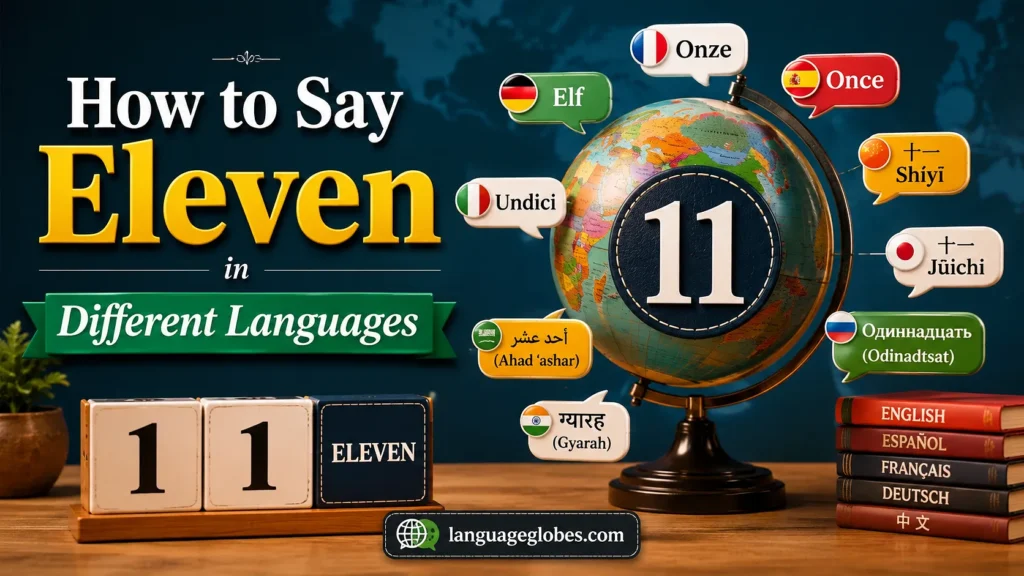
Learning how to say eleven can make language learning more practical and enjoyable. The number eleven is a fundamental number used in everyday counting, dates, ages, quantities, and sports scores.
Exploring eleven in different languages reveals fascinating linguistic patterns, number systems, and cultural diversity. This simple number word also offers useful insight into how languages organize counting.
Whether you are among travelers, students, or language enthusiasts, learning ways to say eleven strengthens communication skills. This guide explores eleven across languages with clear pronunciation guides, translations, and example sentences.
Comparing different languages highlights linguistic similarities, linguistic differences, and interesting historical language connections. It also supports cross-cultural language learning, vocabulary building, and greater understanding of worldwide languages.
Also Read This: How to Say Elephant in Different Languages
Interesting Facts About Eleven
- Eleven is the natural number that comes after ten and before twelve.
- In many sports, including soccer and cricket, teams often consist of eleven players.
- Eleven is considered a master number in some numerological traditions.
- The word “eleven” has Germanic origins and differs from the regular pattern used for many larger numbers.
- Many languages have unique words for eleven rather than combining ten and one.
- Learning numbers like eleven is often one of the first steps in mastering a new language.
- The pronunciation of eleven varies greatly across language families.
- Some languages use tonal pronunciation for numbers, making correct pronunciation especially important.
- Eleven appears frequently in dates, ages, classroom activities, and everyday counting.
How to Say Eleven in Different Languages
The following sections explore how different cultures and regions express the number eleven. Each table includes the language, country or region, translation, pronunciation, and an example sentence.
European Languages
Europe is home to hundreds of languages belonging to several major language families, including Germanic, Romance, Slavic, Celtic, and Baltic languages. While many European languages share historical roots, their pronunciations and vocabulary can differ significantly. Learning how to say eleven in European languages offers insight into the rich linguistic heritage of the continent.
| Language | Country/Region | Translation | Pronunciation | Example Sentence |
| 🇺🇸 American English | USA | Eleven | ih-LEV-en | I have eleven books. |
| 🇬🇧 British English | UK | Eleven | ih-LEV-en | There are eleven students. |
| 🇦🇺 Australian English | Australia | Eleven | ih-LEV-en | We counted eleven kangaroos. |
| Spanish | Spain 🇪🇸 | Once | ON-seh | Tengo once amigos. |
| French | France 🇫🇷 | Onze | ONZ | J’ai onze livres. |
| German | Germany 🇩🇪 | Elf | ELF | Ich habe elf Bücher. |
| Italian | Italy 🇮🇹 | Undici | OON-dee-chee | Ho undici libri. |
| Portuguese | Portugal 🇵🇹 | Onze | ON-zeh | Tenho onze livros. |
| Dutch | Netherlands 🇳🇱 | Elf | ELF | Ik heb elf boeken. |
| Swedish | Sweden 🇸🇪 | Elva | EL-va | Jag har elva böcker. |
| Norwegian | Norway 🇳🇴 | Elleve | EL-le-ve | Jeg har elleve bøker. |
| Danish | Denmark 🇩🇰 | Elleve | EL-le-ve | Jeg har elleve bøger. |
| Finnish | Finland 🇫🇮 | Yksitoista | UUK-see-tois-ta | Minulla on yksitoista kirjaa. |
| Icelandic | Iceland 🇮🇸 | Ellefu | ETH-leh-fu | Ég á ellefu bækur. |
| Polish | Poland 🇵🇱 | Jedenaście | Yeh-deh-NASH-cheh | Mam jedenaście książek. |
| Czech | Czech Republic 🇨🇿 | Jedenáct | Yeh-deh-naatst | Mám jedenáct knih. |
| Slovak | Slovakia 🇸🇰 | Jedenásť | Yeh-deh-naashch | Mám jedenásť kníh. |
| Hungarian | Hungary 🇭🇺 | Tizenegy | TEE-zehn-edj | Van tizenegy könyvem. |
| Romanian | Romania 🇷🇴 | Unsprezece | OON-spreh-zeh-che | Am unsprezece cărți. |
| Bulgarian | Bulgaria 🇧🇬 | Единадесет | Eh-dee-na-DE-set | Имам единадесет книги. |
| Greek | Greece 🇬🇷 | Έντεκα | EN-de-ka | Έχω έντεκα βιβλία. |
| Russian | Russia 🇷🇺 | Одиннадцать | Ah-DEEN-nad-tsat | У меня одиннадцать книг. |
| Ukrainian | Ukraine 🇺🇦 | Одинадцять | Oh-dee-NAD-tsyat | У мене одинадцять книг. |
| Belarusian | Belarus 🇧🇾 | Адзінаццаць | Ad-zee-NAT-sats | У мяне адзінаццаць кніг. |
| Croatian | Croatia 🇭🇷 | Jedanaest | Yeh-da-NA-est | Imam jedanaest knjiga. |
| Serbian | Serbia 🇷🇸 | Једанаест | Yeh-da-NA-est | Имам једанаест књига. |
| Slovenian | Slovenia 🇸🇮 | Enajst | Eh-NAYST | Imam enajst knjig. |
| Lithuanian | Lithuania 🇱🇹 | Vienuolika | Vyeh-no-LI-ka | Turiu vienuolika knygų. |
| Latvian | Latvia 🇱🇻 | Vienpadsmit | VYEN-pads-mit | Man ir vienpadsmit grāmatas. |
| Irish | Ireland 🇮🇪 | Aon déag | AYN jayg | Tá aon déag leabhar agam. |
| Welsh | Wales 🏴 | Un ar ddeg | Een ar theg | Mae gen i un ar ddeg llyfr. |
Asian Languages
Asia contains the largest number of language speakers in the world. From East Asia and South Asia to Southeast and Central Asia, languages vary greatly in grammar, writing systems, and pronunciation. Learning how to say eleven in Asian languages helps build a deeper understanding of the region’s incredible cultural diversity.
| Language | Country/Region | Translation | Pronunciation | Example Sentence |
| Chinese (Mandarin) | China 🇨🇳 | 十一 | Shi Yi | 我有十一本书。 |
| Cantonese | Hong Kong 🇭🇰 | 十一 | Sap Yat | 我有十一本書。 |
| Japanese | Japan 🇯🇵 | 十一 | Juu Ichi | 私は十一冊の本を持っています。 |
| Korean | South Korea 🇰🇷 | 열하나 | Yeol-ha-na | 저는 책이 열하나 있습니다. |
| Hindi | India 🇮🇳 | ग्यारह | Gyaa-rah | मेरे पास ग्यारह किताबें हैं। |
| Urdu | Pakistan 🇵🇰 | گیارہ | Gyaarah | میرے پاس گیارہ کتابیں ہیں۔ |
| Bengali | Bangladesh 🇧🇩 | এগারো | E-ga-ro | আমার এগারোটি বই আছে। |
| Punjabi | India/Pakistan | ਗਿਆਰਾਂ | Gyaa-raan | ਮੇਰੇ ਕੋਲ ਗਿਆਰਾਂ ਕਿਤਾਬਾਂ ਹਨ। |
| Gujarati | India | અગિયાર | A-gee-yar | મારી પાસે અગિયાર પુસ્તકો છે. |
| Marathi | India | अकरा | A-ka-ra | माझ्याकडे अकरा पुस्तके आहेत. |
| Tamil | India/Sri Lanka | பதினொன்று | Pathi-non-ru | எனக்கு பதினொன்று புத்தகங்கள் உள்ளன. |
| Telugu | India | పదకొండు | Pada-kondu | నా దగ్గర పదకొండు పుస్తకాలు ఉన్నాయి. |
| Kannada | India | ಹನ್ನೊಂದು | Han-nondu | ನನ್ನ ಬಳಿ ಹನ್ನೊಂದು ಪುಸ್ತಕಗಳಿವೆ. |
| Malayalam | India | പതിനൊന്ന് | Pathi-nonnu | എനിക്ക് പതിനൊന്ന് പുസ്തകങ്ങളുണ്ട്. |
| Nepali | Nepal 🇳🇵 | एघार | E-ghaar | मसँग एघार किताब छन्। |
| Sinhala | Sri Lanka 🇱🇰 | එකොළහ | E-ko-la-ha | මට පොත් එකොළහක් තියෙනවා. |
| Thai | Thailand 🇹🇭 | สิบเอ็ด | Sip Et | ฉันมีหนังสือสิบเอ็ดเล่ม |
| Vietnamese | Vietnam 🇻🇳 | Mười một | Moo-ee Moi | Tôi có mười một quyển sách. |
| Indonesian | Indonesia 🇮🇩 | Sebelas | Se-be-las | Saya punya sebelas buku. |
| Malay | Malaysia 🇲🇾 | Sebelas | Se-be-las | Saya ada sebelas buku. |
| Filipino | Philippines 🇵🇭 | Labing-isa | La-bing Ee-sa | May labing-isa akong libro. |
| Khmer | Cambodia 🇰🇭 | ដប់មួយ | Dop Muoy | ខ្ញុំមានសៀវភៅដប់មួយក្បាល។ |
| Lao | Laos 🇱🇦 | ສິບເອັດ | Sip Et | ຂ້ອຍມີປື້ມສິບເອັດເຫຼັ້ມ. |
| Mongolian | Mongolia 🇲🇳 | Арван нэг | Arvan Neg | Надад арван нэгэн ном бий. |
African Languages
Africa is one of the most linguistically diverse continents, with thousands of languages spoken across its regions. African languages belong to several major language families and reflect rich traditions, histories, and cultures. Learning numbers such as eleven in African languages provides valuable insight into this remarkable diversity.
| Language | Country/Region | Translation | Pronunciation | Example Sentence |
| Swahili | Kenya/Tanzania 🇰🇪🇹🇿 | Kumi na moja | KOO-mee na MO-ja | Nina vitabu kumi na moja. |
| Zulu | South Africa 🇿🇦 | Ishumi nanye | Ee-shoo-mee NAN-ye | Nginezincwadi ishumi nanye. |
| Xhosa | South Africa 🇿🇦 | Ishumi elinanye | Ee-shoo-mee eh-lee-NAN-ye | Ndineencwadi ishumi elinanye. |
| Afrikaans | South Africa 🇿🇦 | Elf | ELF | Ek het elf boeke. |
| Yoruba | Nigeria 🇳🇬 | Mokanla | Moh-kan-la | Mo ni iwe mokanla. |
| Igbo | Nigeria 🇳🇬 | Iri na otu | Ee-ree na OH-too | Enwere m akwụkwọ iri na otu. |
| Hausa | Nigeria 🇳🇬 | Goma sha ɗaya | Go-ma sha da-ya | Ina da littattafai goma sha ɗaya. |
| Amharic | Ethiopia 🇪🇹 | አስራ አንድ | Asra And | አስራ አንድ መጽሐፍ አለኝ። |
| Somali | Somalia 🇸🇴 | Kow iyo toban | Kow ee-yo to-ban | Waxaan haystaa kow iyo toban buug. |
| Shona | Zimbabwe 🇿🇼 | Gumi nerimwe | Goo-mee neh-RIM-we | Ndine mabhuku gumi nerimwe. |
Middle Eastern Languages
The Middle East has been a crossroads of civilizations for thousands of years. Languages spoken in this region have influenced science, literature, trade, and religion across the globe. Understanding how to say eleven in Middle Eastern languages offers a glimpse into some of humanity’s oldest linguistic traditions.
| Language | Country/Region | Translation | Pronunciation | Example Sentence |
| Arabic | Middle East 🌍 | أحد عشر | Ahad Ashar | لدي أحد عشر كتاباً. |
| Persian (Farsi) | Iran 🇮🇷 | یازده | Yaz-dah | من یازده کتاب دارم. |
| Turkish | Türkiye 🇹🇷 | On bir | On Beer | On bir kitabım var. |
| Hebrew | Israel 🇮🇱 | אחת עשרה | Ahat Esre | יש לי אחת עשרה ספרים. |
| Kurdish | Kurdistan Region | یازدە | Yaz-da | من یازدە کتێبم هەیە. |
| Armenian | Armenia 🇦🇲 | Տասնմեկ | Tasn-mek | Ես տասնմեկ գիրք ունեմ։ |
| Azerbaijani | Azerbaijan 🇦🇿 | On bir | On Beer | Mənim on bir kitabım var. |
| Georgian | Georgia 🇬🇪 | თერთმეტი | Tert-me-ti | მე მაქვს თერთმეტი წიგნი. |
Additional Languages Around the World
Beyond Europe, Asia, Africa, and the Middle East, many fascinating languages are spoken across Oceania, the Americas, and indigenous communities worldwide. These languages contribute to humanity’s cultural richness and linguistic heritage.
| Language | Country/Region | Translation | Pronunciation | Example Sentence |
| Maori | New Zealand 🇳🇿 | Tekau mā tahi | Te-kau maa ta-hi | He tekau mā tahi aku pukapuka. |
| Hawaiian | Hawaii 🌺 | ʻUmikūmākahi | Oo-mee-koo-maa-ka-hee | He ʻumikūmākahi aʻu puke. |
| Samoan | Samoa 🇼🇸 | Sefulutasi | Seh-foo-loo-ta-see | E sefulutasi a’u tusi. |
| Tongan | Tonga 🇹🇴 | Taha mā taha | Ta-ha maa ta-ha | Oku ou maʻu taha mā taha tohi. |
| Tahitian | French Polynesia 🇵🇫 | Ahuru ma hoê | A-hoo-roo ma ho-eh | E ahuru ma hoê buka ta’u. |
| Haitian Creole | Haiti 🇭🇹 | Onz | ONZ | Mwen gen onz liv. |
| Esperanto | International 🌍 | Dek unu | Dek OO-noo | Mi havas dek unu librojn. |
| Latin | Historical Europe | Undecim | OON-deh-kim | Undecim libros habeo. |
| Navajo | USA | Łáʼtsʼáadah | Lats-aa-dah | Shí éí łáʼtsʼáadah naaltsoos yinishyé. |
| Quechua | Peru 🇵🇪 | Chunka hukniyuq | Choon-ka hook-nee-yok | Chunka hukniyuq p’anqaykuna kani. |
FAQs
How do you say eleven in different languages?
You can say eleven in different languages by learning its translation, pronunciation, and usage in each language. Exploring eleven across languages also reveals interesting linguistic patterns and number systems.
What is the translation of eleven in multiple languages?
The eleven translation varies across multiple languages because each language has unique language structures and counting systems. Learning these forms supports multilingual learning and vocabulary building.
How can I pronounce eleven in different languages?
Use a pronunciation guide and pronunciation audio when available to learn how to pronounce eleven correctly. These resources help language learners improve language pronunciation and speaking confidence.
Why is eleven important in different languages?
Eleven is widely used for everyday counting, dates, ages, quantities, and other forms of everyday language. Comparing it across worldwide languages shows how numerical diversity connects with culture.
How is eleven written in different languages?
The word eleven has different written forms in many spoken languages and written languages. Studying these forms provides useful practice with number words, spelling, and language comparison.
What are the different ways to say eleven around the world?
There are many ways to say eleven across global languages, with forms shaped by different linguistic structures. Some languages may reflect patterns such as one-and-ten or ten-one.
Can learning eleven help with language education?
Yes, learning eleven can support language education, language practice, and basic counting words. Number vocabulary is useful for students, teachers, and anyone beginning a new language.
What can eleven reveal about linguistic diversity?
Comparing eleven in different languages can reveal linguistic diversity, cultural patterns, and historical language connections. These comparisons also highlight similarities between different numbering systems.
Where can I learn eleven pronunciation and examples?
A comprehensive guide can provide eleven pronunciation, language examples, regional information, and example sentences. Such resources make language study easier for language enthusiasts and learners.
How does learning eleven support cross-cultural communication?
Learning eleven in multiple languages improves basic multilingual communication and supports cross-cultural communication. It can also help international travelers communicate more naturally while developing cultural understanding.
Conclusion
Learning how to say eleven in different languages is a simple way to build language skills, improve pronunciation, and understand linguistic diversity. Exploring eleven across languages reveals fascinating number systems, cultural patterns, and linguistic similarities while making language learning more practical. Whether you are a language learner, traveler, student, or enthusiast, practicing eleven translation and eleven pronunciation can strengthen everyday communication. Use the translations, pronunciation guides, and example sentences to practice multilingual communication and develop greater cultural understanding.

Grace Hall is a passionate language enthusiast and writer at LanguageGlobes, dedicated to making global communication simple and accessible. She shares insightful content to help readers explore new languages, cultures, and connections around the world.