An elf is a mythical creature found across folklore, fantasy literature, and worldwide culture. Learning how to say elf in different languages reveals how each culture describes magical beings.
These mythical creatures often represent beauty, wisdom, nature, and special powers in global mythology. Their meanings can change through cultural traditions, legends, fantasy stories, and local beliefs.
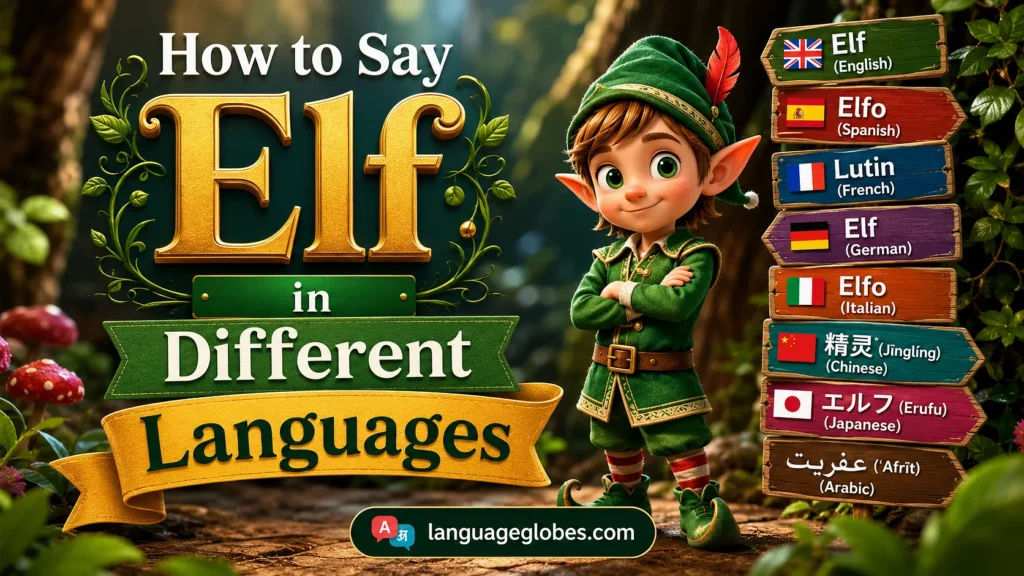
This guide explores the translation of elf across languages while highlighting cultural meaning and pronunciation. You will discover forms such as elfo, Elfe, and lutin and their linguistic backgrounds.
Understanding these direct translations can improve cultural awareness for every language learner, writer, traveler, and student. It also shows the rich diversity of world cultures, languages, storytelling, and traditions surrounding magical creatures.
Also Read This: How to Say Eleven in Different Languages
Interesting Facts About Elf
- Elves originated in ancient Germanic and Norse mythology.
- In traditional folklore, elves were often considered supernatural beings connected to nature.
- Modern fantasy literature greatly influenced how people imagine elves today.
- Elves are commonly portrayed as wise, magical, and long-lived creatures.
- Different cultures have unique versions of elf-like beings.
- The concept of elves appears in myths, legends, fairy tales, and fantasy novels.
- Many fantasy games and movies feature elves as important characters.
- The word “elf” has existed in the English language for more than a thousand years.
- Some cultures associate elves with forests, mountains, or hidden magical worlds.
- Learning fantasy-related vocabulary can help language learners explore folklore and literature from different countries.
How to Say Elf in Different Languages
Below are translations of the word “elf” in more than 70 languages from around the world. Pronunciations are simplified for English speakers and may vary slightly by region.
European Languages
Europe is home to many languages and rich folklore traditions. The idea of elves is especially strong in Northern and Western Europe, where ancient myths and legends helped shape modern fantasy stories. The following translations show how different European cultures express the word “elf.”
| Language | Country/Region | Translation | Pronunciation | Example Sentence |
| 🇺🇸 American English | USA | Elf | Elf | The elf lives in a magical forest. |
| 🇬🇧 British English | United Kingdom | Elf | Elf | The elf guards the ancient tree. |
| 🇦🇺 Australian English | Australia | Elf | Elf | We read a story about an elf. |
| Danish | 🇩🇰 Denmark | Alf | Alf | Alf bor i skoven. |
| Swedish | 🇸🇪 Sweden | Alv | Alv | Alven är magisk. |
| Norwegian | 🇳🇴 Norway | Alv | Alv | Alven bor i fjellet. |
| Icelandic | 🇮🇸 Iceland | Álfur | Ahl-fur | Álfurinn er snjall. |
| German | 🇩🇪 Germany | Elf | Elf | Der Elf lebt im Wald. |
| Dutch | 🇳🇱 Netherlands | Elf | Elf | De elf is vriendelijk. |
| French | 🇫🇷 France | Elfe | Elf | L’elfe est magique. |
| Spanish | 🇪🇸 Spain | Elfo | El-fo | El elfo vive en el bosque. |
| Portuguese | 🇵🇹 Portugal | Elfo | El-fo | O elfo é mágico. |
| Italian | 🇮🇹 Italy | Elfo | El-fo | L’elfo vive nella foresta. |
| Romanian | 🇷🇴 Romania | Elf | Elf | Elful este în pădure. |
| Polish | 🇵🇱 Poland | Elf | Elf | Elf mieszka w lesie. |
| Czech | 🇨🇿 Czech Republic | Elf | Elf | Elf žije v lese. |
| Slovak | 🇸🇰 Slovakia | Elf | Elf | Elf býva v lese. |
| Slovenian | 🇸🇮 Slovenia | Škrat | Shkrat | Škrat živi v gozdu. |
| Croatian | 🇭🇷 Croatia | Vilenjak | Vee-len-yak | Vilenjak živi u šumi. |
| Serbian | 🇷🇸 Serbia | Vilenjak | Vee-len-yak | Vilenjak je čaroban. |
| Bosnian | 🇧🇦 Bosnia | Vilenjak | Vee-len-yak | Vilenjak živi u šumi. |
| Hungarian | 🇭🇺 Hungary | Tünde | Toon-deh | A tünde varázslatos. |
| Finnish | 🇫🇮 Finland | Haltia | Hal-tee-ah | Haltia asuu metsässä. |
| Estonian | 🇪🇪 Estonia | Haldjas | Hald-yas | Haldjas on maagiline. |
| Latvian | 🇱🇻 Latvia | Elfs | Elfs | Elfs dzīvo mežā. |
| Lithuanian | 🇱🇹 Lithuania | Elfas | El-fas | Elfas gyvena miške. |
| Greek | 🇬🇷 Greece | Ξωτικό | Kso-tee-ko | Το ξωτικό είναι μαγικό. |
| Albanian | 🇦🇱 Albania | Elf | Elf | Elfi jeton në pyll. |
| Irish | 🇮🇪 Ireland | Síog | Shee-og | Tá síog sa choill. |
| Welsh | 🏴 Wales | Corrach | Kor-rakh | Mae’r corrach yn hudolus. |
Asian Languages
Asia contains thousands of years of history, folklore, and storytelling traditions. While some Asian cultures do not have an exact equivalent of the Western elf, many languages use adapted words or terms for magical spirits and mythical beings.
| Language | Country/Region | Translation | Pronunciation | Example Sentence |
| Chinese (Simplified) | 🇨🇳 China | 精灵 | Jing-ling | 精灵住在森林里。 |
| Chinese (Traditional) | 🇹🇼 Taiwan | 精靈 | Jing-ling | 精靈很神秘。 |
| Japanese | 🇯🇵 Japan | エルフ | E-ru-fu | エルフは森に住んでいます。 |
| Korean | 🇰🇷 South Korea | 엘프 | El-peu | 엘프는 마법을 사용합니다. |
| Hindi | 🇮🇳 India | योगिनी प्राणी | Yo-gi-ni Pra-ni | वह एक जादुई योगिनी प्राणी है। |
| Urdu | 🇵🇰 Pakistan | ایلف | Elf | ایلف جنگل میں رہتا ہے۔ |
| Bengali | 🇧🇩 Bangladesh | এলফ | Elf | এলফটি জাদুকরী। |
| Punjabi | India/Pakistan | ਐਲਫ | Elf | ਐਲਫ ਜੰਗਲ ਵਿੱਚ ਰਹਿੰਦਾ ਹੈ। |
| Gujarati | 🇮🇳 India | એલ્ફ | Elf | એલ્ફ જાદુઈ છે. |
| Marathi | 🇮🇳 India | एल्फ | Elf | एल्फ जंगलात राहतो. |
| Tamil | 🇮🇳 India | எல்ஃப் | Elf | எல்ஃப் மாயமானது. |
| Telugu | 🇮🇳 India | ఎల్ఫ్ | Elf | ఎల్ఫ్ అడవిలో నివసిస్తుంది. |
| Kannada | 🇮🇳 India | ಎಲ್ಫ್ | Elf | ಎಲ್ಫ್ ಮಾಂತ್ರಿಕವಾಗಿದೆ. |
| Malayalam | 🇮🇳 India | എൽഫ് | Elf | എൽഫ് കാട്ടിൽ താമസിക്കുന്നു. |
| Thai | 🇹🇭 Thailand | เอลฟ์ | Elf | เอลฟ์อาศัยอยู่ในป่า |
| Vietnamese | 🇻🇳 Vietnam | Yêu tinh | Yew-tinh | Yêu tinh sống trong rừng. |
| Indonesian | 🇮🇩 Indonesia | Elf | Elf | Elf tinggal di hutan. |
| Malay | 🇲🇾 Malaysia | Elf | Elf | Elf itu ajaib. |
| Filipino | 🇵🇭 Philippines | Duwende | Doo-wen-deh | Ang duwende ay mahiwaga. |
| Mongolian | 🇲🇳 Mongolia | Элф | Elf | Элф ойд амьдардаг. |
| Nepali | 🇳🇵 Nepal | एल्फ | Elf | एल्फ जंगलमा बस्छ। |
| Sinhala | 🇱🇰 Sri Lanka | එල්ෆ් | Elf | එල්ෆ් මායාකාරී ය. |
African Languages
Africa is a continent with remarkable linguistic diversity and thousands of languages. While traditional African folklore often features spirits, ancestors, and supernatural beings rather than elves, modern translations commonly use adapted versions of the word elf.
| Language | Country/Region | Translation | Pronunciation | Example Sentence |
| Swahili | 🌍 East Africa | Elfu | El-fu | Elfu anaishi msituni. |
| Zulu | 🇿🇦 South Africa | I-elf | Ee-elf | I-elf inomlingo. |
| Xhosa | 🇿🇦 South Africa | I-elf | Ee-elf | I-elf ihlala ehlathini. |
| Afrikaans | 🇿🇦 South Africa | Elf | Elf | Die elf woon in die bos. |
| Yoruba | 🇳🇬 Nigeria | Ẹlfù | El-fu | Ẹlfù ngbe ninu igbo. |
| Igbo | 🇳🇬 Nigeria | Elf | Elf | Elf bi n’ime ọhịa. |
| Hausa | 🇳🇬 Nigeria | Elf | Elf | Elf yana zaune a daji. |
| Amharic | 🇪🇹 Ethiopia | ኤልፍ | Elif | ኤልፍ በጫካ ይኖራል። |
| Somali | 🇸🇴 Somalia | Elf | Elf | Elf wuxuu ku nool yahay kaynta. |
| Shona | 🇿🇼 Zimbabwe | Elf | Elf | Elf anogara musango. |
| Kinyarwanda | 🇷🇼 Rwanda | Elf | Elf | Elf aba mu ishyamba. |
| Sesotho | 🇱🇸 Lesotho | Elf | Elf | Elf o lula morung. |
Middle Eastern Languages
The Middle East has a rich heritage of mythology, folklore, and storytelling. Many regional traditions include spirits, supernatural creatures, and magical beings. Modern translations of elf often use transliterated forms adapted to local languages.
| Language | Country/Region | Translation | Pronunciation | Example Sentence |
| Arabic | 🌍 Middle East | إلف | Ilf | يعيش الإلف في الغابة. |
| Persian | 🇮🇷 Iran | الف | Elf | الف در جنگل زندگی میکند. |
| Turkish | 🇹🇷 Turkey | Elf | Elf | Elf ormanda yaşar. |
| Hebrew | 🇮🇱 Israel | אלף | Elf | האלף חי ביער. |
| Kurdish | Iraq/Turkey | ئەلف | Elf | ئەلف لە دارستان دەژیت. |
| Azerbaijani | 🇦🇿 Azerbaijan | Elf | Elf | Elf meşədə yaşayır. |
| Armenian | 🇦🇲 Armenia | Էլֆ | Elf | Էլֆը ապրում է անտառում։ |
| Georgian | 🇬🇪 Georgia | ელფი | El-fi | ელფი ტყეში ცხოვრობს. |
Additional Languages Around the World
Languages from the Americas, Oceania, and other regions contribute to the global understanding of fantasy and folklore. Many of these languages adopt the international term “elf” while adapting pronunciation and spelling to local linguistic patterns.
| Language | Country/Region | Translation | Pronunciation | Example Sentence |
| Russian | 🇷🇺 Russia | Эльф | Elf | Эльф живет в лесу. |
| Ukrainian | 🇺🇦 Ukraine | Ельф | Yelf | Ельф живе в лісі. |
| Belarusian | 🇧🇾 Belarus | Эльф | Elf | Эльф жыве ў лесе. |
| Bulgarian | 🇧🇬 Bulgaria | Елф | Elf | Елфът живее в гората. |
| Macedonian | 🇲🇰 North Macedonia | Елф | Elf | Елфот живее во шума. |
| Lithuanian Samogitian | 🇱🇹 Lithuania | Elfs | Elfs | Elfs gyvena miške. |
| Catalan | 🇪🇸 Catalonia | Elf | Elf | L’elf viu al bosc. |
| Basque | 🇪🇸 Basque Region | Iratxo | Ee-rat-sho | Iratxoa basoan bizi da. |
| Galician | 🇪🇸 Galicia | Elfo | El-fo | O elfo vive no bosque. |
| Esperanto | International | Elfo | El-fo | La elfo loĝas en arbaro. |
| Maori | 🇳🇿 New Zealand | Erehe | E-re-he | Kei te ngahere te erehe. |
| Hawaiian | 🇺🇸 Hawaii | ʻElepa | Eh-le-pa | Noho ka ʻelepa ma ka ululāʻau. |
| Samoan | 🇼🇸 Samoa | Elf | Elf | O le elf e nofo i le vaomatua. |
| Tongan | 🇹🇴 Tonga | Elf | Elf | ʻOku nofo ʻa e elf ʻi he vao. |
| Fijian | 🇫🇯 Fiji | Elf | Elf | E tiko na elf ena veikau. |
FAQs
What Is an Elf and Where Does This Mythical Creature Come From?
An elf is a mythical creature rooted in folklore, legends, and global mythology. Different cultures describe elves as magical beings with wisdom, beauty, and a close connection to nature.
How Do You Say Elf in Different Languages?
The translation of elf changes across different languages and world cultures. Common forms include elfo in Spanish and Italian, Elfe in German, and lutin in French.
What Is the Spanish Word for Elf?
The Spanish word for elf is elfo, a common word used to describe this mythical being. Its meaning may vary depending on fantasy stories, folklore, and cultural context.
What Is the German Word for Elf?
The German word for elf is Elfe, which appears in fantasy literature and traditional storytelling. The term connects with European ideas about spirits, fairies, and other mythical creatures.
What Is the French Word for Elf?
The French term lutin is commonly associated with an elf-like mythical being. In folklore, lutins may have similar characteristics to other magical creatures.
How Do Different Cultures Describe Elves?
Across world cultures, elves can represent nature, magic, mischief, wisdom, or supernatural abilities. Their meanings reflect local traditions, beliefs, and storytelling practices passed through generations.
Why Are Elves Important in Global Mythology?
Elves appear in ancient European myths and later modern fantasy literature, shaping people’s imagination worldwide. They remain popular through fantasy, stories, movies, and other creative traditions.
How Is Elf Pronounced in Different Languages?
The pronunciation of elf can change significantly between languages, even when the meaning remains similar. Learning to pronounce elf correctly can make communication easier for language learners.
Are Elves the Same as Fairies and Other Mythical Creatures?
Not always, although elves and fairies can share similar characteristics in some traditions. Their roles, appearances, abilities, and meanings differ across cultures and folklore.
Why Learn How to Say Elf in Other Languages?
Learning this word can support communication, cultural learning, and a better understanding of history, traditions, and beliefs. It can also interest a traveler, writer, student, or fantasy enthusiast exploring world cultures.
Conclusion
Learning how to say elf in different languages offers a fascinating look into folklore, culture, and global mythology. From elfo to Elfe and lutin, each translation of elf reflects unique world cultures, traditions, and beliefs. Exploring these mythical creatures can deepen cultural awareness while making language learning more enjoyable for every language learner, writer, traveler, and fantasy enthusiast. Discovering these meanings also reveals how magical beings continue inspiring fantasy literature, legends, and people’s imagination worldwide.

Grace Hall is a passionate language enthusiast and writer at LanguageGlobes, dedicated to making global communication simple and accessible. She shares insightful content to help readers explore new languages, cultures, and connections around the world.