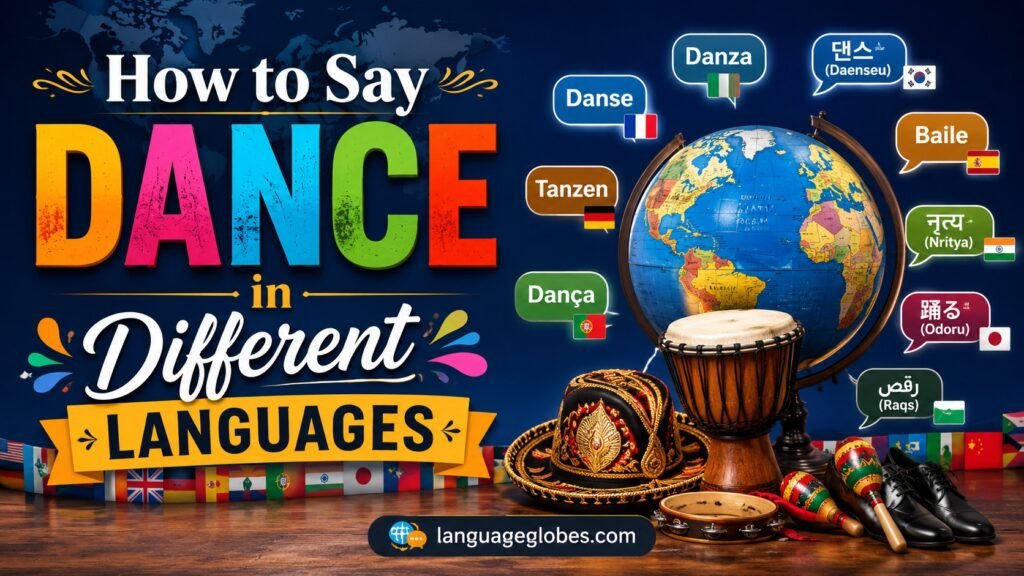
Dance is a beautiful form of expression found across different languages and diverse cultures. Learning how to say dance reveals how people around the globe describe movement, rhythm, joy, and human expression.
This guide explores the word for dance, dance translation, and dance translations across global languages. It also shows how dancing can help connect with culture, communicate across different backgrounds, and appreciate cultures worldwide.
From traditional folk dance in Europe to classical dance in Asia, every culture adds meaning to movement. These common words offer cultural insights while helping language learners, travelers, and cultural enthusiasts expand their vocabulary.
You can discover pronunciations, example sentences, and translations that make it easier to pronounce dance naturally. Exploring this universal language also highlights cultural diversity, cultural connection, creativity, celebration, and the shared joy of dancing worldwide.
Also Read This: How to Say Daisy in Different Languages
Interesting Facts About Dance
- Dance is one of the oldest forms of human expression, dating back thousands of years.
- Every culture has its own unique dance traditions and styles.
- Dance is often used in celebrations, weddings, festivals, and religious ceremonies.
- Many languages have separate words for dance as a noun and dance as a verb.
- Professional dance forms include ballet, salsa, tango, flamenco, hip-hop, and many others.
- Dance can improve physical fitness, mental health, and social connections.
- UNESCO recognizes several traditional dances as important cultural heritage.
- Some cultures use dance to tell historical stories and pass traditions to future generations.
- Dance is considered a universal language because people can understand emotions through movement even without speaking the same language.
- Learning dance-related vocabulary helps travelers and language learners engage more deeply with local cultures.
How to Say Dance in Different Languages
The word “dance” varies across languages, yet it carries a similar meaning of rhythmic movement, celebration, and artistic expression. Below are translations from different regions around the world.
European Languages
Europe is home to dozens of languages and rich dance traditions. From the passionate flamenco of Spain to the elegant ballet traditions of France and Russia, dance plays an important role in European culture. Learning the word for dance in European languages can help you better appreciate these artistic traditions.
| Language | Country/Region | Translation | Pronunciation | Example Sentence |
| 🇺🇸 American English | USA | Dance | Dans | I love to dance at parties. |
| 🇬🇧 British English | United Kingdom | Dance | Dahns | She enjoys dance lessons. |
| 🇦🇺 Australian English | Australia | Dance | Dans | We dance at festivals. |
| French | 🇫🇷 France | Danse | Dahns | J’aime la danse. |
| Spanish | 🇪🇸 Spain | Baile | BY-leh | Me gusta el baile. |
| Portuguese | 🇵🇹 Portugal | Dança | DAN-sa | Eu adoro dança. |
| Italian | 🇮🇹 Italy | Danza | DAN-tsa | Amo la danza. |
| German | 🇩🇪 Germany | Tanz | Tahnts | Ich liebe Tanz. |
| Dutch | 🇳🇱 Netherlands | Dans | Dahns | Ik hou van dans. |
| Swedish | 🇸🇪 Sweden | Dans | Dahns | Jag gillar dans. |
| Norwegian | 🇳🇴 Norway | Dans | Dahns | Jeg liker dans. |
| Danish | 🇩🇰 Denmark | Dans | Dahns | Jeg elsker dans. |
| Finnish | 🇫🇮 Finland | Tanssi | TAN-see | Rakastan tanssia. |
| Icelandic | 🇮🇸 Iceland | Dans | Dahns | Ég elska dans. |
| Irish | 🇮🇪 Ireland | Damhsa | DOW-sa | Is maith liom damhsa. |
| Welsh | Wales | Dawns | Downs | Rwy’n hoffi dawns. |
| Polish | 🇵🇱 Poland | Taniec | TAN-yets | Lubię taniec. |
| Czech | 🇨🇿 Czech Republic | Tanec | TAN-ets | Mám rád tanec. |
| Slovak | 🇸🇰 Slovakia | Tanec | TAN-ets | Milujem tanec. |
| Hungarian | 🇭🇺 Hungary | Tánc | TAHNTS | Szeretem a táncot. |
| Romanian | 🇷🇴 Romania | Dans | Dahns | Îmi place dansul. |
| Bulgarian | 🇧🇬 Bulgaria | Танц | Tants | Обичам танца. |
| Croatian | 🇭🇷 Croatia | Ples | Ples | Volim ples. |
| Serbian | 🇷🇸 Serbia | Плес | Ples | Volim ples. |
| Slovenian | 🇸🇮 Slovenia | Ples | Ples | Rad imam ples. |
| Greek | 🇬🇷 Greece | Χορός | Ho-ROS | Μου αρέσει ο χορός. |
| Russian | 🇷🇺 Russia | Танец | TAN-yets | Я люблю танец. |
| Ukrainian | 🇺🇦 Ukraine | Танець | TAN-ets | Я люблю танець. |
| Belarusian | Belarus | Танец | TAN-ets | Я люблю танец. |
| Latvian | 🇱🇻 Latvia | Deja | DEH-ya | Man patīk deja. |
| Lithuanian | 🇱🇹 Lithuania | Šokis | SHO-kis | Man patinka šokis. |
| Albanian | 🇦🇱 Albania | Vallëzim | Val-eh-ZIM | Unë dua vallëzim. |
Asian Languages
Asia contains thousands of cultures and languages, making it one of the most linguistically diverse regions on Earth. Dance is deeply rooted in Asian traditions, from Indian classical dances to Chinese folk dances and Japanese cultural performances. Understanding how to say dance in Asian languages can provide valuable cultural insight.
| Language | Country/Region | Translation | Pronunciation | Example Sentence |
| Chinese (Mandarin) | 🇨🇳 China | 舞蹈 | Woo-dao | 我喜欢舞蹈。 |
| Cantonese | Hong Kong | 舞蹈 | Mou-to | 我鍾意舞蹈。 |
| Japanese | 🇯🇵 Japan | ダンス | Dan-su | ダンスが好きです。 |
| Korean | 🇰🇷 South Korea | 춤 | Choom | 저는 춤을 좋아합니다. |
| Hindi | 🇮🇳 India | नृत्य | Nritya | मुझे नृत्य पसंद है। |
| Urdu | 🇵🇰 Pakistan | رقص | Raqs | مجھے رقص پسند ہے۔ |
| Bengali | 🇧🇩 Bangladesh | নৃত্য | Nritto | আমি নৃত্য ভালোবাসি। |
| Punjabi | India/Pakistan | ਨਾਚ | Naach | ਮੈਨੂੰ ਨਾਚ ਪਸੰਦ ਹੈ। |
| Gujarati | India | નૃત્ય | Nrutya | મને નૃત્ય ગમે છે. |
| Marathi | India | नृत्य | Nritya | मला नृत्य आवडते. |
| Tamil | India/Sri Lanka | நடனம் | Na-da-nam | எனக்கு நடனம் பிடிக்கும். |
| Telugu | India | నృత్యం | Nru-tyam | నాకు నృత్యం ఇష్టం. |
| Kannada | India | ನೃತ್ಯ | Nrutya | ನನಗೆ ನೃತ್ಯ ಇಷ್ಟ. |
| Malayalam | India | നൃത്തം | Nritham | എനിക്ക് നൃത്തം ഇഷ്ടമാണ്. |
| Sinhala | 🇱🇰 Sri Lanka | නර්තනය | Nar-tha-na-ya | මම නර්තනයට කැමතියි. |
| Nepali | 🇳🇵 Nepal | नृत्य | Nritya | मलाई नृत्य मन पर्छ। |
| Thai | 🇹🇭 Thailand | การเต้นรำ | Gan-ten-ram | ฉันชอบการเต้นรำ |
| Vietnamese | 🇻🇳 Vietnam | Khiêu vũ | Kyew-vu | Tôi thích khiêu vũ. |
| Indonesian | 🇮🇩 Indonesia | Tarian | Ta-ri-an | Saya suka tarian. |
| Malay | 🇲🇾 Malaysia | Tarian | Ta-ri-an | Saya suka tarian. |
| Filipino | 🇵🇭 Philippines | Sayaw | Sa-yow | Mahilig ako sa sayaw. |
| Khmer | 🇰🇭 Cambodia | របាំ | Ro-bam | ខ្ញុំចូលចិត្តរបាំ។ |
| Lao | 🇱🇦 Laos | ການເຕັ້ນ | Kan-ten | ຂ້ອຍມັກການເຕັ້ນ. |
| Mongolian | 🇲🇳 Mongolia | Бүжиг | Bu-jig | Би бүжигт дуртай. |
| Burmese | 🇲🇲 Myanmar | အက | A-ka | ကျွန်ုပ်အကကိုနှစ်သက်သည်။ |
African Languages
Africa is a continent with extraordinary linguistic diversity and vibrant dance traditions. Dance often plays a central role in community gatherings, celebrations, ceremonies, and storytelling. Many African cultures use dance as a way to preserve heritage and strengthen social bonds.
| Language | Country/Region | Translation | Pronunciation | Example Sentence |
| Swahili | 🇹🇿 Tanzania/Kenya | Ngoma | N-go-ma | Ninapenda ngoma. |
| Zulu | 🇿🇦 South Africa | Umdanso | Um-dan-so | Ngithanda umdanso. |
| Xhosa | South Africa | Umdaniso | Um-da-ni-so | Ndiyawuthanda umdaniso. |
| Afrikaans | South Africa | Dans | Dahns | Ek hou van dans. |
| Yoruba | 🇳🇬 Nigeria | Ijó | Ee-jo | Mo fẹ́ ijó. |
| Igbo | Nigeria | Egwu | Eh-gwu | A hụrụ m egwu n’anya. |
| Hausa | Nigeria | Rawa | Ra-wa | Ina son rawa. |
| Amharic | 🇪🇹 Ethiopia | ዳንስ | Danis | ዳንስ እወዳለሁ። |
| Somali | 🇸🇴 Somalia | Ciyaar | Chi-yar | Waxaan jeclahay ciyaar. |
| Shona | 🇿🇼 Zimbabwe | Kutamba | Ku-tam-ba | Ndinoda kutamba. |
| Kinyarwanda | 🇷🇼 Rwanda | Imbyino | Im-bee-no | Nkunda imbyino. |
| Luganda | 🇺🇬 Uganda | Amazina | A-ma-zi-na | Njagala amazina. |
Middle Eastern Languages
The Middle East has a rich history of music, poetry, and dance traditions. From traditional folk dances to modern performances, dance remains an important aspect of cultural identity. The languages spoken in this region reflect centuries of cultural exchange and history.
| Language | Country/Region | Translation | Pronunciation | Example Sentence |
| Arabic | Middle East | رقص | Raqs | أحب الرقص. |
| Persian (Farsi) | 🇮🇷 Iran | رقص | Raqs | من رقص را دوست دارم. |
| Turkish | 🇹🇷 Turkey | Dans | Dahns | Dans etmeyi seviyorum. |
| Hebrew | 🇮🇱 Israel | ריקוד | Ree-kood | אני אוהב ריקוד. |
| Kurdish | Kurdistan Region | Govend | Go-vend | Ez govend hez dikim. |
| Armenian | 🇦🇲 Armenia | Պար | Par | Ես սիրում եմ պար։ |
| Azerbaijani | 🇦🇿 Azerbaijan | Rəqs | Reqs | Mən rəqsi sevirəm. |
| Georgian | 🇬🇪 Georgia | ცეკვა | Tsek-va | მე მიყვარს ცეკვა. |
Additional Languages Around the World
Beyond Europe, Asia, Africa, and the Middle East, many other languages are spoken across island nations, indigenous communities, and multicultural regions. These languages highlight the incredible diversity of human communication and cultural traditions.
| Language | Country/Region | Translation | Pronunciation | Example Sentence |
| Maori | 🇳🇿 New Zealand | Kanikani | Ka-ni-ka-ni | He pai ki ahau te kanikani. |
| Hawaiian | Hawaii | Hula | Hoo-la | Aloha au i ka hula. |
| Samoan | 🇼🇸 Samoa | Siva | See-va | Ou te fiafia i le siva. |
| Tongan | 🇹🇴 Tonga | Me’etu’upaki | Meh-too-pa-kee | Oku ou fiafia ki he me’etu’upaki. |
| Fijian | 🇫🇯 Fiji | Meke | Meh-keh | Au taleitaka na meke. |
| Tahitian | French Polynesia | Ori | O-ree | Ua here vau i te ori. |
| Greenlandic | Greenland | Qitik | Qi-tik | Qitik nuannaraara. |
| Basque | Spain/France | Dantza | Dan-tsa | Dantza maite dut. |
| Catalan | Spain | Dansa | Dan-sa | M’agrada la dansa. |
| Galician | Spain | Danza | Dan-tha | Gústame a danza. |
FAQs
How do you say dance in different languages?
The word for dance changes across different languages, reflecting unique cultures and traditions. This guide explores how to say dance, dance translation, and dance translations worldwide.
What is the translation of dance in different languages?
Dance translation varies between global languages, with each language having its own unique word and pronunciation. These translations offer useful cultural insights for language learners.
How do you say dance in Spanish and German?
In Spanish, dance is commonly translated as baile, while German uses tanz. These common words show how languages describe the same human expression differently.
How do you say dance in Arabic?
In Arabic, dance can be expressed as raqs. Learning this dance translation helps travelers and language learners understand vocabulary connected with movement and culture.
Why is dance considered a universal language?
Dance is a universal language because people use movement to express emotions, tell stories, and connect communities. It can bring people together despite different backgrounds.
How can learning dance translations help language learners?
Learning dance translations can expand vocabulary, improve pronunciation, and help learners communicate with people from diverse cultures. It also supports meaningful cultural discovery.
What role does dance play in diverse cultures?
Dance is a beautiful form of expression and an important art form in cultures worldwide. Traditional dance, classical dance, and ceremonial dance often preserve history and cultural identity.
How does dance connect people around the world?
The joy of dancing can help people connect with culture and appreciate cultural diversity. From celebrations to special occasions, dance creates a shared cultural connection.
What can you learn from dance words in global languages?
Exploring global languages reveals how people around the globe describe movement, rhythm, creativity, and celebration. Cultural insights can make language learning more engaging and meaningful.
Where can I learn pronunciations and example sentences for dance?
You can explore pronunciations, example sentences, and regional meanings to understand how to pronounce dance naturally. These details make translation of dance easier across the regions of the world.
Conclusion
Learning how to say dance in different languages offers more than a simple dance translation, as it reveals cultural diversity, human expression, and the joy of dancing worldwide. Exploring each unique word, pronunciation, and cultural connection helps language learners appreciate diverse cultures and communicate across different backgrounds. From traditional dance to classical dance, these translations show how movement can connect communities and bring people together. Discovering dance translations across global languages makes language learning more engaging while celebrating cultures around the globe.

James Anderson is a passionate language enthusiast and content creator at LanguageGlobes. With a keen interest in global cultures and communication, he shares insightful and engaging content to help readers explore and master new languages.