
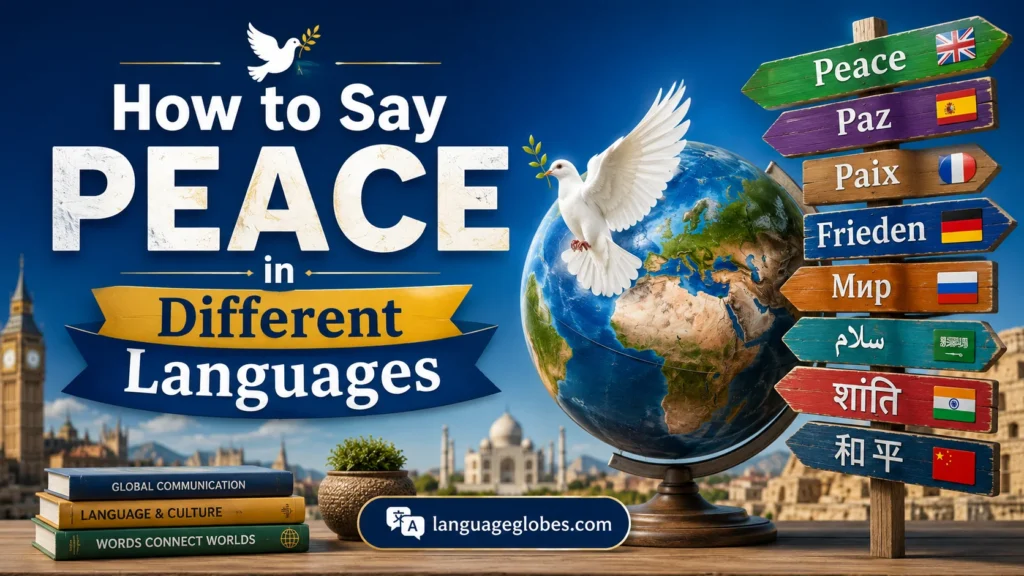
The concept of peace in different languages reveals shared human understanding. Through translation across languages, diverse cultures express a universal aspiration for harmony. Understanding peace as a concept strengthens global harmony and inner peace worldwide humanity.
In the linguistic landscape, expanded vocabulary improves communication across world borders and coexistence. The universal word reflects human history, meaning across cultures, and shared journey. Calmness, love, and hope promote well-being, keeping humanity at peace always.
Travelers and language learners explore over 100 languages with pronunciation guidance globally. European languages, Asian dialects, African tongues, and Middle Eastern expressions span continents and cultures worldwide. Greeting forms include religious greetings and diplomatic discussions promoting communication, understanding, friendship.
Literature, inspirational messages, emotional meaning, and spiritual meaning inspire meaningful words for writers. Studying languages and exploring cultures helps travelers and students enrich vocabulary naturally. Global cooperation fosters freedom from conflict, unity, and absence of conflict in interconnected world.
Also read this: How to Say Pineapple in Different Languages
Interesting Facts About Peace
- The concept of peace exists in every known language and culture.
- Many traditional greetings around the world literally mean “peace be upon you.”
- The peace symbol became internationally recognized during the 20th century.
- Several religions place peace at the center of their teachings.
- The word peace often symbolizes friendship, unity, and mutual respect.
- International organizations promote peace through diplomacy and cooperation.
- Peace is celebrated annually through events such as the International Day of Peace.
- Many national anthems, poems, and songs include themes of peace and harmony.
- In some cultures, peace is associated with wisdom, balance, and spiritual growth.
- Learning peace in different languages helps build cross-cultural understanding.
How to Say Peace in Different Languages
The following sections provide translations, pronunciations, and example sentences from various languages around the world.
European Languages
Europe is home to many language families, including Romance, Germanic, Slavic, Celtic, and Baltic languages. Despite their linguistic differences, cultures across Europe highly value peace and cooperation. The word for peace often appears in literature, politics, and everyday conversations throughout the continent.
| Language | Country/Region | Translation | Pronunciation | Example Sentence |
| 🇺🇸 American English | United States | Peace | Pees | We hope for peace everywhere. |
| 🇬🇧 British English | United Kingdom | Peace | Pees | Peace brings people together. |
| 🇦🇺 Australian English | Australia | Peace | Pees | Let’s work toward peace. |
| 🇫🇷 French | France | Paix | Peh | Nous voulons la paix. |
| 🇪🇸 Spanish | Spain | Paz | Path/Pahs | Queremos paz para todos. |
| 🇵🇹 Portuguese | Portugal | Paz | Pahz | A paz é importante. |
| 🇮🇹 Italian | Italy | Pace | Pah-cheh | La pace è preziosa. |
| 🇩🇪 German | Germany | Frieden | Free-den | Frieden ist wichtig. |
| 🇳🇱 Dutch | Netherlands | Vrede | Vray-duh | Vrede voor iedereen. |
| 🇸🇪 Swedish | Sweden | Fred | Frehd | Fred är viktigt. |
| 🇳🇴 Norwegian | Norway | Fred | Fred | Vi ønsker fred. |
| 🇩🇰 Danish | Denmark | Fred | Fred | Fred er vigtigt. |
| 🇫🇮 Finnish | Finland | Rauha | Rau-ha | Rauha on tärkeä. |
| 🇮🇸 Icelandic | Iceland | Friður | Free-thur | Friður er mikilvægur. |
| 🇵🇱 Polish | Poland | Pokój | Po-kooy | Pokój jest ważny. |
| 🇨🇿 Czech | Czech Republic | Mír | Meer | Mír je důležitý. |
| 🇸🇰 Slovak | Slovakia | Mier | Meer | Mier je dôležitý. |
| 🇭🇺 Hungarian | Hungary | Béke | Bay-keh | Béke fontos. |
| 🇷🇴 Romanian | Romania | Pace | Pah-che | Pace este importantă. |
| 🇬🇷 Greek | Greece | Ειρήνη | Ee-ree-nee | Θέλουμε ειρήνη. |
Asian Languages
Asia contains thousands of languages and dialects spoken by billions of people. The continent is known for its rich cultural traditions, philosophies, and spiritual teachings that often emphasize peace, balance, and harmony. The translations below show how peace is expressed across diverse Asian cultures.
| Language | Country/Region | Translation | Pronunciation | Example Sentence |
| 🇨🇳 Chinese (Mandarin) | China | 和平 | He-ping | 我们希望和平。 |
| 🇯🇵 Japanese | Japan | 平和 | Hei-wa | 平和を願います。 |
| 🇰🇷 Korean | South Korea | 평화 | Pyeong-hwa | 평화를 원합니다. |
| 🇮🇳 Hindi | India | शांति | Shaan-ti | हमें शांति चाहिए। |
| 🇮🇳 Urdu | Pakistan | امن | Aman | ہمیں امن چاہیے۔ |
| 🇧🇩 Bengali | Bangladesh | শান্তি | Shan-ti | আমরা শান্তি চাই। |
| 🇮🇳 Punjabi | Punjab | ਸ਼ਾਂਤੀ | Shaan-ti | ਅਸੀਂ ਸ਼ਾਂਤੀ ਚਾਹੁੰਦੇ ਹਾਂ। |
| 🇮🇳 Gujarati | India | શાંતિ | Shan-ti | અમને શાંતિ જોઈએ. |
| 🇮🇳 Marathi | India | शांती | Shaan-ti | आम्हाला शांती हवी आहे. |
| 🇮🇳 Tamil | India/Sri Lanka | அமைதி | Amaithi | எங்களுக்கு அமைதி வேண்டும். |
| 🇮🇳 Telugu | India | శాంతి | Shanthi | మాకు శాంతి కావాలి. |
| 🇮🇳 Kannada | India | ಶಾಂತಿ | Shaan-ti | ನಮಗೆ ಶಾಂತಿ ಬೇಕು. |
| 🇮🇳 Malayalam | India | സമാധാനം | Samaadhanam | ഞങ്ങൾക്ക് സമാധാനം വേണം. |
| 🇳🇵 Nepali | Nepal | शान्ति | Shaan-ti | हामी शान्ति चाहन्छौं। |
| 🇱🇰 Sinhala | Sri Lanka | සාමය | Saa-ma-ya | අපි සාමය කැමතියි. |
| 🇹🇭 Thai | Thailand | สันติภาพ | San-ti-paap | เราต้องการสันติภาพ |
| 🇻🇳 Vietnamese | Vietnam | Hòa bình | Hwa Binh | Chúng tôi muốn hòa bình. |
| 🇰🇭 Khmer | Cambodia | សន្តិភាព | San-te-pheap | យើងចង់បានសន្តិភាព។ |
| 🇱🇦 Lao | Laos | ສັນຕິພາບ | San-ti-phab | ພວກເຮົາຕ້ອງການສັນຕິພາບ. |
| 🇲🇳 Mongolian | Mongolia | Энх тайван | Enkh Tai-van | Энх тайван хэрэгтэй. |
African Languages
Africa is one of the most linguistically diverse continents in the world, with thousands of languages spoken across its regions. Many African cultures emphasize community, unity, and peaceful coexistence. The word peace often carries social and spiritual significance.
| Language | Country/Region | Translation | Pronunciation | Example Sentence |
| 🇰🇪 Swahili | East Africa | Amani | Ah-mah-nee | Tunataka amani. |
| 🇿🇦 Zulu | South Africa | Ukuthula | Oo-koo-too-la | Sifuna ukuthula. |
| 🇿🇦 Xhosa | South Africa | Uxolo | Oo-kho-lo | Sifuna uxolo. |
| 🇿🇦 Afrikaans | South Africa | Vrede | Fray-duh | Ons wil vrede hê. |
| 🇳🇬 Yoruba | Nigeria | Alaafia | Ah-laa-fee-ah | A fẹ alaafia. |
| 🇳🇬 Igbo | Nigeria | Udo | Oo-doh | Anyị chọrọ udo. |
| 🇪🇹 Amharic | Ethiopia | ሰላም | Se-lam | ሰላም እንፈልጋለን። |
| 🇸🇴 Somali | Somalia | Nabad | Na-bad | Waxaan rabnaa nabad. |
| 🇷🇼 Kinyarwanda | Rwanda | Amahoro | Ama-horo | Dushaka amahoro. |
| 🇧🇼 Tswana | Botswana | Kagiso | Ka-gee-so | Re batla kagiso. |
| 🇱🇸 Sesotho | Lesotho | Khotso | Kho-tso | Re batla khotso. |
| 🇲🇼 Chichewa | Malawi | Mtendere | M-ten-de-re | Tikufuna mtendere. |
| 🇬🇭 Akan | Ghana | Asomdwee | A-som-dwee | Yɛpɛ asomdwee. |
| 🇲🇬 Malagasy | Madagascar | Fiadanana | Fia-da-na-na | Mila fiadanana izahay. |
| 🇪🇷 Tigrinya | Eritrea | ሰላም | Selam | ሰላም ንደሊ። |
Middle Eastern Languages
The Middle East has a rich history of civilization, trade, scholarship, and faith traditions. Many greetings and blessings in the region are directly connected to peace. The concept is deeply rooted in daily life, religion, and cultural identity.
| Language | Country/Region | Translation | Pronunciation | Example Sentence |
| 🇸🇦 Arabic | Middle East | سلام | Salaam | نريد السلام. |
| 🇮🇷 Persian (Farsi) | Iran | صلح | Solh | ما صلح میخواهیم. |
| 🇹🇷 Turkish | Türkiye | Barış | Ba-rish | Barış istiyoruz. |
| 🇮🇱 Hebrew | Israel | שלום | Sha-lom | אנו רוצים שלום. |
| 🇰🇼 Kurdish | Kurdistan Region | Aştî | Ash-tee | Em aştî dixwazin. |
| 🇴🇲 Omani Arabic | Oman | سلام | Salaam | نريد السلام للجميع. |
| 🇶🇦 Gulf Arabic | Gulf Region | سلام | Salaam | السلام مهم للجميع. |
| 🇦🇲 Armenian | Armenia | Խաղաղություն | Kha-gha-ghu-tyun | Մենք խաղաղություն ենք ուզում։ |
| 🇬🇪 Georgian | Georgia | მშვიდობა | Mshvidoba | ჩვენ მშვიდობა გვინდა. |
| 🇦🇿 Azerbaijani | Azerbaijan | Sülh | Sulh | Biz sülh istəyirik. |
Additional Languages Around the World
Beyond Europe, Asia, Africa, and the Middle East, many fascinating languages are spoken across the Americas, Oceania, and island nations. These languages contribute to the rich diversity of human communication while sharing the universal value of peace.
| Language | Country/Region | Translation | Pronunciation | Example Sentence |
| 🇷🇺 Russian | Russia | Мир | Meer | Мы хотим мир. |
| 🇺🇦 Ukrainian | Ukraine | Мир | Myr | Ми хочемо миру. |
| 🇧🇬 Bulgarian | Bulgaria | Мир | Meer | Искаме мир. |
| 🇷🇸 Serbian | Serbia | Мир | Meer | Желимо мир. |
| 🇭🇷 Croatian | Croatia | Mir | Meer | Želimo mir. |
| 🇸🇮 Slovenian | Slovenia | Mir | Meer | Želimo mir. |
| 🇱🇹 Lithuanian | Lithuania | Taika | Tie-ka | Norime taikos. |
| 🇱🇻 Latvian | Latvia | Miers | Mee-ers | Mēs vēlamies mieru. |
| 🇪🇪 Estonian | Estonia | Rahu | Ra-hoo | Me tahame rahu. |
| 🇮🇪 Irish | Ireland | Síocháin | Shee-khawn | Ba mhaith linn síocháin. |
| 🏴 Welsh | Wales | Heddwch | Heh-thookh | Rydym eisiau heddwch. |
| 🇲🇹 Maltese | Malta | Paċi | Paa-chee | Irridu paċi. |
| 🇮🇩 Indonesian | Indonesia | Damai | Da-mai | Kami menginginkan damai. |
| 🇲🇾 Malay | Malaysia | Damai | Da-mai | Kami mahukan damai. |
| 🇵🇭 Filipino | Philippines | Kapayapaan | Ka-pa-ya-pa-an | Nais namin ang kapayapaan. |
| 🇳🇿 Māori | New Zealand | Rangimārie | Ra-ngi-maa-rie | E hiahia ana matou ki te rangimārie. |
| 🇼🇸 Samoan | Samoa | Filemu | Fee-leh-moo | Matou te mananaʻo i le filemu. |
| 🇭🇹 Haitian Creole | Haiti | Lapè | La-pay | Nou vle lapè. |
| 🇬🇱 Greenlandic | Greenland | Eqqissineq | Eqqi-si-neq | Eqqissineq pingaaruteqarpoq. |
| 🇱🇺 Luxembourgish | Luxembourg | Fridden | Frid-den | Fridden ass wichteg. |
FAQs
What is peace in different languages and how is it understood through translation?
Peace in different languages reflects shared human emotion and universal meaning. Through translation, languages and cultures express harmony, unity, and emotional balance. This idea connects humanity across borders and strengthens global understanding.
How do cultures express peace in everyday communication and life?
Across cultures, peace is expressed through kindness, communication, and respect. It supports global harmony, unity, and deeper understanding between people. It also promotes coexistence in diverse societies worldwide.
Why is learning peace related vocabulary important for language learners?
Learning vocabulary about peace helps language learners and improves enrich vocabulary skills. It expands the linguistic landscape and deepens understanding of the world. It also enhances meaningful communication across cultures.
How many languages express peace in over over 100 languages worldwide?
The word peace exists in over 100 languages spoken globally. Travelers and learners explore its forms through pronunciation and usage. This shows how languages connect humanity across regions.
How is peace translated in European languages and common greetings?
In European languages, peace is often used in translation and greeting expressions. It reflects cultural values of respect and unity in communication. These languages show strong historical connections through shared meanings.
What are peace expressions in Asian dialects, African tongues, and Middle Eastern expressions?
Asian dialects, African tongues, and Middle Eastern expressions all have unique forms of peace. These variations reflect rich cultural identity and linguistic diversity. They highlight how humanity shares emotional connection despite differences.
How does pronunciation and audio pronunciation help in learning the word peace?
Pronunciation and audio pronunciation help learners correctly speak peace in different languages. Language learners and travelers use this to improve communication. It builds confidence in real-world conversations.
What is the role of peace in global cooperation and diplomatic discussions?
Peace plays a key role in global cooperation and diplomatic discussions worldwide. It supports absence of conflict, unity, and international stability. This strengthens relationships between nations and societies.
How is inner peace different from global peace and calmness?
Inner peace focuses on personal balance, while global peace involves societies and nations. Both promote calmness, emotional stability, and harmony. Together they support love, hope, and human well-being.
Why do travelers, students, and those studying languages learn the word peace?
Travelers and those studying languages learn peace to improve communication and cultural understanding. It helps in exploring cultures and building friendship globally. This strengthens human connection across borders.
Conclusion
Understanding peace across different languages through translation reveals how languages and cultures connect humanity in a shared vision of global harmony. This universal meaning of inner peace, unity, and understanding strengthens communication, global cooperation, and the absence of conflict among societies. Travelers and language learners explore vocabulary and pronunciation across over 100 languages, including European languages, Asian dialects, African tongues, and Middle Eastern expressions. Ultimately, this journey highlights peace as a universal aspiration for humanity, encouraging coexistence and lasting harmony worldwide.

Grace Hall is a passionate language enthusiast and writer at LanguageGlobes, dedicated to making global communication simple and accessible. She shares insightful content to help readers explore new languages, cultures, and connections around the world.