
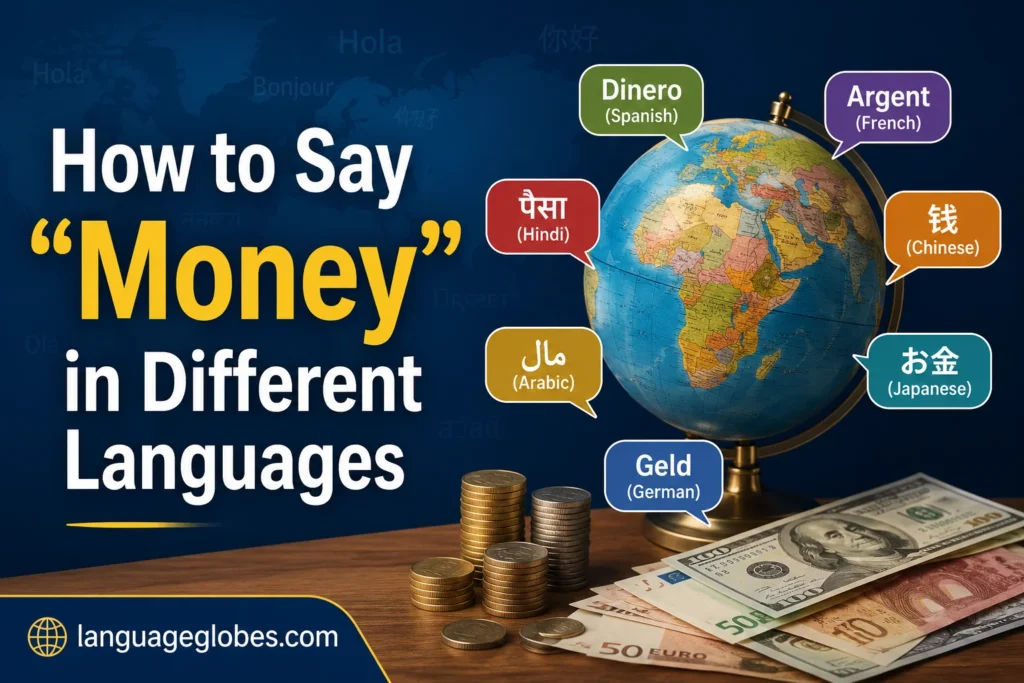
How to Say “Money” in Different Languages helps people learn a universal concept linked to everyday life, trade, travel, and businesses worldwide. This guide explores more than 70 languages, showing money translations, pronunciation, and example sentences through a carefully organized list. During my traveling experiences, I noticed how learning simple words about money makes conversations easier in a local market or while negotiating prices abroad. The table also helps travelers, students, and business professionals better understand how money-related terms are used in different places around the world.
Every culture has its own word for money, often reflecting local history, traditions, and economic systems. In many cultures, these foreign words symbolize wealth, security, prosperity, hard work, and new opportunity. From shopping in Asia to exchanging currency in the Middle East, or visiting markets in Europe and Africa, knowing these different languages creates smoother and more meaningful interactions. Because language is deeply connected to culture, this type of financial vocabulary also supports language enthusiasts, international audiences, and people interested in cultural differences and global cultures.
For anyone learning a new language, these money translations can improve cultural awareness, expand vocabulary, and help people communicate effectively in casual conversations or business negotiations. I have personally seen how a simple word can create a bridge between different cultures and encourage stronger global relationships. This comprehensive guide helps readers discover interesting facts, learn pronunciations, and understand unique meanings hidden inside money-related expressions while connecting with locals, business owners, and wider international audiences.
Interesting Facts About “Money”
- The English word “money” comes from the Latin word “moneta,” which was associated with the Roman goddess Juno Moneta.
- Many languages use completely different root words for money, reflecting unique cultural histories.
- In Japan, the word for money is “okane,” which is commonly used in both formal and informal conversations.
- Arabic-speaking countries often use the word “maal” for wealth or money.
- In Hindi, “paisa” specifically refers to a smaller unit of currency but is also used casually to mean money.
- Some African languages have several words for money depending on whether people are discussing coins, paper notes, or wealth.
- In Mandarin Chinese, the word “qián” has been used for centuries and originally referred to ancient metal coins.
- Learning financial vocabulary is one of the most useful parts of language learning for travelers.
- Different cultures have unique sayings and idioms related to money, wealth, and success.
- Understanding money-related vocabulary can help avoid confusion when shopping or exchanging currency abroad.
European Languages
Europe is home to hundreds of languages belonging to different language families such as Romance, Germanic, and Slavic. The continent has a rich history of trade, banking, and commerce, which has influenced how people talk about money. From English and French to Russian and Greek, each language offers a unique expression for the word “money.”
Travelers in Europe often benefit from learning basic financial vocabulary because it helps when shopping, dining, or using public transportation. Even though many European countries use the Euro, the words for money still differ greatly across languages and cultures.
| Language | Country/Region | Translation | Pronunciation | Example Sentence |
| American English 🇺🇸 | United States | Money | Muh-nee | I need money for the bus. |
| British English 🇬🇧 | United Kingdom | Money | Muh-nee | She saved money for her holiday. |
| Australian English 🇦🇺 | Australia | Money | Muh-nee | We spent a lot of money today. |
| Spanish 🇪🇸 | Spain | Dinero | Dee-neh-ro | Necesito dinero para comprar comida. |
| French 🇫🇷 | France | Argent | Ar-zhon | J’ai besoin d’argent pour voyager. |
| German 🇩🇪 | Germany | Geld | Geld | Ich brauche Geld für das Ticket. |
| Italian 🇮🇹 | Italy | Denaro | Deh-na-ro | Ho bisogno di denaro oggi. |
| Portuguese 🇵🇹 | Portugal | Dinheiro | Dee-nyay-ro | Preciso de dinheiro para o táxi. |
| Dutch 🇳🇱 | Netherlands | Geld | Khelt | Ik heb geld nodig voor koffie. |
| Swedish 🇸🇪 | Sweden | Pengar | Pen-yar | Jag behöver pengar nu. |
| Norwegian 🇳🇴 | Norway | Penger | Peng-er | Jeg trenger penger til mat. |
| Danish 🇩🇰 | Denmark | Penge | Peng-eh | Jeg har ikke mange penge. |
| Finnish 🇫🇮 | Finland | Raha | Ra-ha | Tarvitsen rahaa matkalle. |
| Icelandic 🇮🇸 | Iceland | Peningar | Pen-ing-ar | Ég þarf peninga í dag. |
| Russian 🇷🇺 | Russia | Деньги | Dyehn-gee | Мне нужны деньги на билет. |
| Ukrainian 🇺🇦 | Ukraine | Гроші | Hro-shi | Мені потрібні гроші зараз. |
| Polish 🇵🇱 | Poland | Pieniądze | Pye-nyon-dze | Potrzebuję pieniędzy na jedzenie. |
| Czech 🇨🇿 | Czech Republic | Peníze | Peh-nee-zeh | Potřebuji peníze na cestu. |
| Slovak 🇸🇰 | Slovakia | Peniaze | Peh-nee-ah-ze | Potrebujem peniaze na autobus. |
| Hungarian 🇭🇺 | Hungary | Pénz | Paynz | Szükségem van pénzre. |
| Romanian 🇷🇴 | Romania | Bani | Bahn-ee | Am nevoie de bani acum. |
| Bulgarian 🇧🇬 | Bulgaria | Пари | Pa-ri | Имам нужда от пари. |
| Greek 🇬🇷 | Greece | Χρήματα | Khree-ma-ta | Χρειάζομαι χρήματα σήμερα. |
| Turkish 🇹🇷 | Turkey | Para | Pa-ra | Paraya ihtiyacım var. |
| Serbian 🇷🇸 | Serbia | Novac | No-vats | Treba mi novac za kartu. |
| Croatian 🇭🇷 | Croatia | Novac | No-vats | Trebam novac za hranu. |
| Slovenian 🇸🇮 | Slovenia | Denar | Deh-nar | Potrebujem denar za kavo. |
| Lithuanian 🇱🇹 | Lithuania | Pinigai | Pi-ni-gai | Man reikia pinigų šiandien. |
| Latvian 🇱🇻 | Latvia | Nauda | Now-da | Man vajag naudu ēdienam. |
| Estonian 🇪🇪 | Estonia | Raha | Ra-ha | Mul on raha vaja. |
| Irish 🇮🇪 | Ireland | Airgead | Ar-gid | Tá airgead ag teastáil uaim. |
| Welsh 🏴 | Wales | Arian | Ar-yan | Mae angen arian arnaf. |
| Albanian 🇦🇱 | Albania | Para | Pa-ra | Më duhen para sot. |
| Maltese 🇲🇹 | Malta | Flus | Floos | Għandi bżonn flus illum. |
Asian Languages
Asia is the largest continent in the world and is home to thousands of languages and dialects. The region includes ancient civilizations, modern economies, and vibrant cultural traditions. Financial vocabulary in Asian languages often reflects centuries of trade, commerce, and cultural exchange.
From Mandarin Chinese and Hindi to Japanese and Korean, the word for “money” varies greatly across Asia. Understanding these words can be especially helpful for travelers, students, and international business professionals.
| Language | Country/Region | Translation | Pronunciation | Example Sentence |
| Mandarin Chinese 🇨🇳 | China | 钱 | Chyen | 我需要钱买食物。 |
| Cantonese 🇭🇰 | Hong Kong | 錢 | Chin | 我需要錢。 |
| Japanese 🇯🇵 | Japan | お金 | Oh-kah-neh | お金が必要です。 |
| Korean 🇰🇷 | South Korea | 돈 | Don | 돈이 필요해요. |
| Hindi 🇮🇳 | India | पैसा | Pai-sa | मुझे पैसे चाहिए। |
| Urdu 🇵🇰 | Pakistan | پیسہ | Pai-sa | مجھے پیسے چاہئیں۔ |
| Bengali 🇧🇩 | Bangladesh | টাকা | Ta-ka | আমার টাকা দরকার। |
| Punjabi 🇮🇳 | Punjab | ਪੈਸਾ | Pai-sa | ਮੈਨੂੰ ਪੈਸੇ ਚਾਹੀਦੇ ਹਨ। |
| Tamil 🇮🇳 | Tamil Nadu | பணம் | Pa-nam | எனக்கு பணம் வேண்டும். |
| Telugu 🇮🇳 | Andhra Pradesh | డబ్బు | Dab-boo | నాకు డబ్బు కావాలి. |
| Marathi 🇮🇳 | Maharashtra | पैसे | Pai-se | मला पैसे पाहिजेत. |
| Gujarati 🇮🇳 | Gujarat | પૈસા | Pai-sa | મને પૈસા જોઈએ. |
| Kannada 🇮🇳 | Karnataka | ಹಣ | Ha-na | ನನಗೆ ಹಣ ಬೇಕು. |
| Malayalam 🇮🇳 | Kerala | പണം | Pa-nam | എനിക്ക് പണം വേണം. |
| Sinhala 🇱🇰 | Sri Lanka | මුදල් | Mu-dal | මට මුදල් අවශ්යයි. |
| Nepali 🇳🇵 | Nepal | पैसा | Pai-sa | मलाई पैसा चाहिन्छ। |
| Thai 🇹🇭 | Thailand | เงิน | Ngern | ฉันต้องการเงิน |
| Vietnamese 🇻🇳 | Vietnam | Tiền | Tee-en | Tôi cần tiền hôm nay. |
| Khmer 🇰🇭 | Cambodia | លុយ | Loy | ខ្ញុំត្រូវការលុយ។ |
| Lao 🇱🇦 | Laos | ເງິນ | Ngern | ຂ້ອຍຕ້ອງການເງິນ. |
| Burmese 🇲🇲 | Myanmar | ငွေ | Ngway | ကျွန်ုပ်ငွေလိုသည်။ |
| Indonesian 🇮🇩 | Indonesia | Uang | Oo-ang | Saya butuh uang sekarang. |
| Malay 🇲🇾 | Malaysia | Wang | Wahng | Saya perlukan wang hari ini. |
| Filipino 🇵🇭 | Philippines | Pera | Peh-ra | Kailangan ko ng pera. |
| Mongolian 🇲🇳 | Mongolia | Мөнгө | Mun-gu | Надад мөнгө хэрэгтэй. |
| Kazakh 🇰🇿 | Kazakhstan | Ақша | Ak-sha | Маған ақша керек. |
| Uzbek 🇺🇿 | Uzbekistan | Pul | Pool | Menga pul kerak. |
| Tajik 🇹🇯 | Tajikistan | Пул | Pool | Ба ман пул лозим аст. |
| Georgian 🇬🇪 | Georgia | ფული | Foo-li | ფული მჭირდება. |
| Armenian 🇦🇲 | Armenia | Փող | Pogh | Ինձ փող է պետք։ |
African Languages
Africa is one of the most linguistically diverse continents in the world, with more than 2,000 languages spoken across different regions. African cultures have rich traditions of trade, storytelling, and community life, all of which influence the way people discuss money and wealth.
Learning financial vocabulary in African languages can help travelers connect with local communities and better understand the continent’s cultural diversity. From Swahili in East Africa to Zulu in Southern Africa, each language has its own unique expression for money.
| Language | Country/Region | Translation | Pronunciation | Example Sentence |
| Swahili 🇹🇿 | Tanzania | Pesa | Peh-sa | Ninahitaji pesa leo. |
| Zulu 🇿🇦 | South Africa | Imali | Ee-mah-lee | Ngidinga imali manje. |
| Xhosa 🇿🇦 | South Africa | Imali | Ee-mah-lee | Ndifuna imali ngoku. |
| Afrikaans 🇿🇦 | South Africa | Geld | Khelt | Ek het geld nodig. |
| Yoruba 🇳🇬 | Nigeria | Owo | Oh-wo | Mo nilo owo bayi. |
| Igbo 🇳🇬 | Nigeria | Ego | Eh-go | Achọrọ m ego ugbu a. |
| Hausa 🇳🇬 | Nigeria | Kudi | Koo-dee | Ina bukatar kudi yau. |
| Amharic 🇪🇹 | Ethiopia | ገንዘብ | Gen-zeb | ገንዘብ እፈልጋለሁ። |
| Somali 🇸🇴 | Somalia | Lacag | La-cag | Waxaan u baahanahay lacag. |
| Shona 🇿🇼 | Zimbabwe | Mari | Ma-ri | Ndinoda mari nhasi. |
| Sesotho 🇱🇸 | Lesotho | Chelete | Khe-leh-teh | Ke hloka chelete. |
| Setswana 🇧🇼 | Botswana | Madi | Mah-dee | Ke batla madi. |
| Kinyarwanda 🇷🇼 | Rwanda | Amafaranga | Ah-ma-frank-ah | Nkeneye amafaranga. |
| Luganda 🇺🇬 | Uganda | Ssente | Sen-teh | Nnina ssente ezetaagisa. |
| Wolof 🇸🇳 | Senegal | Xaalis | Haa-lis | Dama soxla xaalis. |
Read More: How to Say “Cloud” in Different Languages
Middle Eastern Languages
The Middle East is known for its ancient civilizations, vibrant marketplaces, and historical trade routes. Languages from this region have influenced global commerce, literature, and culture for centuries. Words related to money are commonly used in everyday conversations, especially in busy markets and business environments.
From Arabic and Persian to Hebrew and Kurdish, Middle Eastern languages showcase the diversity and cultural richness of the region. Learning these expressions can make travel and communication more engaging and respectful.
| Language | Country/Region | Translation | Pronunciation | Example Sentence |
| Arabic 🇸🇦 | Saudi Arabia | مال | Maal | أحتاج إلى المال اليوم. |
| Persian 🇮🇷 | Iran | پول | Pool | من پول نیاز دارم. |
| Hebrew 🇮🇱 | Israel | כסף | Keh-sef | אני צריך כסף היום. |
| Kurdish 🇹🇯 | Kurdistan Region | Pare | Pa-reh | Ez pere dixwazim. |
| Turkish 🇹🇷 | Turkey | Para | Pa-ra | Paraya ihtiyacım var. |
| Pashto 🇦🇫 | Afghanistan | پیسې | Pai-se | زه پیسو ته اړتیا لرم. |
| Dari 🇦🇫 | Afghanistan | پول | Pool | من پول نیاز دارم. |
| Azerbaijani 🇦🇿 | Azerbaijan | Pul | Pool | Mənə pul lazımdır. |
| Armenian 🇦🇲 | Armenia | Փող | Pogh | Ինձ փող է պետք։ |
| Georgian 🇬🇪 | Georgia | ფული | Foo-li | ფული მჭირდება. |
Additional Languages From Around the World
To make this guide even more comprehensive, here are additional translations of the word “money” from various languages spoken across different regions of the world.
| Language | Country/Region | Translation | Pronunciation | Example Sentence |
| Basque 🇪🇸 | Basque Country | Dirua | Dee-roo-ah | Dirua behar dut. |
| Catalan 🇪🇸 | Catalonia | Diners | Dee-ners | Necessito diners avui. |
| Galician 🇪🇸 | Galicia | Diñeiro | Dee-nye-ro | Necesito diñeiro agora. |
| Luxembourgish 🇱🇺 | Luxembourg | Suen | Soo-en | Ech brauch Suen haut. |
| Belarusian 🇧🇾 | Belarus | Грошы | Hro-shy | Мне патрэбны грошы. |
| Macedonian 🇲🇰 | North Macedonia | Пари | Pa-ri | Ми требаат пари. |
| Bosnian 🇧🇦 | Bosnia | Novac | No-vats | Treba mi novac danas. |
| Maori 🇳🇿 | New Zealand | Moni | Moh-nee | Kei te hiahia moni ahau. |
| Samoan 🇼🇸 | Samoa | Tupe | Too-peh | Ou te manaomia tupe. |
| Hawaiian 🇺🇸 | Hawaii | Kālā | Kah-lah | Makemake au i ke kālā. |
| Haitian Creole 🇭🇹 | Haiti | Lajan | Lah-zhan | Mwen bezwen lajan. |
| Esperanto 🌍 | International | Mono | Mo-no | Mi bezonas monon. |
| Latin 🇻🇦 | Vatican City | Pecunia | Peh-koo-nee-ah | Pecunia mihi opus est. |
| Frisian 🇳🇱 | Friesland | Jild | Yilt | Ik ha jild nedich. |
| Breton 🇫🇷 | Brittany | Arc’hant | Ar-khant | Arc’hant am eus ezhomm. |
Why Learning “Money” in Different Languages Matters
Learning how to say “money” in different languages is practical and culturally enriching. Whether you are traveling internationally, studying abroad, conducting business, or simply learning languages for fun, financial vocabulary is one of the first things people often need.
Understanding local words for money can help travelers avoid misunderstandings while shopping, using transportation, or exchanging currency. It can also help business professionals communicate more effectively in international markets.
Language learning also promotes cultural appreciation. Every translation reflects a culture’s history, economy, and traditions. By learning these words, people gain insight into how societies around the world view wealth, trade, and financial security.
FAQs
1. How do you say “money” in Spanish?
The word for “money” in Spanish is “dinero.”
2. What is the Japanese word for money?
In Japanese, money is called “okane.”
3. How do you pronounce the Chinese word for money?
The Mandarin Chinese word “钱” is pronounced “qián,” sounding similar to “chyen.”
4. What is the Arabic word for money?
The Arabic word for money is “maal.”
5. Why is learning financial vocabulary important?
Financial vocabulary helps travelers, students, and professionals communicate effectively in everyday situations.
6. Which language uses the word “geld” for money?
German, Dutch, and Afrikaans all use variations of the word “geld.”
7. Is “paisa” the same as money in Hindi?
Yes, “paisa” can mean money in casual Hindi conversation, although it also refers to a smaller currency unit.
8. What is the French word for money?
In French, money is called “argent.”
9. How many languages are included in this guide?
This article includes translations from more than 70 languages worldwide.
10. Can learning simple foreign words improve travel experiences?
Yes, even basic words like “money,” “hello,” and “thank you” can make travel more enjoyable and respectful.
11. What is the Korean word for money?
The Korean word for money is “돈” (don).
12. Which African language uses “pesa” for money?
Swahili uses the word “pesa” for money.
Conclusion
Learning how to say “money” in different languages is more than just memorizing vocabulary. It opens the door to understanding cultures, improving communication, and building stronger connections with people around the world. Every language has its own unique history and expression for financial concepts, making this topic both practical and fascinating.
Whether you are a traveler exploring new countries, a student learning global languages, or a business professional working internationally, knowing words related to money can make everyday interactions easier and more meaningful. From Europe and Asia to Africa and the Middle East, language continues to unite people across borders.
By exploring these translations and pronunciations, you not only improve your language skills but also gain a deeper appreciation for the diversity of human communication. Keep learning new words, exploring new cultures, and expanding your understanding of the world one language at a time.

Grace Hall is a passionate language enthusiast and writer at LanguageGlobes, dedicated to making global communication simple and accessible. She shares insightful content to help readers explore new languages, cultures, and connections around the world.