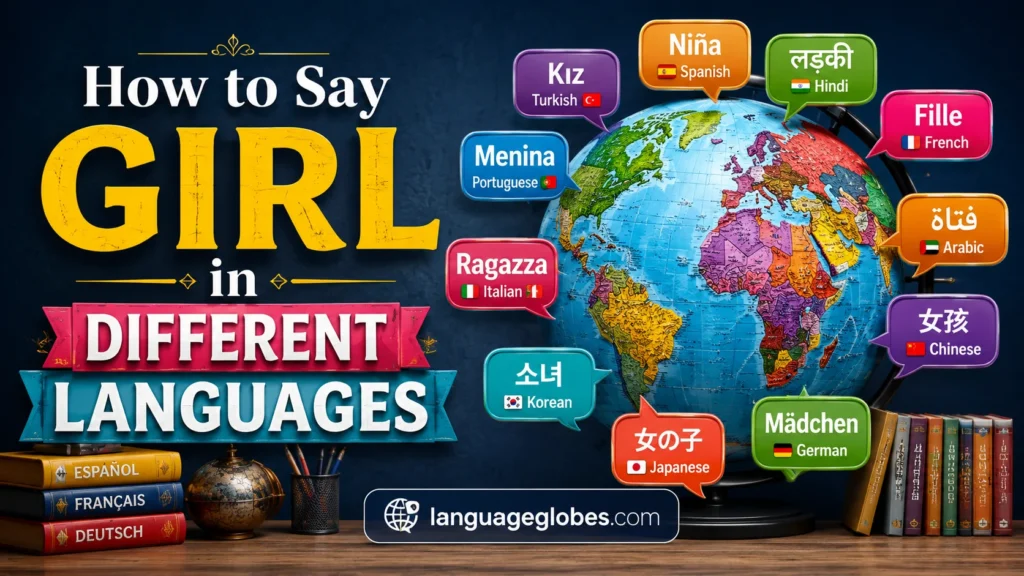
Learning how to say girl in different languages is a simple way to explore global languages and cultures. This common term may describe a young female, female child, or teenager in various contexts. Understanding girl translation across world languages helps improve language learning and strengthens communication skills.
It also introduces language learners to important vocabulary, foundational vocabulary, and practical translations used in daily life. Exploring language differences reveals cultural diversity, cultural values, and unique cultural expressions found worldwide. This knowledge supports global communication, international communication, and deeper understanding cultures through meaningful language use.
Whether you are a student, traveler, teacher, or writer, this language guide offers valuable insights. You will discover terms from French, Spanish, German, English, and many languages across Europe, Asia, Africa, and the Middle East. Along with words like fille, chica, and Mädchen, you will learn proper pronunciation, local pronunciation, and useful example sentences.
This translation guide encourages multilingual learning, language exploration, and appreciation for the linguistic richness of different cultures. By expanding your global vocabulary, improving speaking skills, and building communication confidence, you can enjoy more effective worldwide communication and cross cultural communication. It is also a helpful resource for education, teaching children, students, teachers, travelers, and anyone curious about language knowledge and global culture.
Also read this: How to Say Man in Different Languages
Interesting Facts About Girl
- The English word “girl” originally had a broader meaning in Middle English and could refer to a young person regardless of gender.
- Many languages have separate words for “girl,” “young woman,” and “daughter.”
- Some cultures use different words depending on age, formality, or social context.
- The word for “girl” often appears among the first vocabulary taught to language learners.
- Romance languages such as Spanish, Italian, and French have related words due to shared Latin origins.
- Several Asian languages use characters or scripts completely different from the Latin alphabet.
- Pronunciation varies greatly even when translations have similar spellings.
- Learning simple words like “girl” is an effective way to start building vocabulary in a new language.
How to Say Girl in Different Languages
The following sections provide translations, pronunciations, and examples from languages around the world.
European Languages
Europe is home to hundreds of languages belonging to several major language families, including Romance, Germanic, Slavic, Celtic, and Baltic languages. These languages have influenced global culture, literature, science, and international communication for centuries. While many European languages share historical roots, their words and pronunciations often differ significantly.
| Language | Country/Region | Translation | Pronunciation | Example Sentence |
| 🇺🇸 American English | USA | Girl | Gurl | The girl is reading a book. |
| 🇬🇧 British English | UK | Girl | Gurl | The girl is playing in the garden. |
| 🇦🇺 Australian English | Australia | Girl | Gurl | The girl enjoys surfing. |
| 🇪🇸 Spanish | Spain | Niña | Nee-nya | La niña juega en el parque. |
| 🇫🇷 French | France | Fille | Fee-yuh | La fille est heureuse. |
| 🇮🇹 Italian | Italy | Ragazza | Rah-gat-tsa | La ragazza studia. |
| 🇵🇹 Portuguese | Portugal | Menina | Meh-nee-na | A menina sorri. |
| 🇩🇪 German | Germany | Mädchen | Med-chen | Das Mädchen singt. |
| 🇳🇱 Dutch | Netherlands | Meisje | My-shuh | Het meisje lacht. |
| 🇸🇪 Swedish | Sweden | Flicka | Flee-ka | Flickan springer. |
| 🇳🇴 Norwegian | Norway | Jente | Yen-teh | Jenta leser. |
| 🇩🇰 Danish | Denmark | Pige | Pee-uh | Pigen leger. |
| 🇫🇮 Finnish | Finland | Tyttö | Toot-to | Tyttö laulaa. |
| 🇮🇸 Icelandic | Iceland | Stúlka | Stool-ka | Stúlkan hlær. |
| 🇷🇺 Russian | Russia | Девочка | Dye-voch-ka | Девочка играет. |
| 🇺🇦 Ukrainian | Ukraine | Дівчина | Deev-chee-na | Дівчина читає. |
| 🇵🇱 Polish | Poland | Dziewczyna | Jev-chi-na | Dziewczyna śpiewa. |
| 🇨🇿 Czech | Czech Republic | Dívka | Deev-ka | Dívka běží. |
| 🇸🇰 Slovak | Slovakia | Dievča | Dyev-cha | Dievča číta. |
| 🇭🇺 Hungarian | Hungary | Lány | Laan-y | A lány mosolyog. |
| 🇷🇴 Romanian | Romania | Fată | Fa-ta | Fata dansează. |
| 🇧🇬 Bulgarian | Bulgaria | Момиче | Mo-mi-che | Момичето учи. |
| 🇬🇷 Greek | Greece | Κορίτσι | Ko-ree-tsee | Το κορίτσι παίζει. |
| 🇱🇹 Lithuanian | Lithuania | Mergaitė | Mer-gai-te | Mergaitė skaito. |
| 🇱🇻 Latvian | Latvia | Meitene | May-te-ne | Meitene smaida. |
Asian Languages
Asia is the world’s largest and most linguistically diverse continent. From East Asia and South Asia to Southeast Asia and Central Asia, the region contains thousands of languages spoken by billions of people. Asian languages feature a wide range of writing systems, pronunciations, and cultural traditions that make them fascinating to learn.
| Language | Country/Region | Translation | Pronunciation | Example Sentence |
| 🇨🇳 Chinese (Mandarin) | China | 女孩 | Nyu-hai | 那个女孩很聪明。 |
| 🇯🇵 Japanese | Japan | 女の子 | Onna-no-ko | 女の子が走っています。 |
| 🇰🇷 Korean | South Korea | 소녀 | So-nyeo | 소녀가 노래합니다. |
| 🇮🇳 Hindi | India | लड़की | Lad-kee | लड़की स्कूल जाती है। |
| 🇮🇳 Urdu | Pakistan | لڑکی | Lar-kee | لڑکی کتاب پڑھ رہی ہے۔ |
| 🇧🇩 Bengali | Bangladesh | মেয়ে | Meye | মেয়েটি হাসছে। |
| 🇮🇳 Punjabi | India/Pakistan | ਕੁੜੀ | Ku-rhee | ਕੁੜੀ ਖੇਡ ਰਹੀ ਹੈ। |
| 🇮🇳 Gujarati | India | છોકરી | Cho-kri | છોકરી દોડે છે. |
| 🇮🇳 Marathi | India | मुलगी | Mul-gee | मुलगी शिकते. |
| 🇮🇳 Tamil | India | பெண் குழந்தை | Pen Kulandai | பெண் குழந்தை விளையாடுகிறது. |
| 🇮🇳 Telugu | India | అమ్మాయి | Am-ma-yee | అమ్మాయి చదువుతోంది. |
| 🇮🇳 Kannada | India | ಹುಡುಗಿ | Hu-du-gi | ಹುಡುಗಿ ಓದುತ್ತಿದ್ದಾಳೆ. |
| 🇮🇳 Malayalam | India | പെൺകുട്ടി | Pen-kutti | പെൺകുട്ടി പാടുന്നു. |
| 🇳🇵 Nepali | Nepal | केटी | Ke-ti | केटी पढ्छे। |
| 🇱🇰 Sinhala | Sri Lanka | දැරිය | Da-ri-ya | දැරිය සිනාසෙයි. |
| 🇹🇭 Thai | Thailand | เด็กผู้หญิง | Dek Poo Ying | เด็กผู้หญิงกำลังเล่น |
| 🇻🇳 Vietnamese | Vietnam | Cô gái | Ko Gai | Cô gái đang đọc sách. |
| 🇮🇩 Indonesian | Indonesia | Gadis | Ga-dis | Gadis itu tersenyum. |
| 🇲🇾 Malay | Malaysia | Gadis | Ga-dis | Gadis itu belajar. |
| 🇵🇭 Filipino | Philippines | Babae | Ba-ba-eh | Ang babae ay masaya. |
| 🇰🇿 Kazakh | Kazakhstan | Қыз | Kyz | Қыз кітап оқиды. |
| 🇺🇿 Uzbek | Uzbekistan | Qiz | Kiz | Qiz maktabga boradi. |
African Languages
Africa is home to extraordinary linguistic diversity, with more than 2,000 languages spoken across the continent. African languages belong to several major language families and reflect rich cultural traditions, oral storytelling, and community values. Learning African vocabulary offers insight into some of the world’s oldest and most vibrant cultures.
| Language | Country/Region | Translation | Pronunciation | Example Sentence |
| 🇿🇦 Swahili | East Africa | Msichana | Msee-cha-na | Msichana anasoma. |
| 🇿🇦 Zulu | South Africa | Intombazane | In-tom-ba-za-ne | Intombazane iyacula. |
| 🇿🇦 Xhosa | South Africa | Intombazana | In-tom-ba-za-na | Intombazana iyadlala. |
| 🇳🇬 Yoruba | Nigeria | Ọmọbìnrin | O-mo-bin-rin | Ọmọbìnrin náà ń rẹ́rìn. |
| 🇳🇬 Igbo | Nigeria | Nwata nwanyị | Nwa-ta Nwa-nyi | Nwata nwanyị na-agụ akwụkwọ. |
| 🇳🇬 Hausa | Nigeria | Yarinya | Ya-rin-ya | Yarinya tana karatu. |
| 🇪🇹 Amharic | Ethiopia | ልጃገረድ | Lijagered | ልጃገረድ ትጫወታለች። |
| 🇸🇴 Somali | Somalia | Gabar | Ga-bar | Gabar ayaa akhrinaysa. |
| 🇲🇬 Malagasy | Madagascar | Zazavavy | Za-za-va-vee | Zazavavy mihira. |
| 🇿🇦 Afrikaans | South Africa | Meisie | May-see | Die meisie lees. |
Middle Eastern Languages
The Middle East has a rich linguistic heritage that stretches back thousands of years. Languages from this region have influenced religion, literature, trade, and science throughout human history. Many Middle Eastern languages use unique scripts and possess deep cultural significance.
| Language | Country/Region | Translation | Pronunciation | Example Sentence |
| 🇸🇦 Arabic | Middle East | فتاة | Fa-tah | الفتاة تدرس. |
| 🇮🇷 Persian (Farsi) | Iran | دختر | Dokh-tar | دختر کتاب میخواند. |
| 🇹🇷 Turkish | Turkey | Kız | Kuz | Kız kitap okuyor. |
| 🇮🇱 Hebrew | Israel | ילדה | Yal-da | הילדה משחקת. |
| 🇰🇼 Kurdish | Kurdistan Region | Keç | Ketch | Keç dixwîne. |
| 🇴🇲 Omani Arabic | Oman | فتاة | Fa-tah | الفتاة سعيدة. |
| 🇶🇦 Qatari Arabic | Qatar | فتاة | Fa-tah | الفتاة تلعب. |
| 🇦🇪 Emirati Arabic | UAE | بنت | Bint | البنت تدرس. |
Additional Languages Around the World
Beyond Europe, Asia, Africa, and the Middle East, many other languages are spoken throughout North America, South America, and Oceania. These languages represent unique histories, indigenous traditions, and cultural identities that contribute to the rich tapestry of global communication.
| Language | Country/Region | Translation | Pronunciation | Example Sentence |
| 🇧🇷 Brazilian Portuguese | Brazil | Menina | Meh-nee-na | A menina está feliz. |
| 🇲🇽 Mexican Spanish | Mexico | Niña | Nee-nya | La niña corre rápido. |
| 🇭🇹 Haitian Creole | Haiti | Ti fi | Tee Fee | Ti fi a ap jwe. |
| 🇳🇿 Māori | New Zealand | Kotiro | Ko-tee-ro | Kei te oma te kotiro. |
| 🇼🇸 Samoan | Samoa | Teine | Tay-ee-neh | O le teine e fiafia. |
| 🇹🇴 Tongan | Tonga | Ta’ahine | Ta-a-hee-ne | Oku fiefia e ta’ahine. |
| 🇫🇯 Fijian | Fiji | Goneyalewa | Go-ne-ya-le-wa | E wilika na goneyalewa. |
| 🇬🇱 Greenlandic | Greenland | Niviarsiaraq | Ni-vee-ar-see-ar-ak | Niviarsiaraq atuarpoq. |
| 🇮🇪 Irish | Ireland | Cailín | Ka-leen | Tá an cailín sásta. |
| 🏴 Welsh | Wales | Merch | Merkh | Mae’r ferch yn darllen. |
| 🏴 Scottish Gaelic | Scotland | Nighean | Nee-an | Tha an nighean a’ seinn. |
| 🇪🇪 Estonian | Estonia | Tüdruk | Tu-druk | Tüdruk loeb. |
| 🇦🇱 Albanian | Albania | Vajzë | Vai-ze | Vajza lexon. |
| 🇸🇮 Slovenian | Slovenia | Dekle | Deh-kleh | Dekle bere. |
| 🇭🇷 Croatian | Croatia | Djevojka | Dye-voi-ka | Djevojka čita. |
| 🇷🇸 Serbian | Serbia | Девојка | De-voi-ka | Девојка учи. |
| 🇧🇦 Bosnian | Bosnia | Djevojka | Dye-voi-ka | Djevojka pjeva. |
| 🇲🇰 Macedonian | North Macedonia | Девојче | De-voi-che | Девојчето игра. |
FAQs
What does the word girl mean in different languages?
The word girl generally refers to a young female, female child, or teenager. Across different languages, the meaning remains similar, though cultural nuance, language usage, and local traditions may influence how the term is used.
Why is learning girl translation in different languages useful?
Learning girl translation helps improve language learning, expand vocabulary, and strengthen communication skills. It also supports better global communication and understanding when interacting with people from diverse backgrounds.
How can language learners improve pronunciation of foreign words for girl?
Language learners can improve pronunciation by listening to audio pronunciation, practicing local pronunciation, and reading example sentences. Regular practice builds fluency, comprehension, and stronger speaking skills.
Which languages have the most common translations for girl?
Popular translations include fille in French, chica in Spanish, and Mädchen in German. These terms are widely recognized in world languages and often appear in language education materials.
How does learning common words like girl support vocabulary building?
Learning common words such as girl develops foundational vocabulary and strengthens vocabulary building. These everyday terms are essential for daily communication, conversations, and effective language study.
What can the word girl teach us about cultural diversity?
Studying the word girl across global languages reveals cultural diversity, cultural values, and unique cultural expressions. It encourages cultural awareness, cultural respect, and deeper appreciation of world cultures.
Who can benefit from a language guide about girl translations?
A language guide is useful for students, teachers, writers, travelers, and anyone interested in multilingual learning. It supports educational learning, language discovery, and broader language knowledge.
How does multilingual learning improve worldwide communication?
Multilingual learning creates stronger language connections and promotes worldwide communication. It helps people communicate across countries, nations, and cultures with greater confidence and understanding.
Why are example sentences important when learning translations?
Example sentences show how translations are used in real situations. They improve comprehension, support meaningful interaction, and help learners apply new words in everyday communication.
How does language exploration increase global understanding?
Language exploration helps people understand word meanings, language differences, and linguistic richness across regions. This process promotes global understanding, international communication, and stronger connections within global culture.
Conclusion
By learning how to say girl in different languages, you expand your global vocabulary, strengthen language learning, and improve communication across cultures. Understanding girl translation in world languages promotes cultural awareness, global understanding, and greater appreciation of linguistic diversity. Whether you are interested in multilingual learning, language education, travel, or worldwide communication, these translations help build communication confidence and practical speaking skills. Exploring language differences through common words creates meaningful language connections and deepens your understanding of global culture and world cultures.

Lucy Carter is a curious mind and language lover who writes for Language Globes. She enjoys discovering new languages and sharing simple, helpful ideas that make learning fun and accessible for everyone.