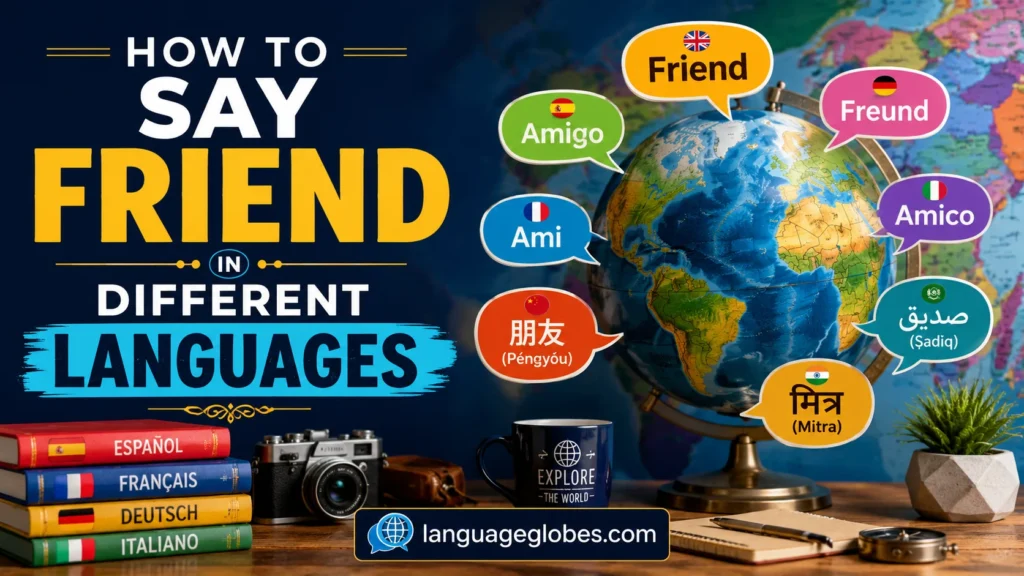
Friendship is a universal concept across cultures, languages, and the world. It represents a strong bond of affection, mutual respect, and emotional connection among individuals. Different languages shape the word friend through culture, history, and identity. This idea is deeply rooted in human communication and everyday expression across societies. It highlights how a single emotion can unite people beyond borders and backgrounds. Understanding these meanings helps build a stronger sense of global connection and shared humanity.
Examples include Spanish language amigo, Japanese language tomodachi, and Arabic language sadiq. English language, French language ami usage, and Urdu language dost show global variations. These words reflect a deep bond of affection and trust in relationships. They also highlight values like honesty, integrity, guidance, and lifelong commitment. Importance of friendship includes support, encouragement, laughter, companionship, good times, and difficult times. Such expressions reveal how human life is enriched through meaningful relationships and shared experiences.
Also read this: How to Say Flowers in Different Languages
Interesting Facts About Friend
- The concept of friendship exists in every known culture around the world.
- Many languages have multiple words for friend depending on closeness and context.
- Some cultures use the same word for both friend and companion.
- The word “friend” comes from Old English “freond,” meaning one who loves or favors.
- Friendship plays an important role in social, emotional, and mental well-being.
- International friendships often begin with learning simple words in another language.
- In several languages, friendship terms are also used as respectful greetings.
- Many famous quotes and proverbs around the world celebrate the value of friendship.
How to Say Friend in Different Languages
Below are translations of the word “friend” in languages spoken across the globe.
European Languages
Europe is home to hundreds of languages and rich cultural traditions. Friendship is highly valued throughout the continent, whether in Mediterranean societies, Nordic countries, or Eastern European communities. Learning these words can help you communicate warmly with native speakers and better understand European cultures.
| Language | Country/Region | Translation | Pronunciation | Example Sentence |
| 🇺🇸 American English | USA | Friend | Frend | My friend is very kind. |
| 🇬🇧 British English | UK | Friend | Frend | My friend lives in London. |
| 🇦🇺 Australian English | Australia | Friend | Frend | My friend enjoys surfing. |
| 🇫🇷 French | France | Ami | Ah-mee | C’est mon ami. |
| 🇪🇸 Spanish | Spain | Amigo | Ah-mee-go | Él es mi amigo. |
| 🇵🇹 Portuguese | Portugal | Amigo | Ah-mee-go | Ele é meu amigo. |
| 🇮🇹 Italian | Italy | Amico | Ah-mee-ko | Lui è il mio amico. |
| 🇩🇪 German | Germany | Freund | Froynd | Er ist mein Freund. |
| 🇳🇱 Dutch | Netherlands | Vriend | Vreend | Hij is mijn vriend. |
| 🇸🇪 Swedish | Sweden | Vän | Ven | Han är min vän. |
| 🇳🇴 Norwegian | Norway | Venn | Ven | Han er min venn. |
| 🇩🇰 Danish | Denmark | Ven | Ven | Han er min ven. |
| 🇫🇮 Finnish | Finland | Ystävä | Us-ta-va | Hän on ystäväni. |
| 🇮🇸 Icelandic | Iceland | Vinur | Vee-nur | Hann er vinur minn. |
| 🇵🇱 Polish | Poland | Przyjaciel | Pshee-ya-chel | To mój przyjaciel. |
| 🇨🇿 Czech | Czech Republic | Přítel | Pree-tel | To je můj přítel. |
| 🇸🇰 Slovak | Slovakia | Priateľ | Pree-ah-tel | On je môj priateľ. |
| 🇭🇺 Hungarian | Hungary | Barát | Bah-raht | Ő a barátom. |
| 🇷🇴 Romanian | Romania | Prieten | Pree-ye-ten | El este prietenul meu. |
| 🇬🇷 Greek | Greece | Φίλος | Fee-los | Είναι φίλος μου. |
| 🇷🇺 Russian | Russia | Друг | Droog | Он мой друг. |
| 🇺🇦 Ukrainian | Ukraine | Друг | Drooh | Він мій друг. |
| 🇧🇬 Bulgarian | Bulgaria | Приятел | Pree-ya-tel | Той е мой приятел. |
| 🇷🇸 Serbian | Serbia | Пријатељ | Pree-ya-tely | Он је мој пријатељ. |
| 🇭🇷 Croatian | Croatia | Prijatelj | Pree-ya-tely | On je moj prijatelj. |
| 🇸🇮 Slovenian | Slovenia | Prijatelj | Pree-ya-tel | On je moj prijatelj. |
| 🇱🇹 Lithuanian | Lithuania | Draugas | Drow-gas | Jis mano draugas. |
| 🇱🇻 Latvian | Latvia | Draugs | Drowgs | Viņš ir mans draugs. |
| 🇪🇪 Estonian | Estonia | Sõber | Suh-ber | Ta on minu sõber. |
Asian Languages
Asia is the world’s largest continent and contains thousands of languages spoken by billions of people. Friendship is deeply respected across Asian societies, often linked with loyalty, trust, and lifelong relationships. Learning these expressions can help you communicate more naturally with people from diverse Asian cultures.
| Language | Country/Region | Translation | Pronunciation | Example Sentence |
| 🇨🇳 Chinese (Mandarin) | China | 朋友 | Peng-you | 他是我的朋友。 |
| 🇯🇵 Japanese | Japan | 友達 | To-mo-da-chi | 彼は私の友達です。 |
| 🇰🇷 Korean | South Korea | 친구 | Chin-goo | 그는 내 친구입니다. |
| 🇮🇳 Hindi | India | दोस्त | Dost | वह मेरा दोस्त है। |
| 🇵🇰 Urdu | Pakistan | دوست | Dost | وہ میرا دوست ہے۔ |
| 🇧🇩 Bengali | Bangladesh | বন্ধু | Bondhu | সে আমার বন্ধু। |
| 🇮🇳 Punjabi | Punjab | ਦੋਸਤ | Dost | ਉਹ ਮੇਰਾ ਦੋਸਤ ਹੈ। |
| 🇮🇳 Gujarati | India | મિત્ર | Mitra | તે મારો મિત્ર છે. |
| 🇮🇳 Marathi | India | मित्र | Mitra | तो माझा मित्र आहे. |
| 🇳🇵 Nepali | Nepal | साथी | Saa-thee | ऊ मेरो साथी हो। |
| 🇱🇰 Sinhala | Sri Lanka | යාළුවා | Yaluwa | ඔහු මගේ යාළුවා. |
| 🇹🇭 Thai | Thailand | เพื่อน | Puean | เขาเป็นเพื่อนของฉัน |
| 🇻🇳 Vietnamese | Vietnam | Bạn | Ban | Anh ấy là bạn tôi. |
| 🇰🇭 Khmer | Cambodia | មិត្ត | Mitt | គាត់ជាមិត្តរបស់ខ្ញុំ។ |
| 🇱🇦 Lao | Laos | ໝູ່ | Moo | ລາວແມ່ນໝູ່ຂອງຂ້ອຍ |
| 🇲🇲 Burmese | Myanmar | သူငယ်ချင်း | Thu-nge-chin | သူကကျွန်တော့်သူငယ်ချင်းပါ။ |
| 🇲🇳 Mongolian | Mongolia | Найз | Nize | Тэр миний найз. |
| 🇮🇩 Indonesian | Indonesia | Teman | Te-man | Dia teman saya. |
| 🇲🇾 Malay | Malaysia | Kawan | Ka-wan | Dia kawan saya. |
| 🇵🇭 Filipino | Philippines | Kaibigan | Ka-i-bi-gan | Siya ay kaibigan ko. |
African Languages
Africa is known for its incredible linguistic diversity, with more than 2,000 languages spoken across the continent. Friendship and community are central values in many African cultures. The words below reflect the warmth and social connections that are deeply rooted in African societies.
| Language | Country/Region | Translation | Pronunciation | Example Sentence |
| 🇿🇦 Swahili | East Africa | Rafiki | Rah-fee-kee | Yeye ni rafiki yangu. |
| 🇿🇦 Zulu | South Africa | Umngane | Oom-gah-neh | Ungumngane wami. |
| 🇿🇦 Xhosa | South Africa | Umhlobo | Oom-hlo-bo | Ungumhlobo wam. |
| 🇿🇦 Afrikaans | South Africa | Vriend | Freend | Hy is my vriend. |
| 🇳🇬 Yoruba | Nigeria | Ọrẹ | Oh-reh | O jẹ ọrẹ mi. |
| 🇳🇬 Igbo | Nigeria | Enyi | En-yee | Ọ bụ enyi m. |
| 🇳🇬 Hausa | Nigeria | Aboki | Ah-bo-kee | Shi abokina ne. |
| 🇪🇹 Amharic | Ethiopia | ጓደኛ | Gua-den-ya | እሱ ጓደኛዬ ነው። |
| 🇸🇴 Somali | Somalia | Saaxiib | Saa-heeb | Waa saaxiibkay. |
| 🇷🇼 Kinyarwanda | Rwanda | Inshuti | In-shoo-tee | Ni inshuti yanjye. |
Middle Eastern Languages
The Middle East is home to some of the world’s oldest civilizations and languages. Friendship is often associated with hospitality, loyalty, and mutual respect. These languages have influenced global culture, literature, and trade for centuries.
| Language | Country/Region | Translation | Pronunciation | Example Sentence |
| 🇸🇦 Arabic | Middle East | صديق | Sa-deeq | هو صديقي. |
| 🇮🇷 Persian | Iran | دوست | Doost | او دوست من است. |
| 🇹🇷 Turkish | Turkey | Arkadaş | Ar-ka-dash | O benim arkadaşım. |
| 🇮🇱 Hebrew | Israel | חבר | Haver | הוא חבר שלי. |
| 🇰🇼 Kurdish | Kurdistan Region | Heval | He-val | Ew hevalê min e. |
| 🇦🇲 Armenian | Armenia | Ընկեր | En-ker | Նա իմ ընկերն է։ |
| 🇬🇪 Georgian | Georgia | მეგობარი | Megobari | ის ჩემი მეგობარია. |
| 🇦🇿 Azerbaijani | Azerbaijan | Dost | Dost | O mənim dostumdur. |
Additional Languages Around the World
Many other languages spoken across Oceania, the Americas, and indigenous communities also have unique words for friend. Learning these expressions expands your understanding of global cultures and demonstrates appreciation for linguistic diversity.
| Language | Country/Region | Translation | Pronunciation | Example Sentence |
| 🇳🇿 Maori | New Zealand | Hoa | Ho-ah | He hoa pai ia. |
| 🇼🇸 Samoan | Samoa | Uo | Oo-oh | O la’u uo lea. |
| 🇹🇴 Tongan | Tonga | Kaumeʻa | Kau-me-ah | Ko hoku kaumeʻa ia. |
| 🇭🇹 Haitian Creole | Haiti | Zanmi | Zan-mee | Li se zanmi mwen. |
| 🇺🇸 Hawaiian | Hawaii | Hoaaloha | Ho-ah-a-lo-ha | ʻO ia koʻu hoaaloha. |
| 🇬🇱 Greenlandic | Greenland | Ikinngut | I-king-ngut | Ikinngutigaara. |
| 🇨🇦 Inuktitut | Arctic Canada | Ikajuqti | I-ka-jook-ti | Ikajuqtiuvuq. |
| 🇵🇾 Guarani | Paraguay | Angirũ | An-gee-roo | Ha’e che angirũ. |
| 🇵🇪 Quechua | Andes Region | Masi | Mah-see | Payqa masiymi. |
| 🇲🇽 Nahuatl | Mexico | Icniuh | Ik-nee-ooh | Yehuatl no icniuh. |
FAQs
How does the concept of friendship appear in different languages?
The idea of friendship is a universal concept found across cultures, languages, and the world. It reflects a deep bond of affection and mutual respect between individuals. This shared meaning shows how human emotions connect people beyond language barriers.
How is the word friend translated in different languages?
The word friend varies through translation in different languages such as Spanish language, Japanese language, Arabic language, French language, and Urdu language. Each language adds its own vocabulary and emotional depth to the same idea.
What cultural meanings are linked to the word friend?
The concept of friendship reflects culture, history, and identity, shaping cultural meanings across global cultures. Regions like Europe, Asia, Africa, and Middle East show unique expressions of connection and trust.
Why is friendship important in human life?
Importance of friendship lies in its role in human life, offering support, encouragement, laughter, and companionship. It helps people enjoy good times and overcome difficult times together.
What are common examples of friend in different languages?
Common examples include amigo, tomodachi, sadiq, ami, and dost used in different regions. These words reflect English language, French language, and other linguistic traditions with emotional depth.
How can learners improve pronunciation of friend in other languages?
Pronunciation and audio pronunciation help with pronunciation learning for language learners. Practicing learning language skills while reading it improves clarity and confidence in communication.
How does friendship support cross cultural communication?
International connections grow through communication, human communication, and cross cultural understanding. It supports exploration, connection building, and helps in meeting new faces around the world.
What makes meaningful friendships strong and lasting?
Strong bonds rely on meaningful relationships, best friend connections, trust, and loyalty. Values like honesty, integrity, and guidance help people rely, share secrets, and grow through ups and downs.
How does regional variation affect the word friend?
Regional variation across Europe, Asia, Africa, and Middle East shows language diversity and multilingual expressions. These differences build a shared global family and universal family of understanding.
How is the word friend used in daily communication?
In daily usage, the word appears in greeting card, social post, and heartfelt message contexts. It includes affectionate terms, poetic expressions, and remains a powerful word in friendship expressions.
Conclusion
In the end, friendship remains a universal concept that connects cultures, languages, and the world through a powerful bond of affection and mutual respect. The word friend carries deep cultural meanings shaped by history, identity, and everyday expression across regions like Europe, Asia, Africa, and Middle East. From Spanish language amigo to Japanese language tomodachi and Urdu language dost, each language reflects a unique bond of affection and human connection. This shared meaning highlights the importance of friendship, offering support, laughter, and companionship through good times and difficult times. Ultimately, it strengthens a global sense of human communication and a lasting global family built on trust and understanding.

James Anderson is a passionate language enthusiast and content creator at LanguageGlobes. With a keen interest in global cultures and communication, he shares insightful and engaging content to help readers explore and master new languages.