
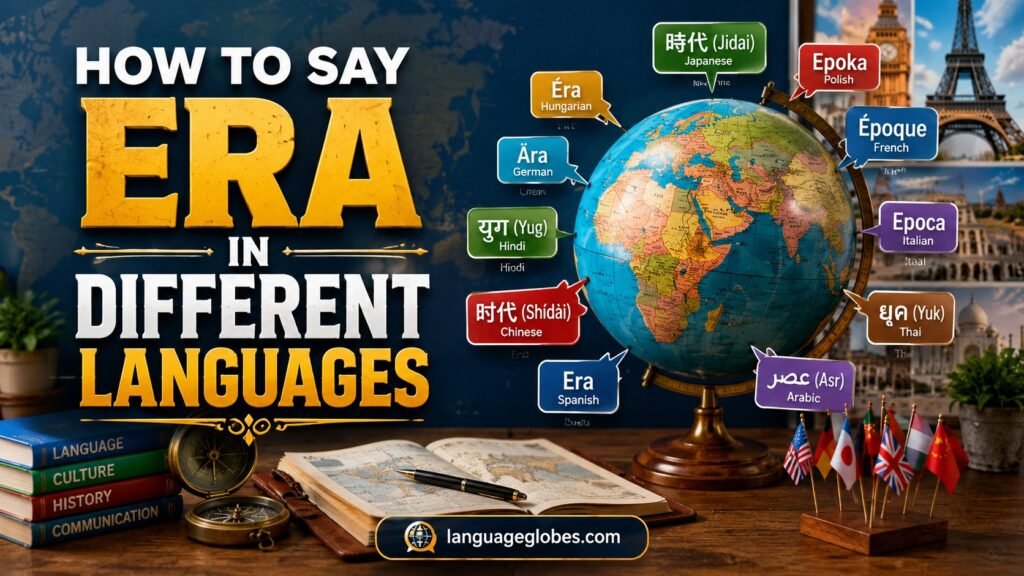
The word era describes a significant period in time with distinct characteristics and meaning. Understanding its historical period, age, and distinct period of time reveals how societies view change. Exploring era across different languages also uncovers fascinating cultural meanings and historical meanings.
These language translations help readers understand how history, culture, and communication connect. From French ère to Spanish era, Spanish época, and German Ära, meanings can vary. Italian era and German Epoche also show how languages express historical time differently.
This guide offers comprehensive translations, useful pronunciation guides, and insights into language and culture. It supports students, travelers, historians, researchers, and language enthusiasts exploring world language vocabulary and global communication.
Also Read This: How to Say Equity in Different Languages
Interesting Facts About Era
- The word era comes from the Latin term aera, meaning a period used for counting years.
- Historians divide human history into different eras to better understand major events and developments.
- Many cultures have their own unique names for historical eras.
- The concept of an era is used in science, geology, literature, sports, politics, and technology.
- Some languages use words that mean “age,” “epoch,” or “period” instead of a direct translation of era.
- Modern expressions such as “digital era” and “information era” are recognized globally.
- Learning historical vocabulary helps improve cross-cultural communication and understanding.
- The idea of an era helps people organize and interpret the past, present, and future.
How to Say Era in Different Languages
European Languages
Europe is home to some of the world’s most widely spoken languages. Many European languages share historical roots from Latin, Greek, and Germanic traditions. As a result, several translations for “era” look similar, although pronunciation and usage vary from country to country. Understanding these differences provides valuable insight into European culture and history.
| Language | Country/Region | Translation | Pronunciation | Example Sentence |
| 🇺🇸 American English | USA | Era | EE-ruh | This is a new era of technology. |
| 🇬🇧 British English | United Kingdom | Era | EE-ruh | The Victorian era shaped Britain. |
| 🇦🇺 Australian English | Australia | Era | EE-ruh | We are entering a different era. |
| 🇫🇷 French | France | Ère | Air | Nous vivons dans une nouvelle ère. |
| 🇪🇸 Spanish | Spain | Era | EH-rah | Estamos en una nueva era. |
| 🇵🇹 Portuguese | Portugal | Era | EH-rah | Esta é uma nova era. |
| 🇮🇹 Italian | Italy | Era | EH-rah | Questa è una nuova era. |
| 🇩🇪 German | Germany | Ära | EH-ra | Das ist eine neue Ära. |
| 🇳🇱 Dutch | Netherlands | Tijdperk | TIDE-perk | Dit is een nieuw tijdperk. |
| 🇸🇪 Swedish | Sweden | Era | EH-ra | Vi lever i en ny era. |
| 🇳🇴 Norwegian | Norway | Epoke | Eh-PO-ke | Dette er en ny epoke. |
| 🇩🇰 Danish | Denmark | Æra | EH-ra | Vi lever i en ny æra. |
| 🇫🇮 Finnish | Finland | Aikakausi | AI-ka-kau-si | Elämme uudessa aikakaudessa. |
| 🇮🇸 Icelandic | Iceland | Tímabil | TEE-ma-bil | Þetta er nýtt tímabil. |
| 🇵🇱 Polish | Poland | Era | EH-ra | To nowa era. |
| 🇨🇿 Czech | Czech Republic | Éra | AY-ra | Toto je nová éra. |
| 🇸🇰 Slovak | Slovakia | Éra | AY-ra | Toto je nová éra. |
| 🇭🇺 Hungarian | Hungary | Korszak | KOR-sak | Ez egy új korszak. |
| 🇷🇴 Romanian | Romania | Eră | EH-rə | Aceasta este o nouă eră. |
| 🇬🇷 Greek | Greece | Εποχή | E-po-HEE | Αυτή είναι μια νέα εποχή. |
| 🇷🇺 Russian | Russia | Эра | EH-ra | Это новая эра. |
| 🇺🇦 Ukrainian | Ukraine | Ера | YE-ra | Це нова ера. |
| 🇧🇬 Bulgarian | Bulgaria | Ера | EH-ra | Това е нова ера. |
| 🇭🇷 Croatian | Croatia | Era | EH-ra | Ovo je nova era. |
| 🇷🇸 Serbian | Serbia | Ера | EH-ra | Ово је нова ера. |
Asian Languages
Asia is the largest continent and contains an incredible diversity of languages, writing systems, and cultures. From East Asia to South Asia and Southeast Asia, the concept of an era is often associated with dynasties, historical periods, and cultural transformations. Many Asian languages have rich historical traditions that make the idea of an era especially significant.
| Language | Country/Region | Translation | Pronunciation | Example Sentence |
| 🇨🇳 Chinese (Simplified) | China | 时代 | SHI-dai | 这是一个新时代。 |
| 🇹🇼 Chinese (Traditional) | Taiwan | 時代 | SHIH-dai | 這是一個新時代。 |
| 🇯🇵 Japanese | Japan | 時代 | JI-dai | これは新しい時代です。 |
| 🇰🇷 Korean | South Korea | 시대 | SHEE-deh | 이것은 새로운 시대입니다. |
| 🇮🇳 Hindi | India | युग | Yug | यह एक नया युग है। |
| 🇵🇰 Urdu | Pakistan | دور | Daur | یہ ایک نیا دور ہے۔ |
| 🇧🇩 Bengali | Bangladesh | যুগ | Jug | এটি একটি নতুন যুগ। |
| 🇵🇰 Punjabi | Punjab | ਯੁੱਗ | Yug | ਇਹ ਇੱਕ ਨਵਾਂ ਯੁੱਗ ਹੈ। |
| 🇮🇳 Gujarati | India | યુગ | Yug | આ એક નવો યુગ છે. |
| 🇮🇳 Marathi | India | युग | Yug | हे एक नवीन युग आहे. |
| 🇮🇳 Tamil | India | யுகம் | Yu-gam | இது ஒரு புதிய யுகம். |
| 🇮🇳 Telugu | India | యుగం | Yu-gam | ఇది కొత్త యుగం. |
| 🇮🇳 Kannada | India | ಯುಗ | Yu-ga | ಇದು ಹೊಸ ಯುಗ. |
| 🇮🇳 Malayalam | India | യുഗം | Yu-gam | ഇത് ഒരു പുതിയ യുഗമാണ്. |
| 🇳🇵 Nepali | Nepal | युग | Yug | यो नयाँ युग हो। |
| 🇱🇰 Sinhala | Sri Lanka | යුගය | Yu-ga-ya | මෙය නව යුගයකි. |
| 🇹🇭 Thai | Thailand | ยุค | Yuk | นี่คือยุคใหม่ |
| 🇻🇳 Vietnamese | Vietnam | Kỷ nguyên | Kee-nguyen | Đây là một kỷ nguyên mới. |
| 🇮🇩 Indonesian | Indonesia | Era | EH-ra | Ini adalah era baru. |
| 🇲🇾 Malay | Malaysia | Era | EH-ra | Ini ialah era baharu. |
| 🇵🇭 Filipino | Philippines | Panahon | Pa-na-hon | Ito ay bagong panahon. |
| 🇰🇭 Khmer | Cambodia | យុគ | Yuk | នេះជាយុគថ្មី។ |
| 🇱🇦 Lao | Laos | ຍຸກ | Yuk | ນີ້ແມ່ນຍຸກໃໝ່. |
| 🇲🇳 Mongolian | Mongolia | Эрин үе | Er-in Ue | Энэ бол шинэ эрин үе. |
| 🇲🇲 Burmese | Myanmar | ခေတ် | Khit | ဒါဟာ ခေတ်သစ်ဖြစ်တယ်။ |
African Languages
Africa is home to thousands of languages representing rich cultural traditions and histories. Many African languages express the concept of an era through words meaning age, period, or historical time. These translations reflect the continent’s linguistic diversity and cultural heritage.
| Language | Country/Region | Translation | Pronunciation | Example Sentence |
| 🇿🇦 Afrikaans | South Africa | Era | EH-ra | Dit is ‘n nuwe era. |
| 🇪🇹 Amharic | Ethiopia | ዘመን | Ze-men | አዲስ ዘመን ነው። |
| 🇰🇪 Swahili | East Africa | Enzi | EN-zee | Hii ni enzi mpya. |
| 🇳🇬 Yoruba | Nigeria | Akoko | Ah-ko-ko | Eyi jẹ akoko tuntun. |
| 🇳🇬 Igbo | Nigeria | Oge | Oh-gay | Nke a bụ oge ọhụrụ. |
| 🇿🇦 Zulu | South Africa | Inkathi | In-ka-ti | Lena inkathi entsha. |
| 🇿🇦 Xhosa | South Africa | Ixesha | I-khe-sha | Eli lixesha elitsha. |
| 🇸🇴 Somali | Somalia | Xilli | Hil-li | Tani waa xilli cusub. |
| 🇷🇼 Kinyarwanda | Rwanda | Igihe | Ee-ghee-he | Iki ni igihe gishya. |
| 🇧🇼 Tswana | Botswana | Motlha | Mo-tlha | Ke motlha o mosha. |
Middle Eastern Languages
The Middle East has played a major role in the development of civilization, trade, science, and literature. Languages from this region often have deep historical roots stretching back thousands of years. The word for era frequently appears in discussions of history, religion, and cultural development.
| Language | Country/Region | Translation | Pronunciation | Example Sentence |
| 🇸🇦 Arabic | Middle East | عصر | Asr | نحن في عصر جديد. |
| 🇮🇷 Persian (Farsi) | Iran | دوران | Do-ran | این یک دوران جدید است. |
| 🇹🇷 Turkish | Türkiye | Çağ | Chah | Bu yeni bir çağdır. |
| 🇮🇱 Hebrew | Israel | עידן | Ee-dan | זהו עידן חדש. |
| 🇰🇼 Kurdish | Kurdistan Region | Serdem | Ser-dem | Ev serdemeke nû ye. |
| 🇦🇲 Armenian | Armenia | Դարաշրջան | Dar-a-shrjan | Սա նոր դարաշրջան է։ |
| 🇬🇪 Georgian | Georgia | ეპოქა | E-po-ka | ეს ახალი ეპოქაა. |
| 🇦🇿 Azerbaijani | Azerbaijan | Dövr | Dovr | Bu yeni dövrdür. |
Additional Languages Around the World
Beyond Europe, Asia, Africa, and the Middle East, many other languages across the Americas and Pacific regions have unique ways of expressing the concept of an era. These languages highlight the global nature of human communication and cultural expression.
| Language | Country/Region | Translation | Pronunciation | Example Sentence |
| 🇧🇷 Brazilian Portuguese | Brazil | Era | EH-ra | Esta é uma nova era. |
| 🇭🇹 Haitian Creole | Haiti | Epòk | Eh-pok | Sa a se yon nouvo epòk. |
| 🇲🇽 Mexican Spanish | Mexico | Era | EH-ra | Esta es una nueva era. |
| 🇺🇸 Hawaiian | Hawaii | Au | Ow | He au hou kēia. |
| 🇳🇿 Maori | New Zealand | Wā | Wah | He wā hou tēnei. |
| 🇼🇸 Samoan | Samoa | Vaitaimi | Vai-tai-mi | O se vaitaimi fou lenei. |
| 🇹🇴 Tongan | Tonga | Kuonga | Ku-on-ga | Ko e kuonga fo’ou eni. |
| 🇫🇯 Fijian | Fiji | Gauna | Gau-na | Oqo e gauna vou. |
| 🇬🇱 Greenlandic | Greenland | Nalaani | Na-la-ni | Nalaani nutaaq unaavoq. |
| 🇨🇦 Inuktitut | Arctic Canada | ᐅᖅᑯᓯᖅ | Uq-qu-siq | ᓄᑖᖅ ᐅᖅᑯᓯᖅ ᐅᕙᓂ. |
FAQs
What does era mean in different languages?
Era generally means a significant period in time, historical period, or age. Its cultural meanings and usage can vary across global languages and cultures.
How is era translated in French and Spanish?
In French, French ère means an era or historical age. Spanish commonly uses Spanish era and Spanish época, depending on the historical context.
What is the German translation of era?
German uses German Ära for an era, while German Epoche often describes a distinct historical period. The best choice depends on context and meaning.
How do Italian speakers say era?
Italian uses Italian era when referring to an era or historical period. Understanding the surrounding language and culture helps select the most natural expression.
Why are language translations of era useful?
Learning language translations of era improves communication, cultural awareness, and understanding of different historical periods. It can also support international conversations.
How does era relate to history and culture?
An era can describe a distinct period of time shaped by important particular events, developments, and characteristics. These periods help explain changes across societies and civilizations.
What is the difference between era, epoch, and historical age?
Era, epoch, and historical age all describe periods of time, but their usage can differ. Epoch often highlights an important turning point or distinctive historical period.
Who can benefit from learning era in multiple languages?
Students, travelers, historians, researchers, writers, and language enthusiasts can benefit from learning this world language vocabulary. It supports cultural exploration and international language learning.
How can pronunciation help when learning era in world languages?
Pronunciation guides make unfamiliar translations easier to understand and use correctly. Comparing pronunciation, language translations, and cultural context improves confident communication.
How does learning era support global communication?
Learning era across multiple languages builds cultural awareness and strengthens global communication. It also provides useful vocabulary for discussing historical development, literature, politics, and culture.
Conclusion
Understanding era in different languages reveals how language and culture shape the meaning of a historical period. Exploring language translations, cultural meanings, and historical meanings makes learning world language vocabulary more useful and engaging. Whether you are a student, traveler, writer, or language enthusiast, this knowledge supports cultural awareness, global communication, and international language learning. Exploring each translation also offers a rewarding way to connect history, culture, and historical development across the world.

Joshua Lewis is a passionate language enthusiast and content creator at LanguageGlobes.com. He specializes in exploring global languages, cultures, and communication trends, helping readers connect with the world through words.