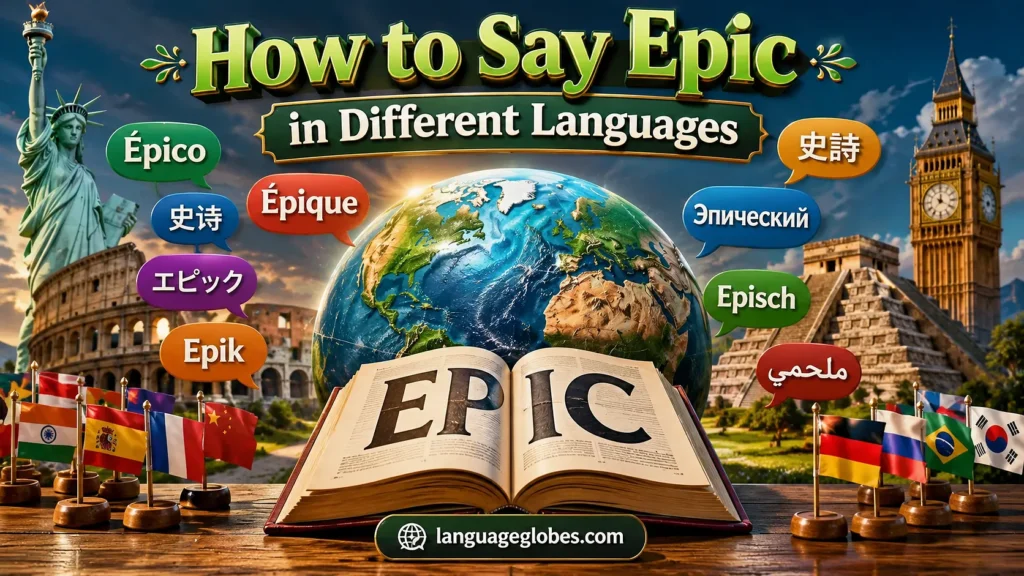
The word epic describes something grand, heroic, impressive, and extraordinary across many languages and cultures. Its powerful and expressive meaning can describe remarkable moments, incredible stories, adventures, or heroes.
Learning this important word in various languages can strengthen communication skills and cultural understanding. It also reveals unique ways that people express greatness, admiration, and heroism.
This comprehensive guide explores epic in different languages, including translations, pronunciations, and example sentences. You will discover how the epic word appears in French, Spanish, Portuguese, German, Chinese, and other world languages.
Whether you are a traveler, student, writer, or language enthusiast, these translations support practical language learning. Understanding these linguistic variations also offers insight into literature, storytelling traditions, and cultural values.
Also Read This: How to Say Earth in Different Languages
Interesting Facts About Epic
- The word “epic” comes from the Ancient Greek word “epos,” meaning story, word, or poem.
- Famous epic works include the Iliad, the Odyssey, and the Epic of Gilgamesh.
- In modern slang, “epic” often means amazing, awesome, or unforgettable.
- Many cultures have their own epic stories featuring heroes, legends, and historical events.
- The concept of epic storytelling exists in nearly every major civilization.
- Epic literature often teaches cultural values, bravery, and wisdom.
- The word is commonly used in gaming, movies, sports, and social media.
- Some languages use the same word for both epic poetry and something extraordinary.
- Epic stories often preserve history and traditions for future generations.
- Learning words like “epic” helps language learners understand cultural expressions and literature.
How to Say Epic in Different Languages
Below are translations of the word “epic” in various languages around the world.
European Languages
Europe is home to hundreds of languages and rich literary traditions. Many European cultures have produced famous epic poems, heroic legends, and historical narratives. The translations below reflect how different European languages express the idea of something grand, heroic, or extraordinary.
| Language | Country/Region | Translation | Pronunciation | Example Sentence |
| 🇺🇸 American English | USA | Epic | EP-ik | That movie was epic. |
| 🇬🇧 British English | UK | Epic | EP-ik | The match was absolutely epic. |
| 🇦🇺 Australian English | Australia | Epic | EP-ik | We had an epic road trip. |
| 🇫🇷 French | France | Épique | ay-PEEK | Cette aventure est épique. |
| 🇪🇸 Spanish | Spain | Épico | EH-pee-ko | Fue un viaje épico. |
| 🇵🇹 Portuguese | Portugal | Épico | EH-pee-koo | Foi uma aventura épica. |
| 🇮🇹 Italian | Italy | Epico | EH-pee-ko | È stata una battaglia epica. |
| 🇩🇪 German | Germany | Episch | AY-pish | Das war ein epischer Sieg. |
| 🇳🇱 Dutch | Netherlands | Episch | AY-pis | Dat was een epische reis. |
| 🇸🇪 Swedish | Sweden | Episk | EH-pisk | Det var en episk berättelse. |
| 🇳🇴 Norwegian | Norway | Episk | EH-pisk | Det var en episk kamp. |
| 🇩🇰 Danish | Denmark | Episk | EH-pisk | Det var en episk oplevelse. |
| 🇫🇮 Finnish | Finland | Eeppinen | EHP-pi-nen | Se oli eeppinen hetki. |
| 🇮🇸 Icelandic | Iceland | Epískur | EH-pis-kur | Þetta var epískur sigur. |
| 🇵🇱 Polish | Poland | Epicki | EH-pit-ski | To była epicka przygoda. |
| 🇨🇿 Czech | Czech Republic | Epický | EH-pit-skee | To byl epický příběh. |
| 🇸🇰 Slovak | Slovakia | Epický | EH-pit-skee | Bol to epický moment. |
| 🇭🇺 Hungarian | Hungary | Epikus | EH-pee-koosh | Ez egy epikus történet. |
| 🇷🇴 Romanian | Romania | Epic | EH-pik | A fost un moment epic. |
| 🇧🇬 Bulgarian | Bulgaria | Епичен | EH-pi-chen | Това беше епичен ден. |
| 🇷🇸 Serbian | Serbia | Епски | EHP-ski | То је била епска битка. |
| 🇭🇷 Croatian | Croatia | Epski | EHP-ski | To je bila epska avantura. |
| 🇸🇮 Slovenian | Slovenia | Epski | EHP-ski | To je epska zgodba. |
| 🇬🇷 Greek | Greece | Επικός | Epi-KOS | Ήταν μια επική εμπειρία. |
| 🇷🇺 Russian | Russia | Эпический | Epi-CHE-skiy | Это был эпический момент. |
| 🇺🇦 Ukrainian | Ukraine | Епічний | EPI-chniy | Це була епічна перемога. |
Asian Languages
Asia is the largest continent and contains thousands of languages and dialects. The region is famous for its rich storytelling traditions, heroic legends, and historical epics. Many Asian languages have unique words that capture the meaning of greatness, magnificence, and legendary achievements.
| Language | Country/Region | Translation | Pronunciation | Example Sentence |
| 🇨🇳 Chinese (Mandarin) | China | 史诗般的 | shir-shrr-ban-duh | 这是一次史诗般的胜利。 |
| 🇯🇵 Japanese | Japan | 壮大な | so-dai-na | それは壮大な冒険でした。 |
| 🇰🇷 Korean | South Korea | 서사적인 | suh-sa-jok-in | 그것은 서사적인 이야기였다. |
| 🇮🇳 Hindi | India | महाकाव्यात्मक | maha-kav-ya-at-mak | यह एक महाकाव्यात्मक जीत थी। |
| 🇵🇰 Urdu | Pakistan | رزمیہ | raz-mi-ya | یہ ایک رزمیہ داستان ہے۔ |
| 🇧🇩 Bengali | Bangladesh | মহাকাব্যিক | mo-ha-ka-byo-ik | এটি একটি মহাকাব্যিক গল্প। |
| 🇮🇳 Punjabi | India/Pakistan | ਮਹਾਕਾਵੀ | maha-ka-vee | ਇਹ ਇੱਕ ਮਹਾਕਾਵੀ ਕਹਾਣੀ ਹੈ। |
| 🇮🇳 Gujarati | India | મહાકાવ્યાત્મક | maha-kav-ya-atmak | આ એક મહાકાવ્યાત્મક જીત હતી. |
| 🇮🇳 Marathi | India | महाकाव्यात्मक | maha-kav-ya-atmak | ही एक महाकाव्यात्मक कथा आहे. |
| 🇳🇵 Nepali | Nepal | महाकाव्यात्मक | maha-kav-ya-atmak | यो महाकाव्यात्मक विजय थियो। |
| 🇱🇰 Sinhala | Sri Lanka | මහා කාව්යමය | maha-kaav-yamaya | එය මහා කාව්යමය සිදුවීමකි. |
| 🇹🇭 Thai | Thailand | ยิ่งใหญ่ | ying-yai | นี่เป็นชัยชนะที่ยิ่งใหญ่ |
| 🇻🇳 Vietnamese | Vietnam | Sử thi | soo-ti | Đó là một chiến thắng sử thi. |
| 🇰🇭 Khmer | Cambodia | វីរភាព | vee-ra-peap | នេះជារឿងវីរភាព។ |
| 🇱🇦 Lao | Laos | ມະຫາກາບ | ma-ha-kaap | ມັນເປັນເລື່ອງມະຫາກາບ. |
| 🇲🇲 Burmese | Myanmar | သူရဲကောင်းဆန်သော | thu-ye-kaung | ဒါဟာသူရဲကောင်းဆန်သောဇာတ်လမ်းပါ။ |
| 🇮🇩 Indonesian | Indonesia | Epik | EH-pik | Itu adalah kemenangan epik. |
| 🇲🇾 Malay | Malaysia | Epik | EH-pik | Itu satu pengembaraan epik. |
| 🇵🇭 Filipino | Philippines | Epiko | EH-pi-ko | Isang epikong tagumpay iyon. |
| 🇲🇳 Mongolian | Mongolia | Туульсын | too-ul-sin | Энэ бол туульсын түүх юм. |
African Languages
Africa is one of the most linguistically diverse continents in the world. It is home to thousands of languages and rich oral storytelling traditions. Epic tales, heroic narratives, and legendary histories have been passed down through generations, making the concept of “epic” deeply meaningful across many African cultures.
| Language | Country/Region | Translation | Pronunciation | Example Sentence |
| 🇿🇦 Afrikaans | South Africa | Epies | EH-pees | Dit was ‘n epiese oorwinning. |
| 🇰🇪 Swahili | East Africa | Kishujaa | kee-shoo-jaa | Hiyo ilikuwa hadithi ya kishujaa. |
| 🇪🇹 Amharic | Ethiopia | ታላቅ | ta-lak | ይህ ታላቅ ታሪክ ነው። |
| 🇳🇬 Yoruba | Nigeria | Akikanju | a-ki-kan-ju | Eyi jẹ itan akikanju. |
| 🇳🇬 Igbo | Nigeria | Dike | dee-keh | Nke a bụ akụkọ dike. |
| 🇳🇬 Hausa | Nigeria | Jarumta | ja-room-ta | Wannan labari ne na jarumta. |
| 🇿🇦 Zulu | South Africa | Okumangalisayo | o-ku-man-ga-li-sa-yo | Lokhu kuwukunqoba okumangalisayo. |
| 🇿🇦 Xhosa | South Africa | Omangalisayo | o-man-ga-li-sa-yo | Eli libali elimangalisayo. |
| 🇰🇪 Somali | Somalia | Halyeey | hal-yay | Tani waa sheeko halyeey ah. |
| 🇲🇬 Malagasy | Madagascar | Mahafinaritra | ma-ha-fi-na-ri-tra | Tantara mahafinaritra izany. |
Middle Eastern Languages
The Middle East has a long history of epic poetry, legendary heroes, and influential literature. Many languages in this region have words associated with grandeur, heroism, and historical significance. These expressions often appear in classical poetry and modern storytelling alike.
| Language | Country/Region | Translation | Pronunciation | Example Sentence |
| 🇸🇦 Arabic | Middle East | ملحمي | mal-ha-mi | كانت معركة ملحمية. |
| 🇮🇷 Persian (Farsi) | Iran | حماسی | ha-ma-si | این یک داستان حماسی است. |
| 🇹🇷 Turkish | Turkey | Destansı | des-tan-suh | Bu destansı bir zaferdi. |
| 🇮🇱 Hebrew | Israel | אפי | eh-fee | זה היה ניצחון אפי. |
| 🇰🇼 Kurdish | Kurdistan Region | Destanî | des-ta-ni | Ev serkeftinek destanî bû. |
| 🇴🇲 Omani Arabic | Oman | ملحمي | mal-ha-mi | هذا انتصار ملحمي. |
| 🇶🇦 Qatari Arabic | Qatar | ملحمي | mal-ha-mi | كانت رحلة ملحمية. |
| 🇦🇪 Emirati Arabic | UAE | ملحمي | mal-ha-mi | كان يوماً ملحمياً. |
Additional Languages Around the World
Languages from other regions of the world offer fascinating perspectives on expressing greatness and extraordinary achievements. These translations further demonstrate how the concept of “epic” exists across diverse cultures and communities.
| Language | Country/Region | Translation | Pronunciation | Example Sentence |
| 🇧🇷 Brazilian Portuguese | Brazil | Épico | EH-pee-ko | Foi uma aventura épica. |
| 🇲🇽 Mexican Spanish | Mexico | Épico | EH-pee-ko | Fue una victoria épica. |
| 🇨🇦 French Canadian | Canada | Épique | ay-PEEK | C’était une aventure épique. |
| 🇭🇹 Haitian Creole | Haiti | Epik | EH-pik | Sa te yon istwa epik. |
| 🇼🇸 Samoan | Samoa | Maoae | mao-ah-eh | O se tala maoae lea. |
| 🇳🇿 Maori | New Zealand | Whakamīharo | fa-ka-mee-ha-ro | He kōrero whakamīharo tēnei. |
| 🇫🇯 Fijian | Fiji | Levu | leh-vu | Oqo e dua na italanoa levu. |
| 🇵🇬 Tok Pisin | Papua New Guinea | Bikpela | bik-pe-la | Em wanpela bikpela stori. |
| 🇬🇪 Georgian | Georgia | ეპიკური | e-pi-ku-ri | ეს ეპიკური გამარჯვება იყო. |
| 🇦🇲 Armenian | Armenia | Էպիկական | eh-pi-ka-kan | Սա էպիկական պատմություն է։ |
| 🇦🇱 Albanian | Albania | Epik | EH-pik | Ishte një fitore epike. |
| 🇱🇻 Latvian | Latvia | Episks | EH-pisks | Tā bija episka cīņa. |
| 🇱🇹 Lithuanian | Lithuania | Epinis | EH-pi-nis | Tai buvo epinė istorija. |
| 🇪🇪 Estonian | Estonia | Eepiline | EE-pi-li-ne | See oli eepiline hetk. |
| 🇲🇹 Maltese | Malta | Epiku | EH-pi-ku | Kien mument epiku. |
| 🇱🇺 Luxembourgish | Luxembourg | Epesch | EH-pesh | Dat war eng epesch Rees. |
| 🇧🇾 Belarusian | Belarus | Эпічны | eh-pich-ny | Гэта была эпічная перамога. |
| 🇲🇰 Macedonian | North Macedonia | Епски | EHP-ski | Тоа беше епска победа. |
| 🇧🇦 Bosnian | Bosnia and Herzegovina | Epski | EHP-ski | To je bila epska avantura. |
| 🇮🇪 Irish | Ireland | Eipiciúil | ep-i-kyool | Bhí sé eipiciúil. |
FAQs
How do you say epic in different languages?
The word epic has unique ways of expression across languages and cultures. Common epic translations include French épique, Spanish épico, Portuguese épico, German episch, and Chinese 史诗.
What does epic mean in different languages?
Epic can describe something grand, heroic, impressive, or extraordinary. Its epic meaning may also connect with greatness, heroism, and remarkable moments.
How do you pronounce epic in different languages?
The pronunciation of epic changes according to each regional language and its sound system. A pronunciation guide with example sentences can help language learners practice naturally.
What is the epic translation in French and Spanish?
In French, epic is épique, while Spanish uses épico. These translations commonly describe heroic stories, remarkable events, and legendary subjects.
How is epic used in literature and storytelling traditions?
In literature, epic often describes narrative poetry, heroic adventures, and stories involving major events. These storytelling traditions can reflect cultural values and historical significance.
Why learn how to say epic in various languages?
Learning important words such as epic can improve language skills, cultural awareness, and multilingual communication. It also helps travelers and learners understand cultural expression more clearly.
Is epic a descriptive adjective or a noun?
Epic is commonly used as a descriptive adjective for something powerful, magnificent, or heroic. It can also function as a noun when referring to an epic narrative poem or literary work.
How can I learn epic word translations effectively?
Use a reliable translation guide that includes pronunciations, example usage, and regional differences. Comparing world languages can make language learning more practical and memorable.
What are common epic expressions around the world?
Different world cultures use expressive language to describe greatness and admiration, heroic achievements, and unforgettable experiences. Their wording often reflects local cultural traditions and storytelling styles.
Where can I find epic translations with pronunciation and examples?
A detailed global language guide can provide language pronunciation, example sentences, regional language information, and useful epic word translations. Such resources are especially helpful for language enthusiasts and students.
Conclusion
Learning epic in different languages offers a simple way to explore cultural expression, language diversity, and greatness across world cultures. Understanding epic translations, epic pronunciation, and example usage can improve language skills while making multilingual learning more engaging. Whether you are a traveler, student, writer, or language enthusiast, these unique ways to express heroism, admiration, and remarkable stories can deepen cultural understanding. Use this global language guide to practice epic word translations and communicate with greater confidence.

James Anderson is a passionate language enthusiast and content creator at LanguageGlobes. With a keen interest in global cultures and communication, he shares insightful and engaging content to help readers explore and master new languages.