Learning how to say eat in different languages makes everyday communication more useful and enjoyable. The word eat is a fundamental verb found in daily conversations, common vocabulary, and simple action words.
This guide shares clear translations, helpful pronunciation, and example sentences for language learners exploring new words. Understanding eat in different languages also reveals how food, meals, family, and local traditions connect with world cultures.
Whether you are traveling abroad, ordering food, or building language skills, these multilingual translations offer practical language learning support. Exploring linguistic diversity can also deepen cultural understanding while making vocabulary practice more interesting.
Also Read This: How to Say Euro in Different Languages
Interesting Facts About Eat
- “Eat” is one of the most commonly used verbs in every language.
- Many cultures have special words and expressions related to eating together.
- The act of sharing food is considered a symbol of friendship in many countries.
- Some languages use different forms of the word “eat” depending on politeness levels.
- Food-related vocabulary is often among the first lessons taught to language learners.
- The English word “eat” comes from the Old English word “etan.”
- Many languages have unique expressions that literally translate to “eat” but have different cultural meanings.
- Learning food-related verbs can significantly improve travel communication.
- The concept of eating is universal, making it one of the easiest words to compare across languages.
- Understanding food vocabulary helps people connect with local cultures while traveling.
How to Say Eat in Different Languages
Below are translations of the word “eat” in many languages around the world, along with pronunciation guides and example sentences.
European Languages
Europe is home to hundreds of languages from several major language families, including Romance, Germanic, Slavic, Celtic, and Baltic languages. Food plays a central role in European cultures, and knowing how to say “eat” can help travelers communicate more effectively. These languages are spoken across many countries and have influenced global communication for centuries.
| Language | Country/Region | Translation | Pronunciation | Example Sentence |
| 🇺🇸 American English | USA | Eat | Eet | Let’s eat dinner together. |
| 🇬🇧 British English | United Kingdom | Eat | Eet | We eat lunch at noon. |
| 🇦🇺 Australian English | Australia | Eat | Eet | Let’s eat after work. |
| 🇪🇸 Spanish | Spain | Comer | Koh-mehr | Vamos a comer ahora. |
| 🇫🇷 French | France | Manger | Mon-zhay | Nous allons manger. |
| 🇩🇪 German | Germany | Essen | Ess-en | Wir wollen essen. |
| 🇮🇹 Italian | Italy | Mangiare | Man-jah-reh | Andiamo a mangiare. |
| 🇵🇹 Portuguese | Portugal | Comer | Koh-mehr | Vamos comer agora. |
| 🇳🇱 Dutch | Netherlands | Eten | Ay-ten | Wij gaan eten. |
| 🇷🇺 Russian | Russia | Есть | Yest | Давайте есть. |
| 🇵🇱 Polish | Poland | Jeść | Yeshch | Chcę jeść teraz. |
| 🇨🇿 Czech | Czech Republic | Jíst | Yeest | Chci jíst. |
| 🇸🇰 Slovak | Slovakia | Jesť | Yest | Ideme jesť. |
| 🇭🇺 Hungarian | Hungary | Enni | En-nee | Szeretek enni. |
| 🇷🇴 Romanian | Romania | A mânca | Ah mun-kah | Vreau să mănânc. |
| 🇸🇪 Swedish | Sweden | Äta | Eh-ta | Vi ska äta. |
| 🇳🇴 Norwegian | Norway | Spise | Spee-seh | Vi skal spise. |
| 🇩🇰 Danish | Denmark | Spise | Spee-seh | Lad os spise. |
| 🇫🇮 Finnish | Finland | Syödä | Syur-da | Mennään syömään. |
| 🇬🇷 Greek | Greece | Τρώω | Tro-o | Πάμε να φάμε. |
Asian Languages
Asia is the largest continent and contains incredible linguistic diversity. From East Asia and South Asia to Southeast Asia and Central Asia, food traditions are deeply connected to culture and identity. Learning how to say “eat” in Asian languages can help travelers navigate local restaurants, markets, and social gatherings more comfortably.
| Language | Country/Region | Translation | Pronunciation | Example Sentence |
| 🇨🇳 Chinese (Mandarin) | China | 吃 | Chrr | 我想吃饭。 |
| 🇯🇵 Japanese | Japan | 食べる | Tah-beh-roo | 一緒に食べましょう。 |
| 🇰🇷 Korean | South Korea | 먹다 | Mok-da | 같이 먹어요. |
| 🇮🇳 Hindi | India | खाना | Kha-na | चलो खाना खाते हैं। |
| 🇵🇰 Urdu | Pakistan | کھانا | Kha-na | آؤ کھانا کھائیں۔ |
| 🇧🇩 Bengali | Bangladesh | খাওয়া | Kha-wa | আমি খেতে চাই। |
| 🇵🇰 Punjabi | Punjab | ਖਾਣਾ | Kha-na | ਆਓ ਖਾਣਾ ਖਾਈਏ। |
| 🇮🇳 Gujarati | India | ખાવું | Kha-voo | ચાલો ખાવા જઈએ. |
| 🇮🇳 Marathi | India | खाणे | Kha-neh | चला जेवूया. |
| 🇮🇳 Tamil | India | சாப்பிடு | Saa-pi-du | நாம் சாப்பிடலாம். |
| 🇮🇳 Telugu | India | తిను | Thi-nu | మనం తిందాం. |
| 🇮🇳 Kannada | India | ತಿನ್ನು | Thin-noo | ಬನ್ನಿ ತಿನ್ನೋಣ. |
| 🇮🇳 Malayalam | India | കഴിക്കുക | Ka-zi-ku-ka | നമുക്ക് കഴിക്കാം. |
| 🇹🇭 Thai | Thailand | กิน | Gin | ไปกินข้าวกัน. |
| 🇻🇳 Vietnamese | Vietnam | Ăn | Un | Chúng ta ăn nhé. |
| 🇮🇩 Indonesian | Indonesia | Makan | Ma-kan | Mari makan. |
| 🇲🇾 Malay | Malaysia | Makan | Ma-kan | Jom makan. |
| 🇵🇭 Filipino | Philippines | Kumain | Ku-ma-in | Tara kumain tayo. |
| 🇲🇳 Mongolian | Mongolia | Идэх | Id-ehkh | Хоол идье. |
| 🇳🇵 Nepali | Nepal | खानु | Kha-nu | खाना खाऔं। |
African Languages
Africa is home to more than 2,000 languages, making it one of the most linguistically diverse continents in the world. Food traditions vary greatly across regions, from North African cuisine to the rich culinary cultures of Sub-Saharan Africa. Learning local food-related words is a great way to connect with communities and show cultural respect.
| Language | Country/Region | Translation | Pronunciation | Example Sentence |
| 🇰🇪 Swahili | East Africa | Kula | Koo-lah | Twende kula. |
| 🇿🇦 Zulu | South Africa | Dla | Dlah | Masidle manje. |
| 🇿🇦 Xhosa | South Africa | Tya | Tya | Masitye ngoku. |
| 🇳🇬 Yoruba | Nigeria | Jeun | Jay-oon | Jẹ ká jẹun. |
| 🇳🇬 Igbo | Nigeria | Rie | Ree-eh | Ka anyị rie nri. |
| 🇳🇬 Hausa | Nigeria | Ci | Chee | Mu ci abinci. |
| 🇪🇹 Amharic | Ethiopia | መብላት | Mehb-lat | እንብላ. |
| 🇸🇴 Somali | Somalia | Cun | Choon | Aynu cunno. |
| 🇲🇬 Malagasy | Madagascar | Mihinana | Mee-hee-na-na | Andao hihinana. |
| 🇸🇩 Sudanese Arabic | Sudan | يأكل | Ya-kul | هيا نأكل. |
Middle Eastern Languages
The Middle East has a rich history of hospitality and food culture. Meals often bring families and communities together. Languages spoken in this region belong to several language families, including Semitic, Turkic, and Indo-Iranian groups. Learning how to say “eat” in these languages can be especially useful when exploring the region’s famous cuisines.
| Language | Country/Region | Translation | Pronunciation | Example Sentence |
| 🇸🇦 Arabic | Middle East | يأكل | Ya-kul | هيا نأكل. |
| 🇮🇷 Persian (Farsi) | Iran | خوردن | Khoor-dan | بیا غذا بخوریم. |
| 🇹🇷 Turkish | Türkiye | Yemek | Yeh-mek | Hadi yemek yiyelim. |
| 🇮🇱 Hebrew | Israel | לאכול | Leh-eh-khol | בוא נאכל. |
| 🇰🇼 Kurdish | Kurdistan Region | Xwarin | Khwa-rin | Em bixwin. |
| 🇦🇲 Armenian | Armenia | Ուտել | Oo-tel | Եկեք ուտենք։ |
| 🇦🇿 Azerbaijani | Azerbaijan | Yemək | Yeh-mek | Gəlin yemək yeyək. |
| 🇬🇪 Georgian | Georgia | ჭამა | Cha-ma | მოდი ვჭამოთ. |
Additional Languages Around the World
Languages from Oceania, indigenous communities, and smaller language groups contribute significantly to the world’s cultural richness. Although some of these languages may have fewer speakers than global languages, they remain important parts of cultural identity and heritage.
| Language | Country/Region | Translation | Pronunciation | Example Sentence |
| 🇮🇸 Icelandic | Iceland | Borða | Bor-tha | Við skulum borða. |
| 🇮🇪 Irish | Ireland | Ith | Ih | Déanaimis ithe. |
| 🏴 Welsh | Wales | Bwyta | Boo-ee-ta | Gadewch i ni fwyta. |
| 🇪🇪 Estonian | Estonia | Sööma | Sur-ma | Lähme sööma. |
| 🇱🇻 Latvian | Latvia | Ēst | Est | Iesim ēst. |
| 🇱🇹 Lithuanian | Lithuania | Valgyti | Val-gee-tee | Eime valgyti. |
| 🇸🇮 Slovenian | Slovenia | Jesti | Yes-tee | Gremo jesti. |
| 🇭🇷 Croatian | Croatia | Jesti | Yes-tee | Idemo jesti. |
| 🇷🇸 Serbian | Serbia | Јести | Yes-tee | Хајде да једемо. |
| 🇧🇬 Bulgarian | Bulgaria | Ям | Yam | Да ядем. |
| 🇺🇦 Ukrainian | Ukraine | Їсти | Yee-stee | Давай їсти. |
| 🇦🇱 Albanian | Albania | Hani | Ha-nee | Le të hamë. |
| 🇲🇹 Maltese | Malta | Kul | Kool | Ejja nieklu. |
| 🇱🇺 Luxembourgish | Luxembourg | Iessen | Ee-essen | Loosst eis iessen. |
| 🇳🇿 Māori | New Zealand | Kai | Kai | Haere mai ki te kai. |
| 🇼🇸 Samoan | Samoa | Ai | Ah-ee | Tatou ai. |
| 🇹🇴 Tongan | Tonga | Kai | Kai | Tau kai. |
| 🇭🇹 Haitian Creole | Haiti | Manje | Man-jay | Ann manje. |
| 🇬🇱 Greenlandic | Greenland | Nerivoq | Ne-ri-vok | Nerivugut. |
| 🇧🇾 Belarusian | Belarus | Есці | Yes-tsee | Давай есці. |
FAQs
How do you say eat in different languages?
The word eat has unique translations across different languages, making it useful for language learners. Learning how to say eat helps with daily conversations and common vocabulary.
What is the translation of eat in different languages?
The translation of eat changes across world languages and reflects distinct linguistic roots. Exploring eat in different languages makes language learning more practical and enjoyable.
Why is the word eat important for language learners?
Eat is a fundamental verb used in daily use, daily conversations, and everyday communication. It is an essential part of common vocabulary and basic language skills.
How do you pronounce eat in different languages?
Learning pronunciation alongside translations and pronunciations helps learners understand each word naturally. Pronunciation practice and phonetic sounds can make speaking easier.
How do you say eat in French, Spanish, and German?
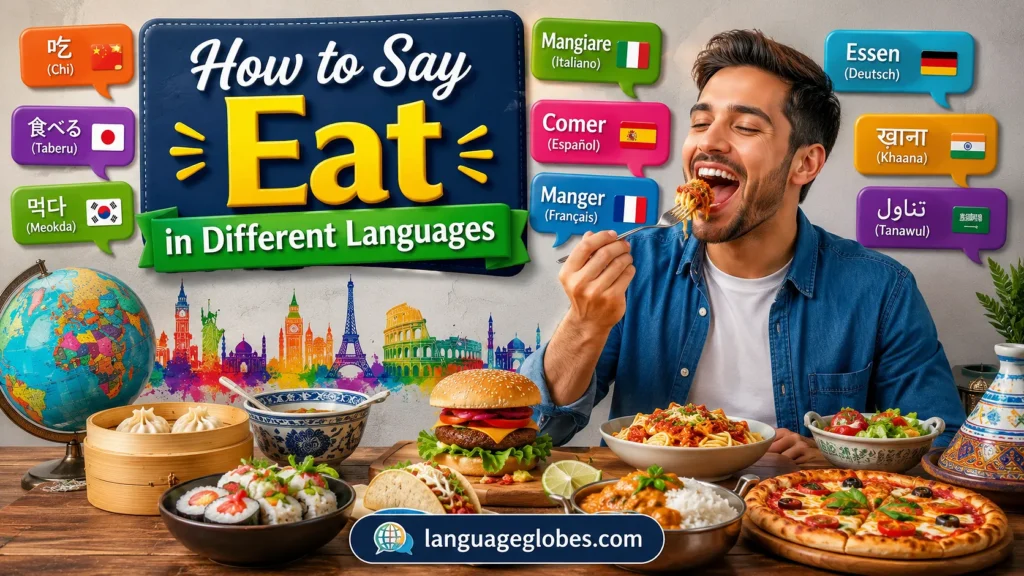
In French, eat is manger, while Spanish uses comer and German uses essen. These examples show how global languages express the same action words differently.
How do you say eat in Mandarin Chinese?
In Mandarin Chinese, the word for eat is 吃, pronounced chī. Learning this common word can support language exploration and everyday communication.
How can learning eat in different languages improve vocabulary?
Studying eat in different languages supports vocabulary building and helps learners improve vocabulary naturally. It also creates a strong language foundation through useful everyday words.
How can these translations help while traveling abroad?
Knowing eat in another language can help with travel, ordering food, and restaurant conversations. These simple terms can improve communication skills when traveling abroad.
What can learning the word eat teach about culture?
The connection between food, meals, family, and local traditions can reveal aspects of world cultures. Learning these words can strengthen cultural understanding and appreciation.
Are translations of eat useful for learning a new language?
Yes, multilingual translations, example sentences, and language practice make learning practical and memorable. Studying common words can also support stronger language skills over time.
Conclusion
Learning eat in different languages is a simple way to build common vocabulary and strengthen language skills. These useful translations support daily conversations, language learning, and better communication while exploring world cultures. Whether you are traveling abroad or practicing a new language, knowing how to say eat makes everyday interactions easier. Exploring each translation also encourages cultural understanding and enjoyable vocabulary building.

James Anderson is a passionate language enthusiast and content creator at LanguageGlobes. With a keen interest in global cultures and communication, he shares insightful and engaging content to help readers explore and master new languages.