
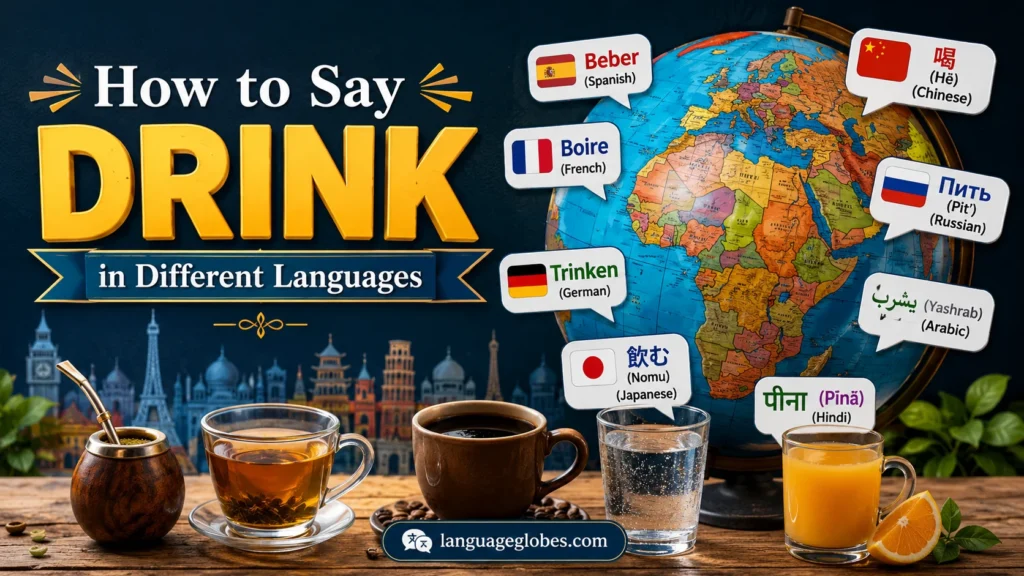
Understanding how to say drink in different languages improves communication during international travel and everyday interactions. This language guide explains drink translation, drink meaning, and drink pronunciation across many world languages.
Whether you are a student, teacher, traveler, or language enthusiast, learning this essential vocabulary strengthens practical language skills. It also supports global communication, helping you connect with people from different backgrounds confidently.
From ordering water, juice, tea, coffee, and other beverages in restaurants or cafés, accurate translation matters. This translation guide includes useful translation examples, a clear pronunciation guide, and helpful word translation references.
Exploring foreign languages through common words builds deeper cultural understanding of customs, traditions, and hospitality culture. It also encourages meaningful cultural exchange while supporting language learning and effective conversation worldwide.
Also Read This: How to Say Dream in Different Languages
Interesting Facts About Drink
- The word “drink” can function as both a noun and a verb in English.
- Every culture has traditional beverages that are closely tied to its history and identity.
- Tea is one of the most consumed drinks in the world.
- Water is the most essential drink for human survival.
- Many languages have separate words for “drink” as a noun and “to drink” as a verb.
- Learning beverage-related vocabulary is often one of the first steps in language learning.
- Hospitality traditions in many countries include offering guests a drink.
- Some languages use the same word for beverage and refreshment.
- The pronunciation of the word “drink” varies greatly across language families.
- Understanding common words like “drink” can make international travel much easier.
How to Say Drink in Different Languages
European Languages
Europe is home to many of the world’s most widely spoken languages. From the Romance languages of Southern Europe to the Germanic and Slavic languages found across the continent, each language reflects a rich cultural heritage. Learning how to say “drink” in European languages can be especially useful for travelers exploring famous cities, restaurants, and cultural destinations.
| Language | Country/Region | Translation | Pronunciation | Example Sentence |
| 🇺🇸 American English | USA | Drink | Drink | I would like a drink. |
| 🇬🇧 British English | United Kingdom | Drink | Drink | May I have a drink? |
| 🇦🇺 Australian English | Australia | Drink | Drink | Let’s grab a drink. |
| 🇫🇷 French | France | Boisson | Bwah-son | Je veux une boisson. |
| 🇪🇸 Spanish | Spain | Bebida | Beh-bee-da | Quiero una bebida. |
| 🇵🇹 Portuguese | Portugal | Bebida | Beh-bee-da | Quero uma bebida. |
| 🇮🇹 Italian | Italy | Bevanda | Beh-van-da | Voglio una bevanda. |
| 🇩🇪 German | Germany | Getränk | Geh-trenk | Ich möchte ein Getränk. |
| 🇳🇱 Dutch | Netherlands | Drank | Drank | Ik wil een drank. |
| 🇸🇪 Swedish | Sweden | Dryck | Drik | Jag vill ha en dryck. |
| 🇳🇴 Norwegian | Norway | Drikke | Drik-keh | Jeg vil ha en drikke. |
| 🇩🇰 Danish | Denmark | Drik | Drik | Jeg vil have en drik. |
| 🇫🇮 Finnish | Finland | Juoma | Yoo-o-ma | Haluan juoman. |
| 🇮🇸 Icelandic | Iceland | Drykkur | Drik-kur | Ég vil fá drykk. |
| 🇵🇱 Polish | Poland | Napój | Na-pooy | Chcę napój. |
| 🇨🇿 Czech | Czech Republic | Nápoj | Naa-poy | Chci nápoj. |
| 🇸🇰 Slovak | Slovakia | Nápoj | Naa-poy | Chcem nápoj. |
| 🇭🇺 Hungarian | Hungary | Ital | Ee-tal | Kérek egy italt. |
| 🇷🇴 Romanian | Romania | Băutură | Buh-oo-tu-ra | Vreau o băutură. |
| 🇬🇷 Greek | Greece | Ποτό | Po-to | Θέλω ένα ποτό. |
| 🇷🇺 Russian | Russia | Напиток | Na-pee-tok | Я хочу напиток. |
Asian Languages
Asia is the largest and most populous continent, home to thousands of languages and cultures. Many Asian societies have rich traditions centered around tea, coffee, herbal drinks, and other beverages. Learning how to say “drink” in Asian languages can help you communicate across diverse regions stretching from East Asia to South Asia and Southeast Asia.
| Language | Country/Region | Translation | Pronunciation | Example Sentence |
| 🇨🇳 Chinese (Mandarin) | China | 饮料 | Yin-lyao | 我想要一杯饮料。 |
| 🇯🇵 Japanese | Japan | 飲み物 | No-mi-mo-no | 飲み物が欲しいです。 |
| 🇰🇷 Korean | South Korea | 음료 | Eum-ryo | 음료를 주세요. |
| 🇮🇳 Hindi | India | पेय | Pey | मुझे एक पेय चाहिए। |
| 🇧🇩 Bengali | Bangladesh | পানীয় | Pa-ni-yo | আমি একটি পানীয় চাই। |
| 🇵🇰 Urdu | Pakistan | مشروب | Mash-roob | مجھے ایک مشروب چاہیے۔ |
| 🇵🇰 Punjabi | Pakistan/India | مشروب | Mash-roob | مینوں اک مشروب چاہیدا اے۔ |
| 🇮🇳 Gujarati | India | પીણું | Pee-nu | મને પીણું જોઈએ. |
| 🇮🇳 Marathi | India | पेय | Pey | मला पेय हवे आहे. |
| 🇮🇳 Tamil | India | பானம் | Paa-nam | எனக்கு ஒரு பானம் வேண்டும். |
| 🇮🇳 Telugu | India | పానీయం | Paa-nee-yam | నాకు పానీయం కావాలి. |
| 🇮🇳 Kannada | India | ಪಾನೀಯ | Paa-ni-ya | ನನಗೆ ಪಾನೀಯ ಬೇಕು. |
| 🇮🇳 Malayalam | India | പാനീയം | Paa-nee-yam | എനിക്ക് പാനീയം വേണം. |
| 🇹🇭 Thai | Thailand | เครื่องดื่ม | Krueang-deum | ฉันต้องการเครื่องดื่ม |
| 🇻🇳 Vietnamese | Vietnam | Đồ uống | Doh oo-ong | Tôi muốn đồ uống. |
| 🇮🇩 Indonesian | Indonesia | Minuman | Mee-noo-man | Saya ingin minuman. |
| 🇲🇾 Malay | Malaysia | Minuman | Mee-noo-man | Saya mahu minuman. |
| 🇵🇭 Filipino | Philippines | Inumin | Ee-noo-min | Gusto ko ng inumin. |
| 🇱🇰 Sinhala | Sri Lanka | පානය | Paa-na-ya | මට පානයක් ඕනෑ. |
| 🇳🇵 Nepali | Nepal | पेय | Pey | मलाई पेय चाहिन्छ। |
African Languages
Africa is one of the most linguistically diverse continents in the world, with thousands of languages spoken across its regions. Traditional beverages play important roles in social gatherings, ceremonies, and daily life. Learning these translations helps create a deeper appreciation of Africa’s cultural diversity.
| Language | Country/Region | Translation | Pronunciation | Example Sentence |
| 🇿🇦 Zulu | South Africa | Isiphuzo | Ee-see-phoo-zo | Ngifuna isiphuzo. |
| 🇿🇦 Xhosa | South Africa | Isiselo | Ee-see-se-lo | Ndifuna isiselo. |
| 🇰🇪 Swahili | East Africa | Kinywaji | Keen-ywa-jee | Ninataka kinywaji. |
| 🇪🇹 Amharic | Ethiopia | መጠጥ | Meh-tet | መጠጥ እፈልጋለሁ |
| 🇳🇬 Yoruba | Nigeria | Ohun mimu | O-hun mee-moo | Mo fẹ ohun mimu. |
| 🇳🇬 Igbo | Nigeria | Ihe ọṅụṅụ | Ee-heh o-noo-noo | Achọrọ m ihe ọṅụṅụ. |
| 🇳🇬 Hausa | Nigeria | Abin sha | A-bin sha | Ina son abin sha. |
| 🇷🇼 Kinyarwanda | Rwanda | Ikinyobwa | Ee-keen-yob-wa | Ndashaka ikinyobwa. |
| 🇸🇴 Somali | Somalia | Cabitaan | Ca-bee-taan | Waxaan rabaa cabitaan. |
| 🇲🇬 Malagasy | Madagascar | Zava-pisotro | Za-va-pee-soo-troo | Mila zava-pisotro aho. |
Middle Eastern Languages
The Middle East is known for its deep-rooted traditions of hospitality, where offering guests tea, coffee, or other beverages is an important cultural practice. The region’s languages have influenced global culture, trade, literature, and cuisine for centuries.
| Language | Country/Region | Translation | Pronunciation | Example Sentence |
| 🇸🇦 Arabic | Middle East | مشروب | Mash-roob | أريد مشروبًا. |
| 🇮🇷 Persian (Farsi) | Iran | نوشیدنی | Noo-shee-da-nee | یک نوشیدنی میخواهم. |
| 🇹🇷 Turkish | Turkey | İçecek | Ee-che-jek | Bir içecek istiyorum. |
| 🇮🇱 Hebrew | Israel | משקה | Mash-keh | אני רוצה משקה. |
| 🇰🇼 Kurdish | Kurdistan Region | Vexwarin | Vekh-wa-rin | Ez vexwarinek dixwazim. |
| 🇴🇲 Omani Arabic | Oman | مشروب | Mash-roob | أريد مشروباً. |
| 🇶🇦 Qatari Arabic | Qatar | مشروب | Mash-roob | أريد مشروباً. |
| 🇦🇪 Emirati Arabic | UAE | مشروب | Mash-roob | أريد مشروباً. |
| 🇸🇾 Syriac | Syria | ܡܫܬܝܐ | Mesh-ti-ya | ܒܥܐ ܐܢܐ ܡܫܬܝܐ |
| 🇦🇲 Armenian | Armenia | Խմիչք | Khmee-chk | Ես խմիչք եմ ուզում։ |
Additional Languages Around the World
Languages from Oceania, the Americas, and other regions further demonstrate the incredible diversity of human communication. Exploring these translations broadens cultural understanding and helps language learners connect with people across the globe.
| Language | Country/Region | Translation | Pronunciation | Example Sentence |
| 🇳🇿 Maori | New Zealand | Inu | Ee-noo | Kei te hiahia ahau ki te inu. |
| 🇼🇸 Samoan | Samoa | Meainu | Meh-ah-ee-noo | Ou te manao i se meainu. |
| 🇹🇴 Tongan | Tonga | Inu | Ee-noo | Oku ou fie inu. |
| 🇫🇯 Fijian | Fiji | Wainimate | Wai-ni-ma-te | Au via gunu wainimate. |
| 🇭🇹 Haitian Creole | Haiti | Bwason | Bwa-son | Mwen vle yon bwason. |
| 🇬🇱 Greenlandic | Greenland | Imigassaq | Ee-mee-ga-sak | Imigassaq piumavara. |
| 🇨🇦 Inuktitut | Canada | ᐃᒥᖅ | Ee-miq | ᐃᒥᖅ ᐱᔪᒪᔭᕋ |
| 🇺🇸 Hawaiian | Hawaii | Inu | Ee-noo | Makemake au i ka inu. |
| 🇵🇾 Guarani | Paraguay | Y’uha | Yoo-ha | Aipota y’uha. |
| 🇲🇽 Nahuatl | Mexico | Atlacualoni | At-la-kwa-lo-ni | Nicnequi atlacualoni. |
| 🇧🇷 Tupi | Brazil | E’u | Eh-oo | Asepotar e’u. |
| 🇵🇪 Quechua | Peru | Ukyana | Oo-kya-na | Ukyanata munani. |
| 🇨🇱 Mapudungun | Chile | Mewün | Meh-woon | Inche mewün ayün. |
| 🇱🇻 Latvian | Latvia | Dzēriens | Dzeh-ri-ens | Es gribu dzērienu. |
| 🇱🇹 Lithuanian | Lithuania | Gėrimas | Geh-ri-mas | Noriu gėrimo. |
| 🇪🇪 Estonian | Estonia | Jook | Yook | Ma tahan jooki. |
| 🇸🇮 Slovenian | Slovenia | Pijača | Pee-ya-cha | Želim pijačo. |
| 🇭🇷 Croatian | Croatia | Piće | Pee-che | Želim piće. |
| 🇷🇸 Serbian | Serbia | Пиће | Pee-che | Желим пиће. |
| 🇧🇬 Bulgarian | Bulgaria | Напитка | Na-pit-ka | Искам напитка. |
FAQs
What does the drink translation mean in different languages?
The drink translation changes across world languages, but the basic drink meaning usually refers to a beverage or the action of consuming a liquid. Learning these common words improves communication and everyday conversations.
How do you say drink in popular foreign languages?
You can say drink differently depending on the language, including boire in French, beber in Spanish and Portuguese, and trinken in German. These examples support effective language learning and translation.
How can I improve drink pronunciation correctly?
Practice drink pronunciation with a reliable pronunciation guide, audio pronunciation, and pronunciation examples. Listening to a male voice, female voice, or professional voice actor helps you learn pronunciation naturally.
Why is learning the word drink important for travelers?
Knowing how to order water, juice, tea, coffee, soft drinks, and other beverages helps travelers communicate confidently in restaurants, café, and cafés. It also makes international travel more comfortable.
How does learning drink support language skills?
Learning drink as both a noun and verb strengthens vocabulary, everyday vocabulary, and overall language skills. Regular language practice also improves conversation and confidence.
Why are translation examples useful for language learning?
Clear translation examples help learners understand word translation, language translation, and proper usage in context. They also improve communication skills and make learn languages easier.
How does the word drink relate to different cultures?
The word drink reflects culture, global cultures, world cultures, customs, traditions, social traditions, and hospitality. It also highlights hospitality culture across African markets, Middle Eastern gatherings, European culture, and Asian culture.
Can learning drink improve international communication?
Yes, understanding drink across multilingual communities supports international communication, global communication, and meaningful cultural exchange. It helps people connect with people from diverse cultures and different backgrounds.
How many world languages include the word drink in translation guides?
Many translation guide resources cover over 100 languages or more than 70 languages, making it easier to read, listen, and speak confidently. These guides also improve linguistic diversity awareness.
Where can students use drink translation in everyday situations?
A student, teacher, or language enthusiast can use drink translation during daily life, everyday life, education, learning guide activities, dictionary searches, and worldwide exploration. It also supports better refreshment requests in real conversations.
Conclusion
Learning how to say drink in different languages makes communication easier while expanding your vocabulary and language skills for real situations. Understanding drink translation, drink meaning, and drink pronunciation helps during international travel, everyday conversations, and meaningful cultural exchange. Whether you are a student, traveler, or language enthusiast, this translation guide supports confident language learning and better global communication. Keep practicing these common words across world languages to build stronger connections with people from diverse cultures and different backgrounds.

Joshua Lewis is a passionate language enthusiast and content creator at LanguageGlobes.com. He specializes in exploring global languages, cultures, and communication trends, helping readers connect with the world through words.