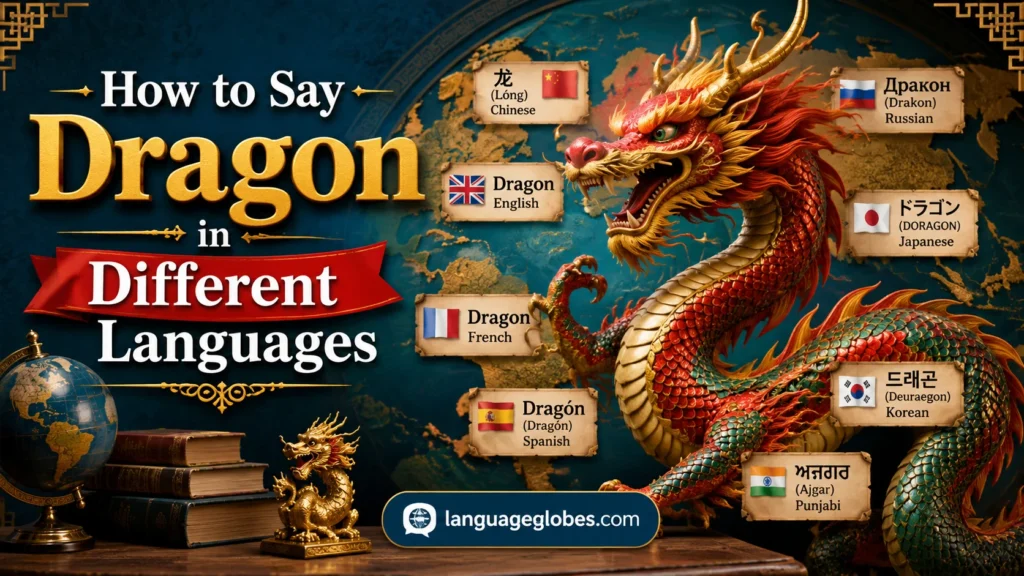
Discovering Dragon across languages reveals how this mythical creature appears in human stories worldwide. From European legends to East Asian cultures, the word for dragon shows unique translations and traditions.
These legendary beings have shaped human history, literature, and imagination for many centuries. Learning how to say dragon in different languages helps people explore cultures through language diversity.
Dragons may symbolize strength, wisdom, mystery, power, or protection in various regions. This guide shares pronunciation guides, example sentences, and cultural insights for learners.
It helps travelers, students, writers, gamers, and mythology enthusiasts understand global cultures better. Explore the translation of dragon and discover fascinating mythical creatures from the world.
Also Read This: How to Say Desert in Different Languages
Interesting Facts About Dragon
- Dragons appear in the folklore and mythology of nearly every continent.
- Chinese dragons are usually symbols of luck, wisdom, and prosperity.
- European dragons are often depicted as fire-breathing creatures.
- The word “dragon” comes from the ancient Greek word “drakon.”
- Dragons are common characters in fantasy novels, movies, and video games.
- Many cultures associate dragons with natural forces such as rivers, storms, and mountains.
- Dragon imagery is frequently used in national symbols, festivals, and traditional art.
- The dragon is one of the twelve animals in the Chinese zodiac.
- Different cultures describe dragons with unique appearances and powers.
- Learning dragon translations helps explore mythology and language diversity worldwide.
How to Say Dragon in Different Languages
Below are translations of the word “dragon” in various languages from around the world.
European Languages
Europe is home to hundreds of languages belonging mainly to Germanic, Romance, Slavic, Celtic, and Baltic language families. Dragons play a significant role in European folklore, legends, and medieval stories. In many European traditions, dragons are powerful creatures that heroes must defeat. The following table shows how to say dragon in European languages.
| Language | Country/Region | Translation | Pronunciation | Example Sentence |
| 🇺🇸 American English | USA | Dragon | DRAG-un | The dragon guards the treasure. |
| 🇬🇧 British English | UK | Dragon | DRAG-un | The dragon appears in many legends. |
| 🇦🇺 Australian English | Australia | Dragon | DRAG-un | We saw a dragon in the storybook. |
| 🇫🇷 French | France | Dragon | Dra-gon | Le dragon est puissant. |
| 🇪🇸 Spanish | Spain | Dragón | Dra-GON | El dragón vuela alto. |
| 🇵🇹 Portuguese | Portugal | Dragão | Dra-GOW | O dragão é forte. |
| 🇮🇹 Italian | Italy | Drago | DRA-go | Il drago vola nel cielo. |
| 🇩🇪 German | Germany | Drache | DRA-khe | Der Drache ist groß. |
| 🇳🇱 Dutch | Netherlands | Draak | DRAHK | De draak vliegt. |
| 🇸🇪 Swedish | Sweden | Drake | DRA-keh | Draken är stor. |
| 🇳🇴 Norwegian | Norway | Drage | DRAH-geh | Dragen flyr. |
| 🇩🇰 Danish | Denmark | Drage | DRAI-geh | Dragen er stærk. |
| 🇫🇮 Finnish | Finland | Lohikäärme | LO-hi-kaar-me | Lohikäärme lentää. |
| 🇮🇸 Icelandic | Iceland | Dreki | DREH-ki | Dreki flýgur. |
| 🇵🇱 Polish | Poland | Smok | Smock | Smok jest potężny. |
| 🇨🇿 Czech | Czech Republic | Drak | Drahk | Drak létá. |
| 🇸🇰 Slovak | Slovakia | Drak | Drahk | Drak je veľký. |
| 🇭🇺 Hungarian | Hungary | Sárkány | SHAR-kany | A sárkány repül. |
| 🇷🇴 Romanian | Romania | Dragon | Dra-gon | Dragonul este puternic. |
| 🇷🇺 Russian | Russia | Дракон | Dra-KON | Дракон летит. |
| 🇺🇦 Ukrainian | Ukraine | Дракон | Dra-KON | Дракон летить. |
| 🇧🇬 Bulgarian | Bulgaria | Дракон | Dra-KON | Драконът лети. |
| 🇭🇷 Croatian | Croatia | Zmaj | Zmai | Zmaj leti. |
| 🇷🇸 Serbian | Serbia | Змај | Zmai | Змај лети. |
| 🇸🇮 Slovenian | Slovenia | Zmaj | Zmai | Zmaj leti. |
| 🇬🇷 Greek | Greece | Δράκος | THRA-kos | Ο δράκος πετάει. |
| 🇮🇪 Irish | Ireland | Dragan | DRA-gan | Tá an dragan mór. |
| 🏴 Welsh | Wales | Draig | Dryg | Mae’r ddraig yn hedfan. |
| 🇱🇹 Lithuanian | Lithuania | Drakonas | Dra-ko-nas | Drakonas skrenda. |
| 🇱🇻 Latvian | Latvia | Pūķis | POO-kis | Pūķis lido. |
Asian Languages
Asia is the largest continent and contains thousands of languages spoken by billions of people. Dragons are especially important in Asian cultures, where they often symbolize wisdom, good fortune, protection, and strength. The translations below highlight the rich linguistic diversity of Asia.
| Language | Country/Region | Translation | Pronunciation | Example Sentence |
| 🇨🇳 Chinese (Mandarin) | China | 龙 | Long | 龙很强大。 |
| 🇨🇳 Chinese (Cantonese) | Hong Kong | 龍 | Lung | 龍很強大。 |
| 🇯🇵 Japanese | Japan | 竜 | Ryū | 竜は空を飛ぶ。 |
| 🇰🇷 Korean | South Korea | 용 | Yong | 용은 강하다. |
| 🇻🇳 Vietnamese | Vietnam | Rồng | Rong | Con rồng rất mạnh. |
| 🇹🇭 Thai | Thailand | มังกร | Mang-gorn | มังกรบินได้ |
| 🇮🇳 Hindi | India | ड्रैगन | Drai-gun | ड्रैगन उड़ रहा है। |
| 🇮🇳 Bengali | Bangladesh/India | ড্রাগন | Dra-gon | ড্রাগন উড়ছে। |
| 🇮🇳 Punjabi | India/Pakistan | ਡਰੈਗਨ | Drai-gun | ਡਰੈਗਨ ਉੱਡਦਾ ਹੈ। |
| 🇮🇳 Gujarati | India | ડ્રેગન | Dre-gun | ડ્રેગન ઉડે છે. |
| 🇮🇳 Marathi | India | ड्रॅगन | Dra-gun | ड्रॅगन उडतो. |
| 🇮🇳 Tamil | India | டிராகன் | Tira-kan | டிராகன் பறக்கிறது. |
| 🇮🇳 Telugu | India | డ్రాగన్ | Dra-gon | డ్రాగన్ ఎగురుతుంది. |
| 🇮🇳 Kannada | India | ಡ್ರ್ಯಾಗನ್ | Dra-gon | ಡ್ರ್ಯಾಗನ್ ಹಾರುತ್ತದೆ. |
| 🇮🇳 Malayalam | India | ഡ്രാഗൺ | Dra-gon | ഡ്രാഗൺ പറക്കുന്നു. |
| 🇵🇰 Urdu | Pakistan | ڈریگن | Drai-gun | ڈریگن اڑ رہا ہے۔ |
| 🇳🇵 Nepali | Nepal | ड्रागन | Dra-gun | ड्रागन उड्छ। |
| 🇱🇰 Sinhala | Sri Lanka | ඩ්රැගන් | Dra-gun | ඩ්රැගන් පියාසර කරයි. |
| 🇲🇲 Burmese | Myanmar | နဂါး | Na-gar | နဂါးပျံသည်။ |
| 🇰🇭 Khmer | Cambodia | នាគ | Neak | នាគហោះហើរ។ |
| 🇱🇦 Lao | Laos | ມັງກອນ | Mang-kon | ມັງກອນບິນໄດ້ |
| 🇲🇳 Mongolian | Mongolia | Луу | Luu | Луу нисдэг. |
| 🇮🇩 Indonesian | Indonesia | Naga | Na-ga | Naga itu kuat. |
| 🇲🇾 Malay | Malaysia | Naga | Na-ga | Naga itu besar. |
| 🇵🇭 Filipino | Philippines | Dragon | Dra-gon | Malakas ang dragon. |
African Languages
Africa is home to more than 2,000 languages and an incredible variety of cultures. While dragons are not as common in African mythology as in Europe or Asia, many African languages have adopted local or borrowed terms for dragon through literature, folklore, and modern media.
| Language | Country/Region | Translation | Pronunciation | Example Sentence |
| 🇿🇦 Afrikaans | South Africa | Draak | Drahk | Die draak vlieg. |
| 🇸🇿 Swati | Eswatini | Udrako | U-dra-ko | Udrako uyandiza. |
| 🇰🇪 Swahili | East Africa | Joka | JO-ka | Joka anaruka. |
| 🇪🇹 Amharic | Ethiopia | ዘንዶ | Zen-do | ዘንዶ ይበራል። |
| 🇳🇬 Yoruba | Nigeria | Dragoni | Dra-go-ni | Dragoni naa lagbara. |
| 🇳🇬 Igbo | Nigeria | Dragọn | Dra-gon | Dragọn na-efe. |
| 🇳🇬 Hausa | Nigeria | Dodo | DO-do | Dodo yana tashi. |
| 🇿🇦 Zulu | South Africa | Udrako | U-dra-ko | Udrako uyandiza. |
| 🇿🇦 Xhosa | South Africa | Udrako | U-dra-ko | Udrako uyabhabha. |
| 🇸🇴 Somali | Somalia | Masduulaagii | Mas-doo-laa-gi | Masduulaagii wuu duulaa. |
| 🇲🇬 Malagasy | Madagascar | Dragona | Dra-go-na | Manidina ny dragona. |
| 🇷🇼 Kinyarwanda | Rwanda | Ikiyoka | I-ki-yo-ka | Ikiyoka kiraguruka. |
Middle Eastern Languages
The Middle East has a rich history of mythology, religion, and storytelling. Many ancient civilizations from this region featured dragon-like creatures in their legends. The following translations show how dragon is expressed across major Middle Eastern languages.
| Language | Country/Region | Translation | Pronunciation | Example Sentence |
| 🇸🇦 Arabic | Middle East | تنين | Tin-neen | التنين يطير في السماء. |
| 🇮🇷 Persian | Iran | اژدها | Azh-da-ha | اژدها قدرتمند است. |
| 🇹🇷 Turkish | Turkey | Ejderha | Ej-der-ha | Ejderha uçuyor. |
| 🇮🇱 Hebrew | Israel | דרקון | Dra-kon | הדרקון עף בשמים. |
| 🇰🇼 Kurdish | Kurdistan | Ejdeha | Ej-de-ha | Ejdeha difire. |
| 🇦🇲 Armenian | Armenia | Վիշապ | Vi-shap | Վիշապը թռչում է։ |
| 🇬🇪 Georgian | Georgia | დრაკონი | Dra-ko-ni | დრაკონი დაფრინავს. |
Additional Languages Around the World
Languages from Oceania, the Americas, and indigenous communities contribute to the world’s incredible linguistic richness. Learning these translations helps expand cultural understanding and appreciation for global communication.
| Language | Country/Region | Translation | Pronunciation | Example Sentence |
| 🇳🇿 Maori | New Zealand | Tarakona | Ta-ra-ko-na | He kaha te tarakona. |
| 🇼🇸 Samoan | Samoa | Tarakona | Ta-ra-ko-na | E lele le tarakona. |
| 🇹🇴 Tongan | Tonga | Talakoni | Ta-la-ko-ni | ʻOku puna ʻa e talakoni. |
| 🇭🇹 Haitian Creole | Haiti | Dragon | Dra-gon | Dragon an ap vole. |
| 🇬🇱 Greenlandic | Greenland | Drage | Dra-geh | Drage timmisarpoq. |
| 🇨🇦 Inuktitut | Canada | ᑎᕋᒐᓐ | Ti-ra-gan | ᑎᕋᒐᓐ ᑎᖕᒥᓲᖅ. |
| 🇵🇾 Guarani | Paraguay | Dragón | Dra-gon | Pe dragón oveve. |
| 🇵🇪 Quechua | Peru | Dragón | Dra-gon | Dragón phawan. |
| 🇺🇸 Hawaiian | Hawaii | Deragona | De-ra-go-na | Lele ka deragona. |
| 🇫🇯 Fijian | Fiji | Tarakoni | Ta-ra-ko-ni | E vuka na tarakoni. |
FAQs
What is the meaning of the word for dragon in different languages?
The word for dragon changes across languages, reflecting unique traditions and cultural insights. The translation of dragon often connects with local myths, stories, and beliefs.
How do you say dragon in different languages around the world?
To say dragon in different languages, people can explore translations from many regions. This reveals the rich language diversity found across the world.
Why are dragons considered fascinating mythical creatures?
Fascinating mythical creatures like dragons appear throughout human history and literature. They inspire imagination through stories about strength, mystery, and adventure.
What do dragons symbolize in different cultures?
Dragons can symbolize strength, wisdom, power, protection, or danger depending on the region. Their meanings vary across cultures and traditions.
How are dragons represented in European legends and Asian cultures?
European legends often describe dragons as powerful beasts, while East Asian cultures view them as legendary beings connected with harmony and fortune.
Who can benefit from learning dragon translations?
Language learners, travelers, students, writers, gamers, and mythology enthusiasts can discover new perspectives through dragon translations and cultural knowledge.
What makes dragon names different across languages?
Dragon names develop from different linguistic roots and historical influences. These differences show how communities describe legendary beast stories in unique ways.
Are pronunciation guides available for dragon translations?
Many resources include pronunciation guides and example sentences to help readers understand each language. These features make learning easier and more practical.
How are dragons described in Chinese traditions?
In Chinese traditions, dragons are often linked with good fortune and prosperity. They represent powerful and respected symbols within traditional beliefs.
Why should people explore dragon words from global cultures?
Learning dragon words helps people explore cultures and understand worldwide stories. It connects global cultures through language, folklore, and shared human creativity.
Conclusion
Exploring Dragon across languages reveals how this mythical creature connects with cultures, stories, and traditions worldwide. The translation of dragon shows the rich language diversity behind these legendary beings and their meanings. Learning to say dragon in different languages helps language learners and travelers discover global cultures in a meaningful way. These fascinating mythical creatures continue inspiring imagination, literature, and human curiosity across generations.

James Anderson is a passionate language enthusiast and content creator at LanguageGlobes. With a keen interest in global cultures and communication, he shares insightful and engaging content to help readers explore and master new languages.