Dolls have been cherished across human culture for thousands of years, inspiring childhood memories and traditions. These simple toys often reflect cultural traditions, storytelling, art, and history, while encouraging imagination and creativity. Learning how to say doll in different languages offers a fascinating way to explore global cultures.
This guide shares translations, pronunciation, and example sentences from Europe, Asia, Africa, and the Middle East. It can help a traveler, language learner, teacher, parent, or collector discover how people describe these beloved playthings. Along the way, you can explore interesting facts, traditional dolls, and their symbol of heritage across the world.
Also Read This: How to Say Dolphin in Different Languages
Interesting Facts About Dolls
- Dolls are among the oldest toys in human history, dating back over 4,000 years.
- Ancient Egyptian children played with handmade dolls crafted from wood and clay.
- Many cultures use dolls in traditional ceremonies and cultural celebrations.
- Some dolls are considered valuable works of art and are collected worldwide.
- Japan is famous for its traditional handcrafted dolls used during cultural festivals.
- Dolls help children develop creativity, communication skills, and emotional intelligence.
- Different languages often have unique words for dolls that reflect local traditions.
- Collecting dolls is a popular hobby enjoyed by millions of people around the world.
- Traditional dolls often represent regional clothing, customs, and lifestyles.
- Learning doll-related vocabulary can improve cultural understanding and language skills.
How to Say Dolls in Different Languages
European Languages
Europe is home to hundreds of languages and dialects, each carrying a rich cultural heritage. From the Romance languages of Southern Europe to the Germanic and Slavic languages found across the continent, the word for dolls varies greatly. Learning these translations provides insight into Europe’s diverse traditions and linguistic history.
| Language | Country/Region | Translation | Pronunciation | Example Sentence |
| 🇺🇸 American English | USA | Dolls | Dolz | The dolls are on the shelf. |
| 🇬🇧 British English | United Kingdom | Dolls | Dolz | The dolls are beautifully made. |
| 🇦🇺 Australian English | Australia | Dolls | Dolz | The dolls belong to my niece. |
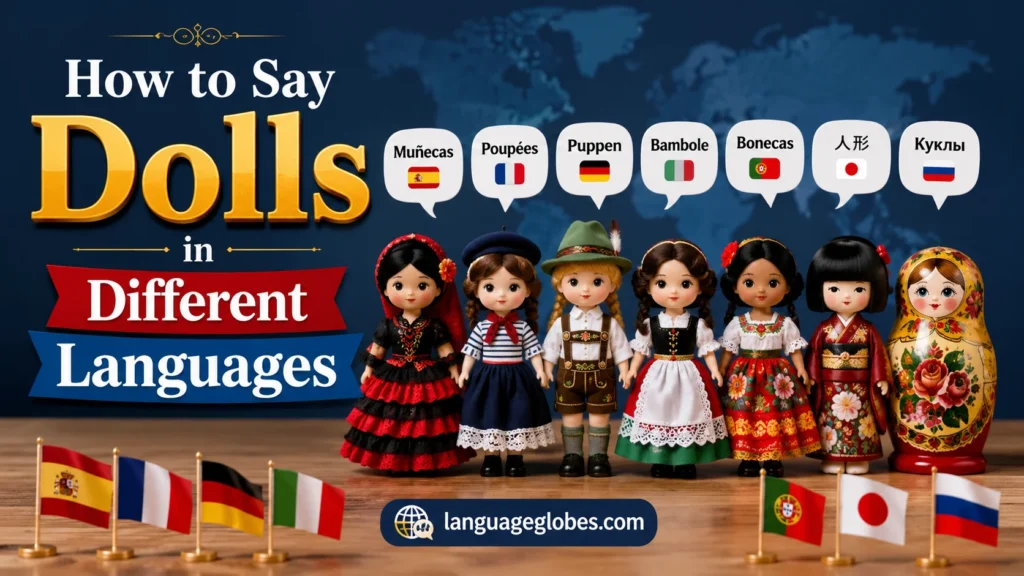
| French | 🇫🇷 France | Poupées | Poo-pay | Les poupées sont jolies. |
| Spanish | 🇪🇸 Spain | Muñecas | Moon-yeh-kas | Las muñecas son nuevas. |
| Portuguese | 🇵🇹 Portugal | Bonecas | Boh-neh-kas | As bonecas são bonitas. |
| Italian | 🇮🇹 Italy | Bambole | Bam-bo-leh | Le bambole sono colorate. |
| German | 🇩🇪 Germany | Puppen | Poo-pen | Die Puppen sind schön. |
| Dutch | 🇳🇱 Netherlands | Poppen | Pop-pen | De poppen zijn leuk. |
| Swedish | 🇸🇪 Sweden | Dockor | Dok-kor | Dockorna är fina. |
| Norwegian | 🇳🇴 Norway | Dukker | Dook-er | Dukkene er vakre. |
| Danish | 🇩🇰 Denmark | Dukker | Dook-er | Dukkerne er søde. |
| Finnish | 🇫🇮 Finland | Nuket | Noo-ket | Nuket ovat kauniita. |
| Icelandic | 🇮🇸 Iceland | Dúkkur | Doo-kur | Dúkkurnar eru fallegar. |
| Polish | 🇵🇱 Poland | Lalki | Lal-kee | Lalki są piękne. |
| Czech | 🇨🇿 Czech Republic | Panenky | Pa-nen-kee | Panenky jsou nové. |
| Slovak | 🇸🇰 Slovakia | Bábiky | Baa-bee-kee | Bábiky sú pekné. |
| Hungarian | 🇭🇺 Hungary | Babák | Ba-baak | A babák szépek. |
| Romanian | 🇷🇴 Romania | Păpuși | Pa-poosh | Păpușile sunt frumoase. |
| Greek | 🇬🇷 Greece | Κούκλες | Koo-kles | Οι κούκλες είναι όμορφες. |
| Russian | 🇷🇺 Russia | Куклы | Kook-lee | Куклы красивые. |
| Ukrainian | 🇺🇦 Ukraine | Ляльки | Lyal-kee | Ляльки гарні. |
| Belarusian | 🇧🇾 Belarus | Лялькі | Lyal-kee | Лялькі прыгожыя. |
| Croatian | 🇭🇷 Croatia | Lutke | Loot-keh | Lutke su lijepe. |
| Serbian | 🇷🇸 Serbia | Лутке | Loot-keh | Лутке су лепе. |
Asian Languages
Asia is the world’s largest continent and contains an incredible variety of languages and cultures. From East Asia to South Asia and Southeast Asia, dolls often play important roles in local traditions, celebrations, and childhood experiences. The translations below showcase the linguistic richness of the region.
| Language | Country/Region | Translation | Pronunciation | Example Sentence |
| Chinese (Mandarin) | 🇨🇳 China | 玩偶 | Wan-ohl | 这些玩偶很漂亮。 |
| Cantonese | 🇭🇰 Hong Kong | 公仔 | Gong-jai | 呢啲公仔好得意。 |
| Japanese | 🇯🇵 Japan | 人形 | Nin-gyo | 人形はきれいです。 |
| Korean | 🇰🇷 South Korea | 인형들 | In-hyong-deul | 인형들이 예뻐요. |
| Hindi | 🇮🇳 India | गुड़िया | Goo-dee-ya | गुड़िया सुंदर हैं। |
| Urdu | 🇵🇰 Pakistan | گڑیاں | Gudiyan | گڑیاں خوبصورت ہیں۔ |
| Bengali | 🇧🇩 Bangladesh | পুতুল | Poo-tool | পুতুলগুলো সুন্দর। |
| Punjabi | India/Pakistan | ਗੁੱਡੀਆਂ | Gud-dee-an | ਗੁੱਡੀਆਂ ਸੋਹਣੀਆਂ ਹਨ। |
| Gujarati | 🇮🇳 India | ઢીંગલીઓ | Dheen-ga-lee-o | ઢીંગલીઓ સુંદર છે. |
| Marathi | 🇮🇳 India | बाहुल्या | Baa-hoo-lya | बाहुल्या सुंदर आहेत. |
| Tamil | 🇮🇳 India | பொம்மைகள் | Pom-mai-gal | பொம்மைகள் அழகாக உள்ளன. |
| Telugu | 🇮🇳 India | బొమ్మలు | Bom-ma-loo | బొమ్మలు అందంగా ఉన్నాయి. |
| Kannada | 🇮🇳 India | ಗೊಂಬೆಗಳು | Gom-be-ga-loo | ಗೊಂಬೆಗಳು ಸುಂದರವಾಗಿವೆ. |
| Malayalam | 🇮🇳 India | പാവകൾ | Paa-va-kal | പാവകൾ മനോഹരമാണ്. |
| Sinhala | 🇱🇰 Sri Lanka | බෝනික්කන් | Bo-nik-kan | බෝනික්කන් ලස්සනයි. |
| Thai | 🇹🇭 Thailand | ตุ๊กตา | Took-ta | ตุ๊กตาสวยมาก |
| Vietnamese | 🇻🇳 Vietnam | Búp bê | Boop-beh | Những búp bê rất đẹp. |
| Indonesian | 🇮🇩 Indonesia | Boneka | Boh-neh-ka | Boneka itu cantik. |
| Malay | 🇲🇾 Malaysia | Anak patung | A-nak pa-toong | Anak patung itu cantik. |
| Filipino | 🇵🇭 Philippines | Mga manika | Ma-ni-ka | Ang mga manika ay maganda. |
| Khmer | 🇰🇭 Cambodia | តុក្កតា | Tuk-ta | តុក្កតាស្អាតណាស់។ |
| Lao | 🇱🇦 Laos | ຕຸກກະຕາ | Took-ka-ta | ຕຸກກະຕາງາມ. |
African Languages
Africa is home to more than a thousand languages, making it one of the most linguistically diverse regions on Earth. Traditional toys and dolls are found throughout African cultures, often handcrafted and connected to local customs. These translations demonstrate the richness of African languages.
| Language | Country/Region | Translation | Pronunciation | Example Sentence |
| Swahili | 🌍 East Africa | Wanasesere | Wa-na-se-se-re | Wanasesere ni wazuri. |
| Zulu | 🇿🇦 South Africa | Onodoli | O-no-do-lee | Onodoli bahle. |
| Xhosa | 🇿🇦 South Africa | Oonodoli | Oo-no-do-lee | Oonodoli bahle. |
| Afrikaans | 🇿🇦 South Africa | Poppe | Pop-peh | Die poppe is mooi. |
| Yoruba | 🇳🇬 Nigeria | Omodé eré | O-mo-de eh-reh | Omodé eré náà lẹ́wà. |
| Igbo | 🇳🇬 Nigeria | Nwa bebi | Nwa be-bi | Nwa bebi mara mma. |
| Hausa | 🇳🇬 Nigeria | Tsana-tsana | Tsa-na tsa-na | Tsana-tsana suna da kyau. |
| Amharic | 🇪🇹 Ethiopia | አሻንጉሊቶች | A-shan-gu-li-toch | አሻንጉሊቶች ቆንጆ ናቸው። |
| Somali | 🇸🇴 Somalia | Caruusado | Ca-roo-sa-do | Caruusado waa qurux badan. |
| Shona | 🇿🇼 Zimbabwe | Zvidhori | Zvi-dho-ri | Zvidhori zvakanaka. |
| Kinyarwanda | 🇷🇼 Rwanda | Ibipupe | I-bi-poo-pe | Ibipupe ni byiza. |
| Luganda | 🇺🇬 Uganda | Obupiira | O-boo-pee-ra | Obupiira bulungi. |
Middle Eastern Languages
The Middle East has a long history of storytelling, craftsmanship, and cultural traditions. Languages in this region belong mainly to the Semitic, Turkic, and Iranian language families. Dolls have historically appeared in folklore, children’s games, and cultural celebrations throughout the region.
| Language | Country/Region | Translation | Pronunciation | Example Sentence |
| Arabic | 🌍 Middle East | دمى | Doo-ma | الدمى جميلة. |
| Persian (Farsi) | 🇮🇷 Iran | عروسکها | A-roo-sak-ha | عروسکها زیبا هستند. |
| Turkish | 🇹🇷 Turkey | Bebekler | Be-bek-ler | Bebekler çok güzel. |
| Hebrew | 🇮🇱 Israel | בובות | Boo-vot | הבובות יפות. |
| Kurdish | Kurdistan Region | Bûkik | Boo-kik | Bûkik xweşik in. |
| Azerbaijani | 🇦🇿 Azerbaijan | Gəlinciklər | Ge-lin-jik-ler | Gəlinciklər gözəldir. |
| Armenian | 🇦🇲 Armenia | Տիկնիկներ | Tik-ni-kner | Տիկնիկները գեղեցիկ են։ |
| Georgian | 🇬🇪 Georgia | თოჯინები | To-ji-ne-bi | თოჯინები ლამაზია. |
Additional Languages Around the World
The world contains many unique languages beyond the major regional groups. Learning words from these languages can deepen your appreciation for cultural diversity and global communication. Below are additional translations from various regions around the globe.
| Language | Country/Region | Translation | Pronunciation | Example Sentence |
| Irish | 🇮🇪 Ireland | Bábóga | Baw-bo-ga | Tá na bábóga go hálainn. |
| Welsh | 🏴 Wales | Doliau | Dol-ee-ai | Mae’r doliau’n brydferth. |
| Scottish Gaelic | 🏴 Scotland | Dèideagan | Jay-ja-gan | Tha na dèideagan brèagha. |
| Basque | Spain/France | Panpinak | Pan-pee-nak | Panpinak politak dira. |
| Catalan | Spain | Nines | Nee-nes | Les nines són boniques. |
| Galician | Spain | Bonecas | Bo-neh-kas | As bonecas son fermosas. |
| Esperanto | International | Pupoj | Poo-poy | La pupoj estas belaj. |
| Maori | 🇳🇿 New Zealand | Karetao | Ka-re-ta-o | He ataahua ngā karetao. |
| Hawaiian | 🇺🇸 Hawaii | Pēpē pāʻani | Peh-peh paa-a-nee | Nani nā pēpē pāʻani. |
| Samoan | 🇼🇸 Samoa | Pepe taalo | Pe-pe taa-lo | E matagofie pepe taalo. |
| Tongan | 🇹🇴 Tonga | Pepee | Pe-pee | Oku faka’ofo’ofa e pepee. |
| Fijian | 🇫🇯 Fiji | Vakatakarakara | Va-ka-ta-ka-ra-ka-ra | Era totoka na vakatakarakara. |
FAQs
What are dolls called in different languages?
The word doll has many translations across different languages, reflecting language and global cultures. Common examples include poupée in French, muñeca in Spanish, Puppe in German, and ningyo in Japanese.
Why are dolls important in human culture?
Dolls have been cherished for thousands of years as simple toys connected with childhood memories. They also represent cultural traditions, storytelling, art, and history across the world.
How do dolls support children’s development?
Dolls encourage imagination and creativity while helping children develop communication and social skills. Playing with dolls can also support storytelling and emotional expression.
How can I learn doll translations in different languages?
A translation guide can provide translations, pronunciation, and example sentences for learners. Exploring words from Europe, Asia, Africa, and the Middle East makes learning more educational and enjoyable.
How do you pronounce doll in different languages?
Pronunciations vary widely because each language uses different sounds and speech patterns. Listening to an audio pronunciation can help a language learner understand how to pronounce doll correctly.
What do traditional dolls represent?
Traditional dolls can reflect local customs, traditional crafts, fashion, and cultural identity. In many communities, they serve as a symbol of heritage passed through generations.
Why do dolls have different forms around the world?
Dolls appear in countless forms, from handmade figures to high-tech toys and interactive toys. Their designs often reflect local cultural traditions, creativity, history, and the universal charm of play.
Where can I find doll translations in many languages?
A detailed guide can include translations across more than 70 languages, covering major world regions. Such extensive translation lists can make comparing vocabulary easier for learners, teachers, and travelers.
What are some common doll translations?
Some widely recognized translations include poupée, muñeca, Puppe, and ningyo. Comparing these words helps learners understand communication, pronunciation, and cultural differences between languages.
Why should language learners study doll vocabulary?
Learning everyday words like dolls can make language learner practice more practical and enjoyable. It also offers insight into diversity, communication, and how people express familiar ideas across cultures.
Conclusion
Learning how to say dolls in different languages reveals fascinating connections between language, culture, and history. These beloved playthings reflect human culture, childhood memories, traditional crafts, and global cultures across the world. Exploring translations and pronunciation helps every language learner discover cultural diversity in an enjoyable way. Whether you are a traveler, teacher, parent, or collector, these words offer a simple way to appreciate how people communicate and share traditions.

James Anderson is a passionate language enthusiast and content creator at LanguageGlobes. With a keen interest in global cultures and communication, he shares insightful and engaging content to help readers explore and master new languages.