
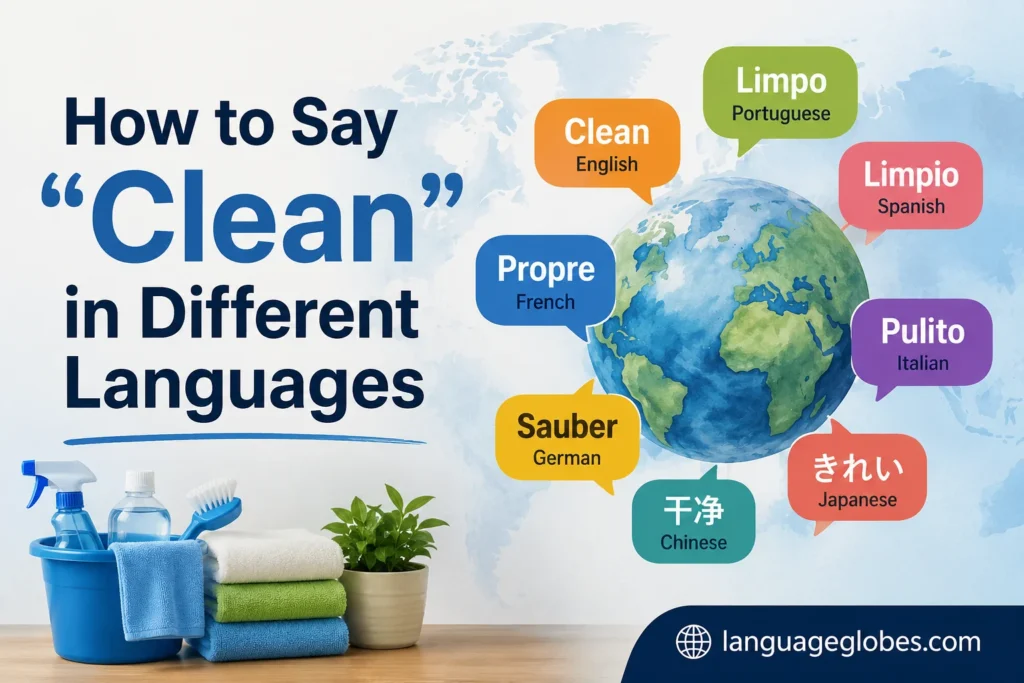
How to Say “Clean” in Different Languages helps people learn global words, improve pronunciation, and understand cultures worldwide.
In my daily life, I often notice how the word clean can describe ideas like hygiene, tidiness, and purity. Many people search for clean in different languages to learn, express ideas, and understand cleanliness in different cultures while traveling, learning a new language, or studying global vocabulary.
Knowing how to say this term can help in conversations, improve pronunciation, explain meaning, and create useful example sentences. During a trip abroad, one small interaction improved my communication and deepened my understanding of local customs.
In many societies, cleanliness is seen as a virtue and a universal language that speaks volumes about respect for ourselves and the environment. In every corner of the world, this concept is upheld through various languages and a unique expression of culture and identity.
When people join a linguistic journey to uncover how 70 diverse languages from around the globe use this word, they discover how simple yet important concepts can connect humanity. Exploring different languages becomes a gateway to understanding cultures, connecting globally, and realizing that words are not mere symbols but tools that reflect values, traditions, and ways of life.
While speaking and expressing ideas about being clean may sound fundamental, they help people communicate effectively in diverse situations, including social interactions and professional settings.
These expressions provide insights into the importance of personal care, environmental consciousness, and cultural habits in different parts of the world. By embracing linguistic diversity, we can gain empathy and build a broader worldview through meaningful language experiences.
Interesting Facts About Saying “Clean” in Different Languages
- The word “clean” has unique cultural connotations in various regions. For instance, in Japan, cleanliness is deeply tied to etiquette and respect.
- Some languages have multiple words for “clean,” reflecting different types of cleanliness, like “pure,” “tidy,” or “washed.”
- In Scandinavian countries, the concept of cleanliness often extends to communal spaces and nature.
- Understanding local expressions can prevent miscommunication and foster goodwill, especially when offering or describing cleanliness.
European Languages
Europe is home to a rich diversity of languages, each carrying its unique nuances and history. Many European cultures place a high value on personal hygiene, and the concept of “clean” often goes beyond mere physical cleanliness to include orderliness and purity of environment.
| Language | Country/Region | Translation | Pronunciation | Example Sentence |
| American English 🇺🇸 | United States | Clean | /kliːn/ | Keep your room clean every day. |
| British English 🇬🇧 | United Kingdom | Clean | /kliːn/ | The kitchen must be clean before dinner. |
| Australian English 🇦🇺 | Australia | Clean | /kliːn/ | Make sure the beach is clean after the party. |
| French 🇫🇷 | France | Propre | /prɔpʁ/ | Cette maison est très propre. (This house is very clean.) |
| Spanish 🇪🇸 | Spain | Limpio | /ˈlim.pjo/ | Mantén la cocina limpia. (Keep the kitchen clean.) |
| German 🇩🇪 | Germany | Sauber | /ˈzaʊbɐ/ | Das Badezimmer ist sauber. (The bathroom is clean.) |
| Italian 🇮🇹 | Italy | Pulito | /puˈli.to/ | La stanza è pulita. (The room is clean.) |
| Portuguese 🇵🇹 | Portugal | Limpo | /ˈlĩ.pu/ | O chão está limpo. (The floor is clean.) |
| Dutch 🇳🇱 | Netherlands | Schoon | /sxoːn/ | De tafel is schoon. (The table is clean.) |
| Swedish 🇸🇪 | Sweden | Ren | /reːn/ | Golvet är rent. (The floor is clean.) |
| Danish 🇩🇰 | Denmark | Ren | /ʁɛn/ | Badeværelset er rent. (The bathroom is clean.) |
| Norwegian 🇳🇴 | Norway | Ren | /ren/ | Rommet er rent. (The room is clean.) |
| Finnish 🇫🇮 | Finland | Puhdas | /ˈpuh.das/ | Keittiö on puhdas. (The kitchen is clean.) |
| Russian 🇷🇺 | Russia | Чистый | /ˈt͡ɕistɨj/ | Комната чистая. (The room is clean.) |
| Polish 🇵🇱 | Poland | Czysty | /ˈt͡ʂɨ.stɨ/ | Pokój jest czysty. (The room is clean.) |
Asian Languages
Asia is incredibly linguistically diverse, with languages reflecting centuries of cultural traditions. In many Asian societies, cleanliness is associated not only with hygiene but also with spiritual purity and social etiquette.
| Language | Country/Region | Translation | Pronunciation | Example Sentence |
| Chinese (Mandarin) 🇨🇳 | China | 干净 | /gān jìng/ | 房间很干净。 (The room is very clean.) |
| Japanese 🇯🇵 | Japan | きれい | /ki.reː/ | 部屋はきれいです。 (The room is clean.) |
| Korean 🇰🇷 | South Korea | 깨끗한 | /kkaekkeuthan/ | 방이 깨끗해요. (The room is clean.) |
| Hindi 🇮🇳 | India | साफ | /saaf/ | कमरा साफ है। (The room is clean.) |
| Bengali 🇧🇩 | Bangladesh | পরিষ্কার | /pɔrishkar/ | ঘরটি পরিষ্কার। (The room is clean.) |
| Thai 🇹🇭 | Thailand | สะอาด | /sàːʔàːt/ | ห้องสะอาดมาก (The room is very clean.) |
| Vietnamese 🇻🇳 | Vietnam | Sạch | /saːk/ | Phòng rất sạch. (The room is very clean.) |
| Indonesian 🇮🇩 | Indonesia | Bersih | /bər.sih/ | Kamar ini bersih. (This room is clean.) |
| Malay 🇲🇾 | Malaysia | Bersih | /bər.siħ/ | Rumah ini bersih. (This house is clean.) |
| Filipino 🇵🇭 | Philippines | Malinis | /maˈli.nis/ | Malinis ang kwarto. (The room is clean.) |
| Urdu 🇵🇰 | Pakistan | صاف | /saaf/ | کمرہ صاف ہے۔ (The room is clean.) |
| Tamil 🇮🇳 | India/Sri Lanka | சுத்தமான | /suththamāṉa/ | அறை சுத்தமாக உள்ளது. (The room is clean.) |
| Telugu 🇮🇳 | India | శుభ్రమైన | /śubhramaina/ | గది శుభ్రమై ఉంది. (The room is clean.) |
| Arabic (Modern Standard) 🇸🇦 | Middle East | نظيف | /naẓīf/ | الغرفة نظيفة. (The room is clean.) |
African Languages
Africa is home to thousands of languages and dialects, each with its own way of describing cleanliness. In many African cultures, clean surroundings and personal hygiene are highly valued for both social and health reasons.
| Language | Country/Region | Translation | Pronunciation | Example Sentence |
| Swahili 🇰🇪 | Kenya | Safi | /ˈsa.fi/ | Chumba ni safi. (The room is clean.) |
| Zulu 🇿🇦 | South Africa | Cocekile | /t͡ʃoˈt͡ʃe.kile/ | Igumbi licocekile. (The room is clean.) |
| Xhosa 🇿🇦 | South Africa | Coca | /ˈko.ka/ | Igumbi licocekile. (The room is clean.) |
| Yoruba 🇳🇬 | Nigeria | Mọ́ | /mɔ́/ | Yàrá náà mọ́. (The room is clean.) |
| Hausa 🇳🇬 | Nigeria | Tsabta | /tsab.ta/ | Dakin yana da tsabta. (The room is clean.) |
| Amharic 🇪🇹 | Ethiopia | ንጹህ | /nəts’uh/ | ክፍሉ ንጹህ ነው። (The room is clean.) |
| Somali 🇸🇴 | Somalia | Nadiif | /na.diːf/ | Qolka waa nadiif. (The room is clean.) |
| Arabic (North Africa) 🇲🇦 | Morocco | نظيف | /naẓīf/ | الغرفة نظيفة. (The room is clean.) |
Read More: How to Say “Angel” in Different Languages
Middle Eastern Languages
Middle Eastern cultures often intertwine cleanliness with religion, hospitality, and social etiquette. Cleanliness in these regions is not just about hygiene but also a reflection of respect for others.
| Language | Country/Region | Translation | Pronunciation | Example Sentence |
| Arabic 🇸🇦 | Saudi Arabia | نظيف | /naẓīf/ | الغرفة نظيفة. (The room is clean.) |
| Hebrew 🇮🇱 | Israel | נקי | /naˈki/ | החדר נקי. (The room is clean.) |
| Turkish 🇹🇷 | Turkey | Temiz | /teˈmiz/ | Oda temiz. (The room is clean.) |
| Persian 🇮🇷 | Iran | تمیز | /tamiz/ | اتاق تمیز است. (The room is clean.) |
| Kurdish 🇮🇶 | Iraq | Paqij | /paˈqidʒ/ | Oda paqij e. (The room is clean.) |
| Pashto 🇦🇫 | Afghanistan | پاک | /pāk/ | خونه پاکه ده. (The house is clean.) |
| Arabic (Egypt) 🇪🇬 | Egypt | نظيف | /naẓīf/ | الغرفة نظيفة. (The room is clean.) |
FAQs
1. What does “clean” mean in different languages?
The word “clean” usually refers to hygiene, purity, tidiness, or something free from dirt, but its cultural meaning can vary across languages.
2. Why should I learn how to say “clean” in different languages?
Learning this word helps with travel, communication, language learning, and understanding cultural values related to cleanliness and hygiene.
3. Is the pronunciation of “clean” difficult in foreign languages?
Pronunciation depends on the language, but with practice and listening to native speakers, it becomes much easier.
4. How can learning simple words improve communication?
Simple words like “clean” help start conversations, build confidence, and make daily interactions smoother in different countries.
5. Are there cultural differences in the meaning of cleanliness?
Yes, different cultures may connect cleanliness with respect, personal care, spirituality, or social traditions.
6. Can learning vocabulary from multiple languages improve memory?
Yes, studying words from various languages can improve memory, vocabulary skills, and overall language understanding.
7. What is the easiest way to remember foreign words?
Using example sentences, repetition, pronunciation practice, and real-life conversations can help you remember new words quickly.
8. Why is cleanliness considered important around the world?
Cleanliness is linked to health, hygiene, environmental care, and positive social behavior in many cultures.
9. How many languages can I learn the word “clean” in?
You can learn it in dozens of languages, including popular global and regional languages from around the world.
10. Does learning words from other languages help cultural understanding?
Yes, learning foreign vocabulary helps people understand traditions, lifestyles, and perspectives from different cultures.
Conclusion
Learning to say “clean” in different languages is more than a linguistic exercise; it’s a doorway into understanding cultures, values, and social etiquette around the world. Whether traveling, working, or simply connecting with international friends, knowing these words enhances communication and fosters respect. Embracing multiple languages strengthens empathy, broadens your worldview, and highlights the universal importance of cleanliness in human life.
By exploring European, Asian, African, and Middle Eastern languages, we’ve seen that cleanliness is a concept valued globally, expressed through diverse words and pronunciations. Mastering these can enrich personal experiences and cultural appreciation.
This article is crafted for global readers with easy-to-understand explanations, clear tables, and examples, making it an essential guide to saying “clean” across cultures.

Grace Hall is a passionate language enthusiast and writer at LanguageGlobes, dedicated to making global communication simple and accessible. She shares insightful content to help readers explore new languages, cultures, and connections around the world.