
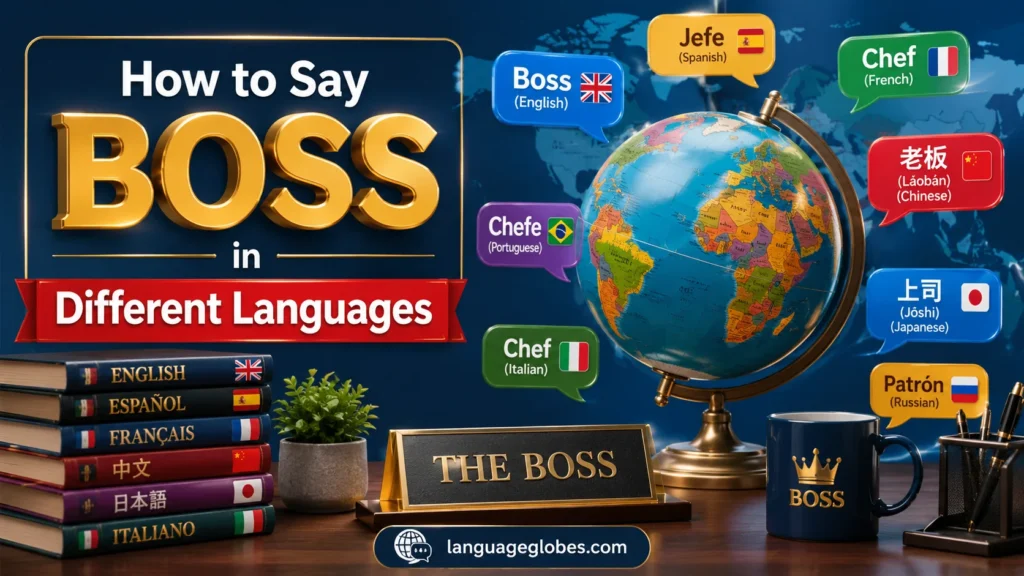
The boss term appears universal across modern workplaces worldwide today. Professionals in a multinational company often work while working abroad. Many people practice learning new language to refer supervisor or manager roles. Strong leadership in an organization builds highly effective team culture.
Understanding different languages improves communication across diverse global cultures today. Cultural respect guides international interactions in Europe Asia Africa Middle East. Multilingual translation guide helps pronunciation and listening practice effectively skills. Online language guide explains meaning of boss in over 70 languages.
Also Read This: How to Say Billionaire in Different Languages
Interesting Facts About Boss
- The English word “boss” originated from the Dutch word “baas,” meaning master or supervisor.
- In many cultures, there are different words for a workplace boss and a political leader.
- Some languages use the same word for boss, chief, and leader.
- The concept of a boss varies across cultures, reflecting different workplace traditions.
- In several Asian cultures, respectful titles are often used instead of directly calling someone a boss.
- Modern workplaces increasingly use terms like team leader, supervisor, and manager alongside boss.
- Informally, calling someone “boss” can be a sign of respect or admiration in many English-speaking countries.
- Learning leadership-related vocabulary can improve communication in international business environments.
How to Say Boss in Different Languages
European Languages
Europe is home to dozens of languages that have influenced global culture, business, and communication. Many European languages have distinct words for a boss, manager, or leader. These terms often reflect centuries of social and professional development and remain important in modern workplaces.
| Language | Country/Region | Translation | Pronunciation | Example Sentence |
| 🇺🇸 American English | USA | Boss | Boss | My boss approved the project. |
| 🇬🇧 British English | United Kingdom | Boss | Boss | My boss is very supportive. |
| 🇦🇺 Australian English | Australia | Boss | Boss | The boss called a meeting. |
| French | 🇫🇷 France | Patron | Pah-tron | Mon patron est très gentil. |
| Spanish | 🇪🇸 Spain | Jefe | He-feh | Mi jefe llegó temprano. |
| Portuguese | 🇵🇹 Portugal | Chefe | Shef | Meu chefe é experiente. |
| Italian | 🇮🇹 Italy | Capo | Kah-po | Il mio capo è occupato. |
| German | 🇩🇪 Germany | Chef | Shef | Mein Chef arbeitet hier. |
| Dutch | 🇳🇱 Netherlands | Baas | Bahs | Mijn baas helpt ons. |
| Swedish | 🇸🇪 Sweden | Chef | Shef | Min chef är vänlig. |
| Norwegian | 🇳🇴 Norway | Sjef | Shef | Min sjef leder teamet. |
| Danish | 🇩🇰 Denmark | Chef | Shef | Min chef er dygtig. |
| Finnish | 🇫🇮 Finland | Pomo | Poh-mo | Pomo hyväksyi suunnitelman. |
| Icelandic | 🇮🇸 Iceland | Yfirmaður | Ir-fi-ma-thur | Yfirmaður minn er góður. |
| Polish | 🇵🇱 Poland | Szef | Shef | Mój szef jest miły. |
| Czech | 🇨🇿 Czech Republic | Šéf | Shef | Můj šéf je přátelský. |
| Slovak | 🇸🇰 Slovakia | Šéf | Shef | Môj šéf pomáha tímu. |
| Hungarian | 🇭🇺 Hungary | Főnök | Fuh-nuk | A főnök értekezletet tart. |
| Romanian | 🇷🇴 Romania | Șef | Shef | Șeful meu este corect. |
| Bulgarian | 🇧🇬 Bulgaria | Шеф | Shef | Моят шеф е добър. |
| Greek | 🇬🇷 Greece | Αφεντικό | Afen-dee-ko | Το αφεντικό είναι εδώ. |
| Croatian | 🇭🇷 Croatia | Šef | Shef | Moj šef vodi tim. |
| Serbian | 🇷🇸 Serbia | Шеф | Shef | Moj šef radi ovde. |
| Slovenian | 🇸🇮 Slovenia | Šef | Shef | Moj šef je prijazen. |
| Ukrainian | 🇺🇦 Ukraine | Бос | Bos | Мій бос допомагає команді. |
| Russian | 🇷🇺 Russia | Начальник | Na-chal-nik | Мой начальник опытный. |
Asian Languages
Asia contains thousands of languages spoken by billions of people. The region is known for its rich cultural diversity and unique approaches to leadership and respect. In many Asian societies, titles and honorifics play an important role when addressing a boss or manager.
| Language | Country/Region | Translation | Pronunciation | Example Sentence |
| Chinese (Mandarin) | 🇨🇳 China | 老板 | Lao-ban | 我的老板很好。 |
| Cantonese | 🇭🇰 Hong Kong | 老闆 | Lo-ban | 我老闆好好。 |
| Japanese | 🇯🇵 Japan | 上司 | Jo-shi | 上司は親切です。 |
| Korean | 🇰🇷 South Korea | 상사 | Sang-sa | 상사는 친절합니다. |
| Hindi | 🇮🇳 India | बॉस | Boss | मेरा बॉस अच्छा है। |
| Urdu | 🇵🇰 Pakistan | باس | Boss | میرا باس اچھا ہے۔ |
| Bengali | 🇧🇩 Bangladesh | বস | Bosh | আমার বস খুব ভালো। |
| Punjabi | India/Pakistan | باس | Baas | میرا باس اچھا اے۔ |
| Gujarati | 🇮🇳 India | બોસ | Boss | મારો બોસ સારો છે. |
| Marathi | 🇮🇳 India | बॉस | Boss | माझा बॉस मदत करतो. |
| Tamil | 🇮🇳 India | முதலாளர் | Mu-tha-la-lar | என் முதலாளர் நல்லவர். |
| Telugu | 🇮🇳 India | బాస్ | Boss | నా బాస్ మంచివాడు. |
| Kannada | 🇮🇳 India | ಬಾಸ್ | Boss | ನನ್ನ ಬಾಸ್ ಒಳ್ಳೆಯವರು. |
| Malayalam | 🇮🇳 India | ബോസ് | Boss | എന്റെ ബോസ് നല്ലവനാണ്. |
| Thai | 🇹🇭 Thailand | เจ้านาย | Jao-nai | เจ้านายใจดีมาก |
| Vietnamese | 🇻🇳 Vietnam | Sếp | Sep | Sếp của tôi rất tốt. |
| Indonesian | 🇮🇩 Indonesia | Bos | Bos | Bos saya ramah. |
| Malay | 🇲🇾 Malaysia | Bos | Bos | Bos saya baik hati. |
| Filipino | 🇵🇭 Philippines | Amo | Ah-mo | Mabait ang amo ko. |
| Khmer | 🇰🇭 Cambodia | ចៅហ្វាយ | Chao-fvay | ចៅហ្វាយរបស់ខ្ញុំល្អ។ |
African Languages
Africa is one of the most linguistically diverse continents in the world, with thousands of languages and dialects. Leadership and authority are important cultural concepts across African societies, and many languages have unique words for a boss, chief, or supervisor.
| Language | Country/Region | Translation | Pronunciation | Example Sentence |
| Swahili | 🇹🇿 Tanzania/Kenya | Bosi | Bo-see | Bosi wangu ni mzuri. |
| Zulu | 🇿🇦 South Africa | Umphathi | Oom-pa-ti | Umphathi wami muhle. |
| Xhosa | 🇿🇦 South Africa | Umphathi | Oom-pa-ti | Umphathi wam ulungile. |
| Afrikaans | 🇿🇦 South Africa | Baas | Bahs | My baas is vriendelik. |
| Yoruba | 🇳🇬 Nigeria | Oga | Oh-ga | Oga mi dara. |
| Igbo | 🇳🇬 Nigeria | Onye isi | On-ye ee-see | Onye isi m dị mma. |
| Hausa | 🇳🇬 Nigeria | Shugaba | Shoo-ga-ba | Shugabana yana da kirki. |
| Amharic | 🇪🇹 Ethiopia | አለቃ | Aleka | አለቃዬ ጥሩ ነው። |
| Somali | 🇸🇴 Somalia | Madaxa | Ma-da-ha | Madaxa waa wanaagsan yahay. |
| Shona | 🇿🇼 Zimbabwe | Sabhuku | Sa-boo-ku | Sabhuku wangu akanaka. |
Middle Eastern Languages
The Middle East has a long history of trade, governance, and leadership traditions. Languages from this region often include terms that convey authority, management, and responsibility. These words are widely used in both professional and social settings.
| Language | Country/Region | Translation | Pronunciation | Example Sentence |
| Arabic | Middle East | مدير | Mu-deer | مديري يساعد الفريق. |
| Persian (Farsi) | 🇮🇷 Iran | رئیس | Ra-ees | رئیس من مهربان است. |
| Turkish | 🇹🇷 Turkey | Patron | Pat-ron | Patron çok yardımsever. |
| Hebrew | 🇮🇱 Israel | בוס | Boss | הבוס שלי נחמד. |
| Kurdish | Iraq/Turkey | Serok | Se-rok | Serok baş e. |
| Azerbaijani | 🇦🇿 Azerbaijan | Müdir | Mu-dir | Müdir yaxşı insandır. |
| Pashto | Afghanistan/Pakistan | مشر | Mashar | زما مشر ښه دی. |
| Armenian | 🇦🇲 Armenia | Ղեկավար | Ghek-a-var | Ղեկավարս լավ է։ |
Additional Languages Around the World
Languages from other parts of the world contribute to our understanding of leadership and workplace communication. Learning these translations can help build stronger relationships across cultures and improve global communication skills.
| Language | Country/Region | Translation | Pronunciation | Example Sentence |
| Maori | 🇳🇿 New Zealand | Rangatira | Rang-ah-tee-ra | He pai taku rangatira. |
| Hawaiian | 🇺🇸 Hawaii | Luna | Loo-na | He luna maikaʻi ʻo ia. |
| Samoan | 🇼🇸 Samoa | Pule | Poo-leh | E lelei loʻu pule. |
| Tongan | 🇹🇴 Tonga | Pule | Poo-leh | Ko e pule lelei ia. |
| Fijian | 🇫🇯 Fiji | Boso | Bo-so | E vinaka na boso. |
| Tahitian | 🇵🇫 Tahiti | Fatu | Fah-too | E maitai te fatu. |
| Greenlandic | 🇬🇱 Greenland | Aqutsisoq | A-koo-tsee-sok | Aqutsisoq pitsaasuuvoq. |
| Latvian | 🇱🇻 Latvia | Priekšnieks | Pree-esh-nieks | Mans priekšnieks ir labs. |
| Lithuanian | 🇱🇹 Lithuania | Viršininkas | Vir-shi-nin-kas | Mano viršininkas geras. |
| Estonian | 🇪🇪 Estonia | Ülemus | Uu-le-mus | Minu ülemus on tore. |
FAQs
What is the meaning of the boss term in different languages?
The boss term is widely understood across different languages with a similar meaning of boss in global communication. It is often used as a universal word in modern workplaces to indicate authority.
How is the word boss used in workplaces and workplace environments?
In most workplaces, the word boss refers to a supervisor, manager, or leader within an organization. Strong team structure depends on clear roles and effective communication.
What is the difference between supervisor, manager, and leader?
A supervisor handles daily tasks, while a manager controls planning and execution. A leader focuses on leadership and guiding the organization toward goals.
How does pronunciation of boss change in different languages?
The pronunciation of boss varies across cultures, but remains recognizable globally. Using audio pronunciation tools helps improve clarity when listening pronunciation guides online.
What is a multilingual translation guide for the word boss?
A translation guide helps convert boss into local terms across languages. A language guide or language reference supports accurate multilingual translation for learners.
How does cultural respect affect the word boss in global cultures?
In global cultures, cultural respect shapes how boss is addressed in formal settings. Europe Asia Africa Middle East regions show different social customs in workplaces.
How is boss used in a multinational company or while working abroad?
In a multinational company, boss often reflects shared leadership concept across borders. Professionals working abroad must adapt to global international interactions.
Why is learning new language important for understanding boss terms?
Learning new language improves understanding of boss roles in global settings. Language learning helps students and international business professionals communicate better.
How does communication affect understanding of boss roles globally?
Strong communication and cross cultural communication ensure clarity in workplace relationships. It helps align expectations in global cultures and diverse teams.
How many languages include translations for the word boss?
Over 70 languages include translations of boss in widely spoken languages worldwide. These variations support clear understanding in international workplaces and leadership roles.
Conclusion
The boss term remains a universal concept across different languages in modern workplaces worldwide. Using a translation guide and multilingual translation supports language learning and improves pronunciation understanding. In a multinational company or working abroad, strong communication and cultural respect enhance international interactions within global cultures. Ultimately, the meaning of boss reflects leadership, organization, and clear team direction in every environment.

Grace Hall is a passionate language enthusiast and writer at LanguageGlobes, dedicated to making global communication simple and accessible. She shares insightful content to help readers explore new languages, cultures, and connections around the world.