
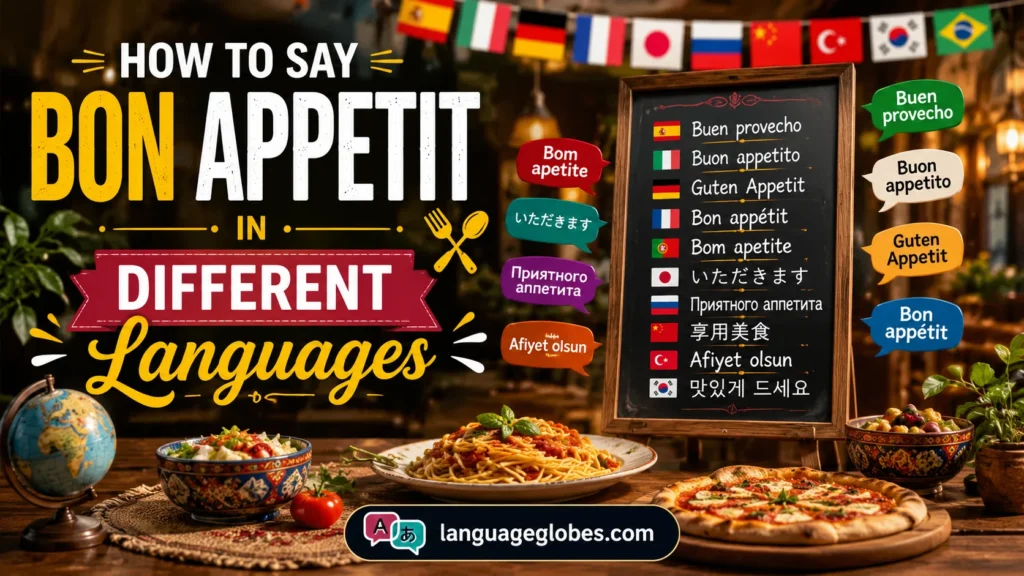
The French expression bon appétit is a warm French phrase expressing good appetite before eating together. It reflects hospitality, kindness, respect, and appreciation while encouraging everyone to enjoy your meal.
This universal phrase appears across global languages, strengthening communication through meaningful meal wishes and food culture. Whether you are travelers, language learners, or food lovers, these multilingual phrases support natural communication during every shared meal.
This language guide explores phrase translation, pronunciation, language translation, and the English equivalent across world languages. Discover commonly spoken languages, lesser-known languages, and local expression examples used before eating with proper dining etiquette.
Learn how greetings before meals, food expressions, and meal etiquette reflect cultural traditions, global culture, and cultural exchange. You will read, learn, and speak confidently while understanding phrase meaning, good appetite meaning, and ways to wish someone well.
Also Read This: How to Say Boogeyman in Different Languages
Interesting Facts About Bon Appetit
- “Bon Appétit” originates from the French language.
- The literal English translation is “good appetite.”
- The phrase became internationally popular due to French culinary influence.
- Many countries have their own version of wishing someone an enjoyable meal.
- Some cultures focus on gratitude rather than appetite before eating.
- In Japan, people often say “Itadakimasu,” which expresses thankfulness for the meal.
- In Germany, people commonly say “Guten Appetit.”
- In Italy, the standard phrase is “Buon Appetito.”
- Learning meal-time expressions helps travelers connect with local cultures.
- Food greetings are considered polite in many parts of the world.
- Some languages use religious blessings before meals instead of direct equivalents of Bon Appetit.
- These expressions often reveal important cultural values such as gratitude, hospitality, and community.
How to Say Bon Appetit in Different Languages
The phrase “Bon Appetit” exists in many forms across the globe. While the exact wording may differ, the intention remains the same: wishing someone an enjoyable meal. Below are translations organized by region and language family.
European Languages
Europe has a rich culinary heritage and many countries use dedicated expressions before meals. These phrases are commonly heard in homes, restaurants, and family gatherings. While many European languages have direct equivalents of Bon Appetit, each expression reflects the unique culture and traditions of its speakers.
| Language | Country/Region | Translation | Pronunciation | Example Sentence |
| French 🇫🇷 | France | Bon Appétit | bon ah-pay-tee | Bon appétit à tous. |
| Italian 🇮🇹 | Italy | Buon Appetito | bwohn ahp-peh-tee-toh | Buon appetito a tutti. |
| Spanish 🇪🇸 | Spain | Buen Provecho | bwen pro-veh-cho | Buen provecho a todos. |
| Portuguese 🇵🇹 | Portugal | Bom Apetite | bom ah-peh-chee | Bom apetite para todos. |
| German 🇩🇪 | Germany | Guten Appetit | goo-ten ah-peh-teet | Guten Appetit zusammen. |
| Dutch 🇳🇱 | Netherlands | Eet Smakelijk | ate smah-ke-lik | Eet smakelijk iedereen. |
| Swedish 🇸🇪 | Sweden | Smaklig Måltid | smak-lig mole-teed | Smaklig måltid! |
| Norwegian 🇳🇴 | Norway | God Appetitt | goo ah-peh-teet | God appetitt alle sammen. |
| Danish 🇩🇰 | Denmark | Velbekomme | vel-be-kom-me | Velbekomme! |
| Finnish 🇫🇮 | Finland | Hyvää Ruokahalua | huu-va roo-ka-ha-lua | Hyvää ruokahalua. |
| Icelandic 🇮🇸 | Iceland | Verði Þér Að Góðu | ver-thee-ther-ath-go-thu | Verði þér að góðu. |
| Polish 🇵🇱 | Poland | Smacznego | smach-neh-go | Smacznego wszystkim. |
| Czech 🇨🇿 | Czech Republic | Dobrou Chuť | do-broh hoot | Dobrou chuť. |
| Slovak 🇸🇰 | Slovakia | Dobrú Chuť | doh-broo hoot | Dobrú chuť. |
| Hungarian 🇭🇺 | Hungary | Jó Étvágyat | yo et-va-yat | Jó étvágyat! |
| Romanian 🇷🇴 | Romania | Poftă Bună | pof-ta boo-na | Poftă bună tuturor. |
| Bulgarian 🇧🇬 | Bulgaria | Добър Апетит | dobur apetit | Добър апетит. |
| Greek 🇬🇷 | Greece | Καλή Όρεξη | ka-lee o-rek-see | Καλή όρεξη. |
| Croatian 🇭🇷 | Croatia | Dobar Tek | do-bar tek | Dobar tek svima. |
| Serbian 🇷🇸 | Serbia | Prijatno | pree-yat-no | Prijatno. |
| Slovenian 🇸🇮 | Slovenia | Dober Tek | do-ber tek | Dober tek. |
| Ukrainian 🇺🇦 | Ukraine | Смачного | smach-no-ho | Смачного! |
| Belarusian 🇧🇾 | Belarus | Смачнага | smach-na-ha | Смачнага. |
| Lithuanian 🇱🇹 | Lithuania | Skanaus | ska-naus | Skanaus. |
| Latvian 🇱🇻 | Latvia | Labu Apetīti | la-boo ah-pe-tee-tee | Labu apetīti. |
| Estonian 🇪🇪 | Estonia | Head Isu | he-ad ee-su | Head isu. |
| Irish 🇮🇪 | Ireland | Bain Taitneamh As | ban tat-nav as | Bain taitneamh as do bhéile. |
| Welsh 🏴 | Wales | Mwynhewch Eich Pryd | mwin-hewch eich prid | Mwynhewch eich pryd. |
| Maltese 🇲🇹 | Malta | L-Ikla t-Tajba | lik-la tai-ba | L-ikla t-tajba. |
| Albanian 🇦🇱 | Albania | Ju Bëftë Mirë | yoo bef-te mee-re | Ju bëftë mirë. |
Asian Languages
Asia is home to thousands of languages and diverse food traditions. In many Asian cultures, expressions before meals emphasize gratitude, respect, and community. Some phrases directly mean “enjoy your meal,” while others express thankfulness for the food being served.
| Language | Country/Region | Translation | Pronunciation | Example Sentence |
| Mandarin Chinese 🇨🇳 | China | 请慢用 | ching man yong | 请慢用。 |
| Cantonese 🇭🇰 | Hong Kong | 慢慢食 | maan maan sik | 慢慢食。 |
| Japanese 🇯🇵 | Japan | いただきます | ee-ta-da-kee-mas | いただきます。 |
| Korean 🇰🇷 | South Korea | 맛있게 드세요 | ma-shit-ke deu-se-yo | 맛있게 드세요. |
| Hindi 🇮🇳 | India | भोजन का आनंद लें | bhojan ka anand len | भोजन का आनंद लें। |
| Urdu 🇵🇰 | Pakistan | کھانے کا لطف اٹھائیں | khaanay ka lutf uthain | کھانے کا لطف اٹھائیں۔ |
| Bengali 🇧🇩 | Bangladesh | ভালো করে খান | bhalo kore khan | ভালো করে খান। |
| Punjabi 🇮🇳 | Punjab | ਖਾਣੇ ਦਾ ਆਨੰਦ ਲਵੋ | khaane da aanand lavo | ਖਾਣੇ ਦਾ ਆਨੰਦ ਲਵੋ। |
| Gujarati 🇮🇳 | India | જમો અને આનંદ માણો | jamo ane anand mano | જમો અને આનંદ માણો. |
| Marathi 🇮🇳 | India | जेवणाचा आनंद घ्या | jevanacha anand ghya | जेवणाचा आनंद घ्या. |
| Tamil 🇮🇳 | India | உணவை ரசித்து சாப்பிடுங்கள் | unavai rasithu saapidungal | உணவை ரசித்து சாப்பிடுங்கள். |
| Telugu 🇮🇳 | India | భోజనం ఆనందించండి | bhojanam anandinchandi | భోజనం ఆనందించండి. |
| Kannada 🇮🇳 | India | ಊಟವನ್ನು ಆನಂದಿಸಿ | ootavannu anandisi | ಊಟವನ್ನು ಆನಂದಿಸಿ. |
| Malayalam 🇮🇳 | India | ഭക്ഷണം ആസ്വദിക്കൂ | bhakshanam aaswadikku | ഭക്ഷണം ആസ്വദിക്കൂ. |
| Thai 🇹🇭 | Thailand | ทานให้อร่อย | tan hai aroi | ทานให้อร่อย |
| Vietnamese 🇻🇳 | Vietnam | Chúc Ngon Miệng | chook ngon mee-eng | Chúc ngon miệng. |
| Indonesian 🇮🇩 | Indonesia | Selamat Makan | suh-la-mat ma-kan | Selamat makan. |
| Malay 🇲🇾 | Malaysia | Selamat Menjamu Selera | suh-la-mat men-ja-moo | Selamat menjamu selera. |
| Filipino 🇵🇭 | Philippines | Kain Na | ka-in na | Kain na tayo. |
| Khmer 🇰🇭 | Cambodia | សូមពិសាអាហារ | sohm pee-sa a-ha | សូមពិសាអាហារ. |
| Lao 🇱🇦 | Laos | ກິນແຊບໆ | kin saep saep | ກິນແຊບໆ. |
| Burmese 🇲🇲 | Myanmar | စားကောင်းပါစေ | sa kaung ba say | စားကောင်းပါစေ. |
| Nepali 🇳🇵 | Nepal | स्वादिष्ट भोजन गर्नुहोस् | swa-disht bhojan garnuhos | स्वादिष्ट भोजन गर्नुहोस्. |
| Sinhala 🇱🇰 | Sri Lanka | ආහාරය රසවිඳින්න | aaharaya rasa vidinna | ආහාරය රසවිඳින්න. |
| Mongolian 🇲🇳 | Mongolia | Сайхан хооллоорой | sai-khan khool-lo-roy | Сайхан хооллоорой. |
African Languages
Africa is home to extraordinary linguistic diversity, with thousands of languages spoken across the continent. Food plays an important role in family life and community gatherings. Meal-time expressions often emphasize sharing, hospitality, and appreciation for the food provided.
| Language | Country/Region | Translation | Pronunciation | Example Sentence |
| Swahili 🇰🇪 | East Africa | Furahia Chakula Chako | foo-ra-hee-a cha-koo-la cha-ko | Furahia chakula chako. |
| Zulu 🇿🇦 | South Africa | Jabulela Ukudla Kwakho | ja-boo-le-la oo-koo-dla | Jabulela ukudla kwakho. |
| Xhosa 🇿🇦 | South Africa | Yonwabela Ukutya Kwakho | yon-wa-be-la uku-ta-ya | Yonwabela ukutya kwakho. |
| Afrikaans 🇿🇦 | South Africa | Geniet Jou Ete | khe-neet yo ete | Geniet jou ete. |
| Yoruba 🇳🇬 | Nigeria | Jeun Re | jay-un ray | Jeun re. |
| Igbo 🇳🇬 | Nigeria | Rie Nri Gi | ree ehn-ree gee | Rie nri gi. |
| Hausa 🇳🇬 | Nigeria | A Ci Abinci Lafiya | a chi a-bin-chi | A ci abinci lafiya. |
| Amharic 🇪🇹 | Ethiopia | መልካም ምግብ | mel-kam migib | መልካም ምግብ. |
| Somali 🇸🇴 | Somalia | Cunto Wanaagsan | coon-to wa-na-jan | Cunto wanaagsan. |
| Shona 🇿🇼 | Zimbabwe | Nakidzwa Nekudya Kwako | na-kid-zwa ne-kud-ya | Nakidzwa nekudya kwako. |
| Kinyarwanda 🇷🇼 | Rwanda | Mwiryohereze Ifunguro | mwee-ryo-he-re-ze | Mwiryohereze ifunguro. |
| Tswana 🇧🇼 | Botswana | Natefelwa Ke Dijo | na-te-fel-wa ke di-jo | Natefelwa ke dijo. |
Middle Eastern Languages
The Middle East has a long tradition of hospitality, family meals, and shared dining experiences. In many cultures of the region, blessings before meals are common and often carry religious or cultural significance. Wishing others enjoyment and gratitude before eating remains an important social custom.
| Language | Country/Region | Translation | Pronunciation | Example Sentence |
| Arabic 🇸🇦 | Middle East | بالهنا والشفا | bil-hana wal-shifa | بالهنا والشفا |
| Persian 🇮🇷 | Iran | نوش جان | noosh jaan | نوش جان |
| Turkish 🇹🇷 | Türkiye | Afiyet Olsun | ah-fee-yet ol-soon | Afiyet olsun. |
| Hebrew 🇮🇱 | Israel | בתיאבון | be-te-a-von | בתיאבון |
| Kurdish | Kurdistan Region | Nosh Jan | nosh jan | Nosh jan. |
| Armenian 🇦🇲 | Armenia | Բարի Ախորժակ | ba-ri a-khor-zhak | Բարի ախորժակ |
| Azerbaijani 🇦🇿 | Azerbaijan | Nuş Olsun | noosh ol-soon | Nuş olsun. |
| Georgian 🇬🇪 | Georgia | გემრიელად მიირთვით | gem-ree-e-lad | გემრიელად მიირთვით. |
Additional Languages Around the World
Beyond Europe, Asia, Africa, and the Middle East, many other languages have unique ways to wish someone a pleasant meal. These expressions showcase the diversity of cultures across the Americas, Oceania, and indigenous communities worldwide. Learning them can make your interactions more meaningful when traveling or communicating internationally.
| Language | Country/Region | Translation | Pronunciation | Example Sentence |
| American English 🇺🇸 | United States | Enjoy Your Meal | en-joy your meal | Enjoy your meal, everyone. |
| British English 🇬🇧 | United Kingdom | Enjoy Your Meal | en-joy your meal | Enjoy your meal. |
| Australian English 🇦🇺 | Australia | Enjoy Your Meal | en-joy your meal | Enjoy your meal, mates. |
| Canadian English 🇨🇦 | Canada | Enjoy Your Meal | en-joy your meal | Enjoy your meal. |
| Māori 🇳🇿 | New Zealand | Kia Pai Te Kai | kee-a pie te kai | Kia pai te kai. |
| Hawaiian 🌺 | Hawaii | E ʻAi Kākou | eh eye ka-kou | E ʻai kākou. |
| Samoan 🇼🇸 | Samoa | Manuia Le Taumafataga | ma-noo-ee-a | Manuia le taumafataga. |
| Tongan 🇹🇴 | Tonga | Fiefia He Me’akai | fee-fee-a | Fiefia he me’akai. |
| Tahitian 🇵🇫 | Tahiti | Tama’a Maitai | ta-ma-a mai-tai | Tama’a maitai. |
| Haitian Creole 🇭🇹 | Haiti | Bon Apeti | bon a-pe-ti | Bon apeti. |
| Quechua 🇵🇪 | Peru | Mikuyki Kusikuy | mee-koo-ee-kee | Mikuyki kusikuy. |
| Guarani 🇵🇾 | Paraguay | Ekaru Porã | e-ka-roo po-ran | Ekaru porã. |
FAQs
What does bon appétit mean in English?
Bon appétit is a popular French expression and French phrase that means good appetite or enjoy your meal. It is the closest English equivalent used to wish someone well before eating and encourage an enjoyable meal.
How do you say bon appétit in different languages?
Many different languages have their own local expression for bon appétit, reflecting unique food culture and cultural traditions. Learning these multilingual phrases improves international communication and creates a friendly connection with people worldwide.
Why is bon appétit important in food culture?
The phrase represents hospitality, kindness, respect, and appreciation before a meal. It is part of many dining customs, meal tradition, and social customs, making meals feel more welcoming and meaningful.
Is bon appétit used only in the French language?
Although bon appétit comes from the French language, similar food expressions exist in many world languages. These phrases carry the same purpose of offering meal wishes and promoting a pleasant dining experience.
How can language learners improve pronunciation of bon appétit?
Language learners can practice with an audio pronunciation resource and a reliable pronunciation guide. Regular listening and speaking help build confidence in natural communication and everyday language learning.
Why should travelers learn common phrases like bon appétit?
For travelers, knowing common phrases such as bon appétit shows respect for local culture and improves communication. It also helps create positive interactions in a restaurant or during a shared meal.
Can bon appétit be used during prayer before meal or meal blessing?
Some families combine bon appétit with a meal blessing, grace, or prayer before meal based on their beliefs. Others simply express thanks for food before enjoying their meal together.
What is the best way to learn phrase translation for meal greetings?
A good language guide explains phrase translation, language translation, literal translation, and phrase meaning in context. This approach helps you understand greetings before meals across commonly spoken languages and lesser-known languages.
Which countries have famous meals associated with these expressions?
Many countries connect meal greetings with local cuisine, including Italy and pasta, Japan and sushi, Pakistan and biryani, and Mexico and tacos. These traditions highlight food appreciation, global culture, and cultural exchange.
How many languages include expressions similar to bon appétit?
You can find similar phrases in over 70 languages, over 100 languages, and more than 40 languages depending on the collection. Exploring these global languages expands your vocabulary, helps you read, learn, and speak, and strengthens linguistic diversity through translation and expressions.
Conclusion
By learning how to say bon appétit in different languages, you gain more than useful multilingual phrases because you also understand food culture, cultural traditions, dining etiquette, and global culture. Whether you are a language learner, traveler, or food lover, using the right local expression before eating helps wish someone well, encourages natural communication, and shows hospitality, respect, kindness, and appreciation. Keep exploring world languages, improve your pronunciation, read, learn, and speak with confidence while building meaningful connections through every shared meal and cultural exchange.

James Anderson is a passionate language enthusiast and content creator at LanguageGlobes. With a keen interest in global cultures and communication, he shares insightful and engaging content to help readers explore and master new languages.