Blue is a universally recognized color across human communication worldwide today. It represents tranquility, depth, and stability in everyday understanding. Across the globe, its linguistic heritage connects deeply with languages, translation, and word usage. This shared meaning strengthens communication while reflecting rich linguistic diversity and cultural diversity. People explore its vocabulary through words that carry emotional and symbolic value. The journey of understanding Blue enhances awareness of global expression.
Different cultures interpret Blue through cultural meanings inspired by nature, sea, sky, and ocean symbolism. Its shades reflect emotional depth and visual identity across societies. In Spanish, Portuguese, and French, words like azul and bleu express calmness and peace. These expressions connect with trust, wisdom, and loyalty in human understanding. They also inspire confidence, harmony, spirituality, and protection across traditions. Such meanings strengthen linguistic expression and global awareness.
An easy to read guide offers vocabulary expansion and practical examples. Everyday communication includes conversations art, fashion, design, and teaching children effectively. A pronunciation guide supports audio listening, reading, and example sentences for learners. Multilingual learning encourages cultural exploration and language discovery across global communities. Color significance shows cultural variation and linguistic variation in expression. Overall global journey highlights human languages and shared cultural heritage.
Also read this: How to Say Beautiful in Different Languages
Interesting Facts About Blue
- Blue is one of the world’s most popular favorite colors.
- Many cultures associate blue with peace, trust, and stability.
- Ancient civilizations often used rare minerals to create blue pigments.
- Blue is commonly used in company logos because it symbolizes reliability.
- The sky and oceans contribute to the universal recognition of blue.
- In some cultures, blue is believed to offer protection from negative energy.
- Different languages may have multiple shades of blue with separate names.
- Blue is frequently linked to intelligence, wisdom, and creativity.
- Many national flags around the world feature the color blue.
- Blue is often associated with calmness and relaxation in psychology.
How to Say Blue in Different Languages
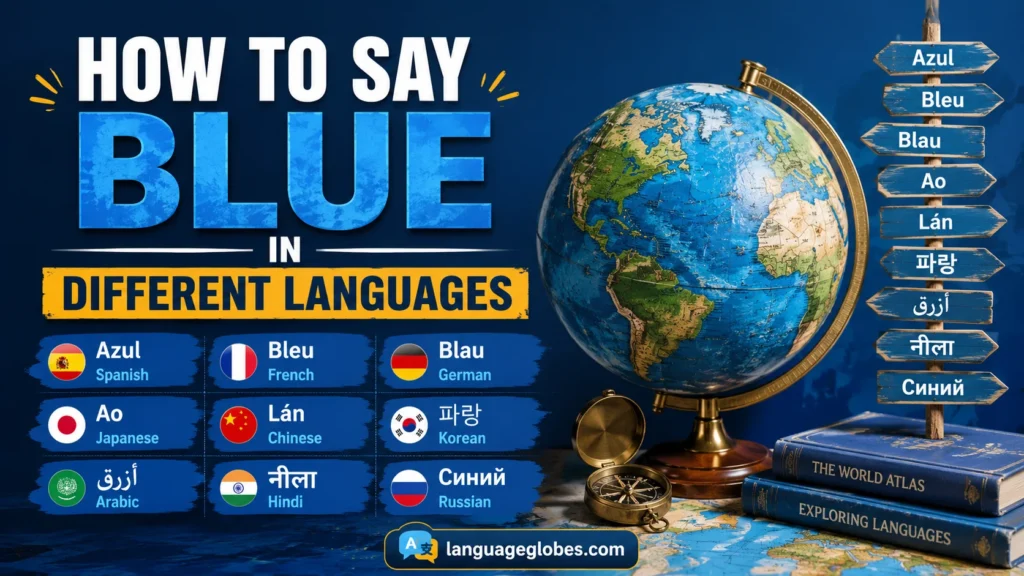
The word “blue” varies across languages, but its significance remains universal. Below you will find translations, pronunciations, and example sentences from more than 70 languages around the world.
European Languages
Europe is home to hundreds of languages from several language families, including Germanic, Romance, Slavic, Celtic, and Baltic languages. While these languages have different origins and structures, they all have distinct words for colors. Learning the word for blue in European languages can help travelers, students, and language enthusiasts communicate more effectively across the continent.
| Language | Country/Region | Translation | Pronunciation | Example Sentence |
| American English 🇺🇸 | USA | Blue | Bloo | The sky is blue. |
| British English 🇬🇧 | United Kingdom | Blue | Bloo | The car is blue. |
| Australian English 🇦🇺 | Australia | Blue | Bloo | My shirt is blue. |
| Spanish 🇪🇸 | Spain | Azul | Ah-sool | El cielo es azul. |
| French 🇫🇷 | France | Bleu | Bluh | Le ciel est bleu. |
| German 🇩🇪 | Germany | Blau | Blow | Der Himmel ist blau. |
| Italian 🇮🇹 | Italy | Blu | Bloo | Il mare è blu. |
| Portuguese 🇵🇹 | Portugal | Azul | Ah-zool | O céu é azul. |
| Dutch 🇳🇱 | Netherlands | Blauw | Blouw | De lucht is blauw. |
| Swedish 🇸🇪 | Sweden | Blå | Bloh | Himlen är blå. |
| Norwegian 🇳🇴 | Norway | Blå | Bloh | Himmelen er blå. |
| Danish 🇩🇰 | Denmark | Blå | Bloh | Himlen er blå. |
| Finnish 🇫🇮 | Finland | Sininen | See-nee-nen | Taivas on sininen. |
| Icelandic 🇮🇸 | Iceland | Blár | Blour | Himinninn er blár. |
| Irish 🇮🇪 | Ireland | Gorm | Gorum | Tá an spéir gorm. |
| Welsh 🏴 | Wales | Glas | Glass | Mae’r awyr yn las. |
| Polish 🇵🇱 | Poland | Niebieski | Nyeh-byes-kee | Niebo jest niebieskie. |
| Czech 🇨🇿 | Czech Republic | Modrý | Moh-dree | Obloha je modrá. |
| Slovak 🇸🇰 | Slovakia | Modrý | Moh-dree | Obloha je modrá. |
| Hungarian 🇭🇺 | Hungary | Kék | Kake | Az ég kék. |
| Romanian 🇷🇴 | Romania | Albastru | Al-bas-troo | Cerul este albastru. |
| Bulgarian 🇧🇬 | Bulgaria | Син | Seen | Небето е синьо. |
| Croatian 🇭🇷 | Croatia | Plava | Plah-va | Nebo je plavo. |
| Serbian 🇷🇸 | Serbia | Плава | Plah-va | Небо је плаво. |
| Slovenian 🇸🇮 | Slovenia | Moder | Moh-der | Nebo je modro. |
| Ukrainian 🇺🇦 | Ukraine | Синій | See-nee | Небо синє. |
| Russian 🇷🇺 | Russia | Синий | See-nee | Небо синее. |
| Belarusian 🇧🇾 | Belarus | Сіні | See-nee | Неба сіняе. |
| Lithuanian 🇱🇹 | Lithuania | Mėlyna | May-lee-na | Dangus mėlynas. |
| Latvian 🇱🇻 | Latvia | Zils | Zeels | Debesis ir zils. |
| Albanian 🇦🇱 | Albania | Blu | Bloo | Qielli është blu. |
| Greek 🇬🇷 | Greece | Μπλε | Bleh | Ο ουρανός είναι μπλε. |
Asian Languages
Asia is the largest continent and contains thousands of languages spoken by billions of people. From East Asia to South Asia and Southeast Asia, color vocabulary often reflects rich cultural traditions and historical influences. The word for blue appears in everyday speech, literature, art, and religious symbolism throughout Asia.
| Language | Country/Region | Translation | Pronunciation | Example Sentence |
| Chinese (Mandarin) 🇨🇳 | China | 蓝色 | Lan-suh | 天空是蓝色的。 |
| Japanese 🇯🇵 | Japan | 青い | Ah-oh-ee | 空は青いです。 |
| Korean 🇰🇷 | South Korea | 파란색 | Pa-ran-sek | 하늘은 파란색입니다. |
| Hindi 🇮🇳 | India | नीला | Nee-la | आसमान नीला है। |
| Urdu 🇵🇰 | Pakistan | نیلا | Nee-la | آسمان نیلا ہے۔ |
| Bengali 🇧🇩 | Bangladesh | নীল | Neel | আকাশ নীল। |
| Punjabi 🇮🇳 | India | ਨੀਲਾ | Nee-la | ਅਸਮਾਨ ਨੀਲਾ ਹੈ। |
| Gujarati 🇮🇳 | India | વાદળી | Vaa-da-lee | આકાશ વાદળી છે. |
| Marathi 🇮🇳 | India | निळा | Nee-la | आकाश निळे आहे. |
| Tamil 🇮🇳 | India | நீலம் | Nee-lam | வானம் நீலமாக உள்ளது. |
| Telugu 🇮🇳 | India | నీలం | Nee-lam | ఆకాశం నీలంగా ఉంది. |
| Kannada 🇮🇳 | India | ನೀಲಿ | Nee-lee | ಆಕಾಶ ನೀಲಿಯಾಗಿದೆ. |
| Malayalam 🇮🇳 | India | നീല | Nee-la | ആകാശം നീലയാണ്. |
| Sinhala 🇱🇰 | Sri Lanka | නිල් | Nil | අහස නිල් පාටයි. |
| Nepali 🇳🇵 | Nepal | नीलो | Nee-lo | आकाश नीलो छ। |
| Thai 🇹🇭 | Thailand | สีฟ้า | See-fah | ท้องฟ้าสีฟ้า. |
| Vietnamese 🇻🇳 | Vietnam | Xanh dương | Sanh-yung | Bầu trời màu xanh dương. |
| Indonesian 🇮🇩 | Indonesia | Biru | Bee-roo | Langit berwarna biru. |
| Malay 🇲🇾 | Malaysia | Biru | Bee-roo | Langit berwarna biru. |
| Filipino 🇵🇭 | Philippines | Asul | Ah-sool | Asul ang langit. |
| Khmer 🇰🇭 | Cambodia | ពណ៌ខៀវ | Pohn Keev | មេឃពណ៌ខៀវ។ |
| Lao 🇱🇦 | Laos | ສີຟ້າ | See-fah | ທ້ອງຟ້າສີຟ້າ. |
| Burmese 🇲🇲 | Myanmar | အပြာ | Ah-pya | ကောင်းကင်က အပြာရောင်ဖြစ်သည်။ |
| Mongolian 🇲🇳 | Mongolia | Цэнхэр | Tsen-kher | Тэнгэр цэнхэр. |
African Languages
Africa is one of the most linguistically diverse continents, with thousands of languages spoken across its regions. Colors often hold cultural and symbolic meanings in African societies. Learning color names such as blue can provide a glimpse into the continent’s rich linguistic heritage and traditions.
| Language | Country/Region | Translation | Pronunciation | Example Sentence |
| Swahili 🇹🇿 | East Africa | Bluu | Bloo | Anga ni bluu. |
| Zulu 🇿🇦 | South Africa | Luhlaza okwesibhakabhaka | Loo-hla-za | Isibhakabhaka siluhlaza. |
| Xhosa 🇿🇦 | South Africa | Luhlaza | Loo-hla-za | Isibhakabhaka siluhlaza. |
| Afrikaans 🇿🇦 | South Africa | Blou | Blow | Die lug is blou. |
| Yoruba 🇳🇬 | Nigeria | Buluu | Boo-loo | Oju orun jẹ buluu. |
| Igbo 🇳🇬 | Nigeria | Anụnụ anụnụ | Ah-noo-noo | Elu igwe bụ anụnụ anụnụ. |
| Hausa 🇳🇬 | Nigeria | Shuɗi | Shoo-dee | Sama shuɗi ce. |
| Somali 🇸🇴 | Somalia | Buluug | Boo-loog | Cirku waa buluug. |
| Amharic 🇪🇹 | Ethiopia | ሰማያዊ | Se-ma-ya-wee | ሰማዩ ሰማያዊ ነው። |
| Shona 🇿🇼 | Zimbabwe | Bhuruu | Boo-roo | Denga riri bhuruu. |
| Kinyarwanda 🇷🇼 | Rwanda | Ubururu | Oo-boo-roo-roo | Ikirere ni ubururu. |
| Sesotho 🇱🇸 | Lesotho | Putsoa | Poot-soa | Leholimo le putsoa. |
Middle Eastern Languages
The Middle East is known for its rich history, ancient civilizations, and influential languages. Many of the region’s languages have contributed significantly to literature, science, religion, and culture. The color blue often carries special cultural and spiritual significance throughout the Middle East.
| Language | Country/Region | Translation | Pronunciation | Example Sentence |
| Arabic 🇸🇦 | Middle East | أزرق | Az-rak | السماء زرقاء. |
| Persian 🇮🇷 | Iran | آبی | Ah-bee | آسمان آبی است. |
| Turkish 🇹🇷 | Turkey | Mavi | Mah-vee | Gökyüzü mavi. |
| Hebrew 🇮🇱 | Israel | כחול | Ka-hol | השמיים כחולים. |
| Kurdish | Kurdistan Region | Şîn | Sheen | Ezman şîn e. |
| Armenian 🇦🇲 | Armenia | Կապույտ | Ka-pooyt | Երկինքը կապույտ է։ |
| Azerbaijani 🇦🇿 | Azerbaijan | Mavi | Mah-vee | Səma mavidir. |
| Georgian 🇬🇪 | Georgia | ლურჯი | Lur-jee | ცა ლურჯია. |
Additional Languages Around the World
The world contains many more languages beyond the major regional groups. These languages represent diverse cultures, histories, and communities. Learning even a simple word like blue in multiple languages can strengthen cultural awareness and appreciation for global diversity.
| Language | Country/Region | Translation | Pronunciation | Example Sentence |
| Maori 🇳🇿 | New Zealand | Kahurangi | Ka-ha-roo-ngee | He kahurangi te rangi. |
| Hawaiian 🇺🇸 | Hawaii | Polū | Poh-loo | Polū ka lani. |
| Samoan 🇼🇸 | Samoa | Lanumoana | Lah-noo-mo-ah-na | E lanumoana le lagi. |
| Tongan 🇹🇴 | Tonga | Lanumoana | Lah-noo-mo-ah-na | ʻOku lanumoana ʻa e langi. |
| Tahitian 🇵🇫 | Tahiti | Ninamu | Nee-na-moo | E ninamu te raʻi. |
| Fijian 🇫🇯 | Fiji | Karakarawa | Ka-ra-ka-ra-wa | E vulavula na lomalagi. |
| Greenlandic 🇬🇱 | Greenland | Tungujortoq | Toon-goo-yor-tok | Qilak tungujortoq. |
| Luxembourgish 🇱🇺 | Luxembourg | Blo | Bloh | Den Himmel ass blo. |
| Maltese 🇲🇹 | Malta | Blu | Bloo | Is-sema blu. |
| Esperanto 🌍 | International | Blua | Bloo-ah | La ĉielo estas blua. |
FAQs
How do you say Blue in different languages?
Blue is expressed differently across languages through unique translation and word variations. It remains a universally recognized color in global human communication, linking people through shared meaning.
What is the meaning of Blue across cultures?
The meaning of Blue reflects tranquility, calmness, and peace in many cultures. It also carries cultural meanings connected to trust, wisdom, and emotional depth.
How is Blue translated in Spanish, French, Portuguese?
In Spanish, Blue is azul, while in French it is bleu and in Portuguese also azul. These translations show strong linguistic heritage and shared vocabulary roots.
What does Blue symbolize in nature and culture?
Blue symbolizes sea, sky, and ocean elements in nature. Across cultures, it represents harmony, stability, and spirituality in everyday cultural expression.
Why is Blue important in human communication?
Blue enhances human communication by expressing emotions like confidence, loyalty, and peace. It strengthens communication across cultures through shared linguistic expression.
How to pronounce Blue in other languages?
Pronunciation of Blue varies across languages, supported by audio pronunciation and listening practice. Learning correct word sounds improves communication skills and language learning.
What are cultural meanings of Blue?
The cultural meanings of Blue include trust, protection, and wisdom in many traditions. These meanings evolve through cultural diversity and global linguistic variation.
How is Blue used in vocabulary learning?
Blue is a key vocabulary word in learning languages and building language learning skills. It supports everyday communication, reading, and example sentences practice.
What is the symbolism of shades of Blue?
Different shades of Blue represent varied symbolism, from calmness to deep stability. This color symbolism reflects emotional tone in art, design, and cultural insights.
How does Blue appear in global linguistic diversity?
Blue appears across global cultures as part of linguistic diversity and cultural heritage. It connects world languages through shared meaning, translation, and expression.
Conclusion
Blue remains a universally recognized Blue color across languages, where every translation of the word strengthens human communication and shared understanding worldwide. Its symbolism of tranquility, linked with sea, sky, and ocean, reflects diverse shades and deep meaning across global cultures, shaped by linguistic heritage and cultural diversity. In Spanish, French, and Portuguese, words like azul and bleu enrich vocabulary and improve communication, showing strong linguistic diversity. This knowledge supports learning languages, vocabulary growth, and stronger communication skills for a global journey.

Joshua Lewis is a passionate language enthusiast and content creator at LanguageGlobes.com. He specializes in exploring global languages, cultures, and communication trends, helping readers connect with the world through words.