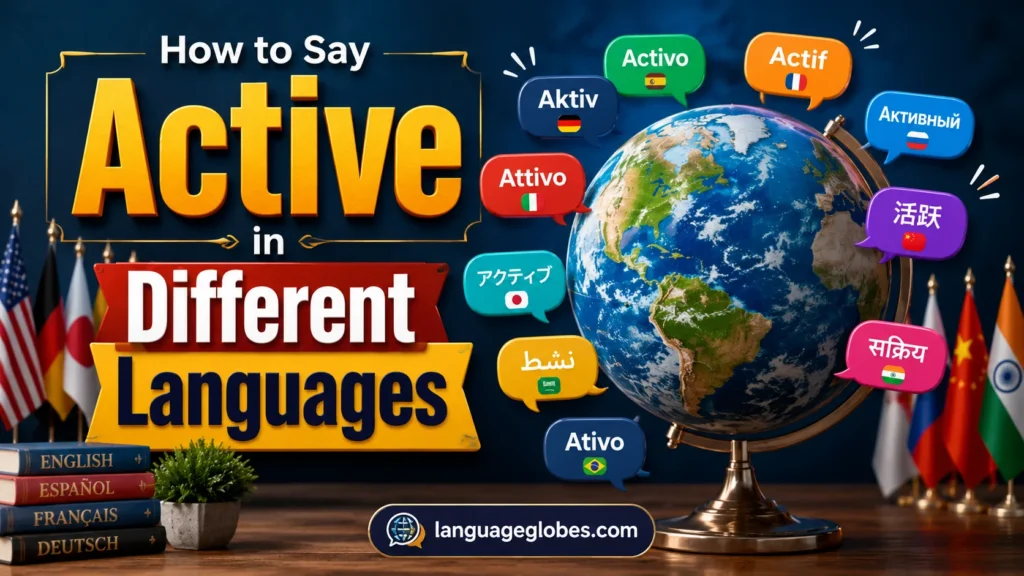
The active word connects people worldwide through different languages and unique cultural expressions. Learning how to say active helps travelers, students, and language enthusiasts communicate with confidence. This linguistic tour explores active translations across world languages with simple explanations and examples.
The word active appears in daily conversation, describing energetic, engaged, and busy qualities. These translations reveal how cultures use language for communication and meaningful human connections. Explore global languages to understand pronunciations, localized terms, and practical usage worldwide.
From sports to work, active lifestyle ideas appear in many real situations. The guide supports multilingual speakers and cultural learners improving their language skills naturally. It explains the active word meaning through examples, audio pronunciation, and cultural insights.
Readers discover active around the world meanings through international languages and cultural understanding. These insights improve cross-cultural communication, speaking skills, and confident everyday interactions. The article provides useful language practice for travel, teamwork, and social connections.
Also read this: How to Say Accept in Different Languages
Interesting Facts About Active
- The word “active” comes from the Latin word activus, meaning “doing” or “driving.”
- Many languages have separate words for physical activity and social activity.
- Being active is commonly associated with health, fitness, productivity, and engagement.
- The concept of an active lifestyle exists in virtually every culture worldwide.
- Some languages use the same word for “active” and “energetic.”
- Learning positive adjectives like active is one of the fastest ways to build vocabulary in a new language.
- In business settings, being described as active often implies leadership and initiative.
- The word active is frequently used in education, sports, healthcare, and technology.
How to Say Active in Different Languages
European Languages
Europe is home to dozens of language families, including Germanic, Romance, Slavic, and Celtic languages. Although these languages have different origins, many share similar words for “active” due to historical influences from Latin and other ancient languages.
| Language | Country/Region | Translation | Pronunciation | Example Sentence |
| 🇺🇸 American English | USA | Active | AK-tiv | She is very active at school. |
| 🇬🇧 British English | United Kingdom | Active | AK-tiv | He remains active in the community. |
| 🇦🇺 Australian English | Australia | Active | AK-tiv | They lead an active lifestyle. |
| French | 🇫🇷 France | Actif | ak-TEEF | Il est très actif. |
| Spanish | 🇪🇸 Spain | Activo | ak-TEE-vo | Él es muy activo. |
| Portuguese | 🇵🇹 Portugal | Ativo | ah-TEE-vo | Ele é muito ativo. |
| Italian | 🇮🇹 Italy | Attivo | at-TEE-vo | Lui è molto attivo. |
| German | 🇩🇪 Germany | Aktiv | ak-TEEF | Er ist sehr aktiv. |
| Dutch | 🇳🇱 Netherlands | Actief | ak-TEEF | Hij is erg actief. |
| Swedish | 🇸🇪 Sweden | Aktiv | ak-TEEV | Hon är mycket aktiv. |
| Norwegian | 🇳🇴 Norway | Aktiv | ak-TEEV | Han er veldig aktiv. |
| Danish | 🇩🇰 Denmark | Aktiv | ak-TEEV | Hun er meget aktiv. |
| Finnish | 🇫🇮 Finland | Aktiivinen | ak-TEE-vee-nen | Hän on aktiivinen. |
| Icelandic | 🇮🇸 Iceland | Virkur | VEER-kur | Hann er virkur. |
| Polish | 🇵🇱 Poland | Aktywny | ak-TIV-ni | On jest aktywny. |
| Czech | 🇨🇿 Czech Republic | Aktivní | ak-TIV-nee | On je aktivní. |
| Slovak | 🇸🇰 Slovakia | Aktívny | ak-TEEV-nee | Je aktívny. |
| Hungarian | 🇭🇺 Hungary | Aktív | ak-TEEV | Ő aktív. |
| Romanian | 🇷🇴 Romania | Activ | ak-TEEV | El este activ. |
| Bulgarian | 🇧🇬 Bulgaria | Активен | ak-TEE-ven | Той е активен. |
| Croatian | 🇭🇷 Croatia | Aktivan | ak-TEE-van | On je aktivan. |
| Serbian | 🇷🇸 Serbia | Aktivan | ak-TEE-van | On je aktivan. |
| Slovenian | 🇸🇮 Slovenia | Aktiven | ak-TEE-ven | On je aktiven. |
| Ukrainian | 🇺🇦 Ukraine | Активний | ak-TIV-nyi | Він активний. |
| Russian | 🇷🇺 Russia | Активный | ak-TIV-niy | Он активный. |
| Belarusian | 🇧🇾 Belarus | Актыўны | ak-TIV-ni | Ён актыўны. |
| Greek | 🇬🇷 Greece | Ενεργός | en-er-GOS | Είναι ενεργός. |
| Irish | 🇮🇪 Ireland | Gníomhach | GNEE-mahkh | Tá sé gníomhach. |
| Welsh | 🏴 Wales | Egnïol | eg-NEE-ol | Mae e’n egnïol. |
Asian Languages
Asia is the world’s largest continent and contains thousands of languages. The region includes major language families such as Sino-Tibetan, Indo-Aryan, Dravidian, Turkic, and Austronesian. Expressions for “active” often emphasize energy, participation, and movement.
| Language | Country/Region | Translation | Pronunciation | Example Sentence |
| Chinese (Mandarin) | 🇨🇳 China | 活跃 | hwo-YWEH | 他很活跃。 |
| Cantonese | 🇭🇰 Hong Kong | 活躍 | woot-yeuk | 佢好活躍。 |
| Japanese | 🇯🇵 Japan | 活発な | kap-pat-su-na | 彼は活発です。 |
| Korean | 🇰🇷 South Korea | 활동적인 | hwal-dong-jeo-gin | 그는 활동적입니다. |
| Hindi | 🇮🇳 India | सक्रिय | sak-riya | वह सक्रिय है। |
| Urdu | 🇵🇰 Pakistan | فعال | fa-aal | وہ بہت فعال ہے۔ |
| Bengali | 🇧🇩 Bangladesh | সক্রিয় | shok-ri-yo | সে সক্রিয়। |
| Punjabi | 🇮🇳🇵🇰 Punjab | ਸਰਗਰਮ | sar-ga-ram | ਉਹ ਸਰਗਰਮ ਹੈ। |
| Gujarati | 🇮🇳 India | સક્રિય | sak-riy | તે સક્રિય છે. |
| Marathi | 🇮🇳 India | सक्रिय | sak-riya | तो सक्रिय आहे. |
| Tamil | 🇮🇳 Sri Lanka | செயலில் | sei-yal-il | அவர் செயலில் உள்ளார். |
| Telugu | 🇮🇳 India | చురుకైన | chu-ru-kai-na | అతను చురుకైనవాడు. |
| Kannada | 🇮🇳 India | ಸಕ್ರಿಯ | sak-ri-ya | ಅವನು ಸಕ್ರಿಯನಾಗಿದ್ದಾನೆ. |
| Malayalam | 🇮🇳 India | സജീവം | sa-jee-vam | അവൻ സജീവമാണ്. |
| Sinhala | 🇱🇰 Sri Lanka | ක්රියාශීලී | kri-ya-shee-lee | ඔහු ක්රියාශීලීය. |
| Nepali | 🇳🇵 Nepal | सक्रिय | sak-riya | ऊ सक्रिय छ। |
| Thai | 🇹🇭 Thailand | กระตือรือร้น | gra-tu-rue-run | เขากระตือรือร้นมาก |
| Vietnamese | 🇻🇳 Vietnam | Năng động | nang dong | Anh ấy rất năng động. |
| Indonesian | 🇮🇩 Indonesia | Aktif | ak-teef | Dia sangat aktif. |
| Malay | 🇲🇾 Malaysia | Aktif | ak-teef | Dia sangat aktif. |
| Filipino | 🇵🇭 Philippines | Aktibo | ak-ti-bo | Siya ay aktibo. |
| Mongolian | 🇲🇳 Mongolia | Идэвхтэй | i-devh-tei | Тэр идэвхтэй. |
| Kazakh | 🇰🇿 Kazakhstan | Белсенді | bel-sen-di | Ол белсенді. |
| Uzbek | 🇺🇿 Uzbekistan | Faol | fa-ol | U faol. |
African Languages
Africa is one of the most linguistically diverse continents, with over 2,000 languages spoken across its regions. Many African languages express activity through words associated with vitality, movement, and participation in community life.
| Language | Country/Region | Translation | Pronunciation | Example Sentence |
| Swahili | 🇹🇿 🇰🇪 East Africa | Hai | ha-ee | Yeye ni hai sana. |
| Zulu | 🇿🇦 South Africa | Sebenzayo | se-ben-za-yo | Usebenzayo kakhulu. |
| Xhosa | 🇿🇦 South Africa | Esebenzayo | e-se-ben-za-yo | Uyasebenza kakhulu. |
| Afrikaans | 🇿🇦 South Africa | Aktief | ak-teef | Hy is aktief. |
| Yoruba | 🇳🇬 Nigeria | Alágbára | a-la-gba-ra | Ó ṣiṣẹ́ gan-an. |
| Igbo | 🇳🇬 Nigeria | Na-arụsi ọrụ ike | na-ru-si o-ru ike | Ọ na-arụsi ọrụ ike. |
| Hausa | 🇳🇬 Niger | Mai aiki | mai ai-ki | Yana da aiki sosai. |
| Amharic | 🇪🇹 Ethiopia | ንቁ | ni-ku | እሱ ንቁ ነው። |
| Somali | 🇸🇴 Somalia | Firfircoon | fir-fir-coon | Waa firfircoon. |
| Shona | 🇿🇼 Zimbabwe | Anoshanda | a-no-shan-da | Anoshanda zvikuru. |
| Kinyarwanda | 🇷🇼 Rwanda | Gikora | gi-ko-ra | Ni umuntu gikora. |
| Malagasy | 🇲🇬 Madagascar | Mavitrika | ma-vee-tree-ka | Mavitrika izy. |
Middle Eastern Languages
The Middle East is known for its rich cultural history and influential languages. Languages spoken in this region often have deep literary traditions and unique ways of expressing energy, action, and participation.
| Language | Country/Region | Translation | Pronunciation | Example Sentence |
| Arabic | 🌍 Middle East | نشيط | na-sheet | هو نشيط جداً. |
| Persian (Farsi) | 🇮🇷 Iran | فعال | fa-aal | او فعال است. |
| Turkish | 🇹🇷 Türkiye | Aktif | ak-tif | O çok aktif. |
| Hebrew | 🇮🇱 Israel | פעיל | pa-eel | הוא פעיל מאוד. |
| Kurdish | 🌍 Kurdistan Region | Çalak | cha-lak | Ew gelek çalak e. |
| Azerbaijani | 🇦🇿 Azerbaijan | Aktiv | ak-tiv | O aktivdir. |
| Armenian | 🇦🇲 Armenia | Ակտիվ | ak-tiv | Նա ակտիվ է։ |
| Georgian | 🇬🇪 Georgia | აქტიური | ak-ti-u-ri | ის აქტიურია. |
Additional Languages Around the World
Languages outside the major regional groups provide even more ways to express the idea of being active. These languages reflect the diversity and richness of cultures across the globe.
| Language | Country/Region | Translation | Pronunciation | Example Sentence |
| Maori | 🇳🇿 New Zealand | Kaha | ka-ha | He tangata kaha ia. |
| Hawaiian | 🇺🇸 Hawaii | Hoʻoikaika | ho-o-ee-kai-ka | He kanaka hoʻoikaika ʻo ia. |
| Samoan | 🇼🇸 Samoa | Toaga | to-a-nga | E toaga tele o ia. |
| Tongan | 🇹🇴 Tonga | Mālohi | ma-lo-hee | ʻOku mālohi ia. |
| Fijian | 🇫🇯 Fiji | Gugumatua | gu-gu-ma-tu-a | E gugumatua o koya. |
| Tahitian | 🇵🇫 Tahiti | Itoito | ee-toy-to | E taata itoito oia. |
| Greenlandic | 🇬🇱 Greenland | Suliartoq | su-lee-ar-toq | Suliartoquuvoq. |
| Esperanto | 🌍 International | Aktiva | ak-TEE-va | Li estas aktiva. |
FAQs
How to Say Active in Different Languages?
The phrase say active can be translated into many different languages around the world. These active translations help people understand the word active in various cultural and linguistic contexts.
What Does the Word Active Mean in Different Cultures?
The active word meaning often describes being energetic, engaged, or involved in actions. Different cultures and societies may use unique expressions to describe this positive quality.
How Can I Learn Active Translations Easily?
Learning active translations becomes easier with language learning, examples, and regular language practice. It helps improve communication skills and supports better cross-cultural communication.
Why Is the Word Active Important in World Languages?
The word active is commonly used across world languages to describe movement, participation, and involvement. It appears in daily conversation, education, work, and social situations.
How Do Travelers Say Active in Different Languages?
Travelers can learn how to say active to communicate naturally during international experiences. Understanding global languages creates better real-life interactions and cultural connections.
How Is Active Used in Sports and Daily Communication?
In sports and daily communication, active describes people who are physically fit, involved, and energetic. It also relates to an active lifestyle and healthy habits.
Can Active Describe a Person’s Personality?
Yes, active can describe personality traits such as being energetic, involved, and motivated. Many languages use similar language expressions for positive personality qualities.
How Do Different Languages Pronounce Active?
The pronunciations of active vary across international languages and regions. Learning word pronunciation helps speakers communicate more clearly with native speakers.
How Does Learning Active in Languages Improve Communication?
Knowing active around the world expressions improves global communication and builds cultural understanding. It allows learners to connect through meaningful international languages.
Where Can I Find Active Translations Around the World?
You can explore translations around the world through language resources, examples, and cultural insights. These worldwide expressions show the diversity of how people describe energy and involvement.
Conclusion
Understanding how to say active in different languages opens a path toward better communication and cultural understanding. These active translations reveal how global languages describe energy, movement, and participation in everyday life. Exploring the word active across cultures improves language skills, speaking skills, and meaningful interactions. Whether for travel, education, or daily communication, learning these expressions supports stronger connections with people worldwide.

Grace Hall is a passionate language enthusiast and writer at LanguageGlobes, dedicated to making global communication simple and accessible. She shares insightful content to help readers explore new languages, cultures, and connections around the world.