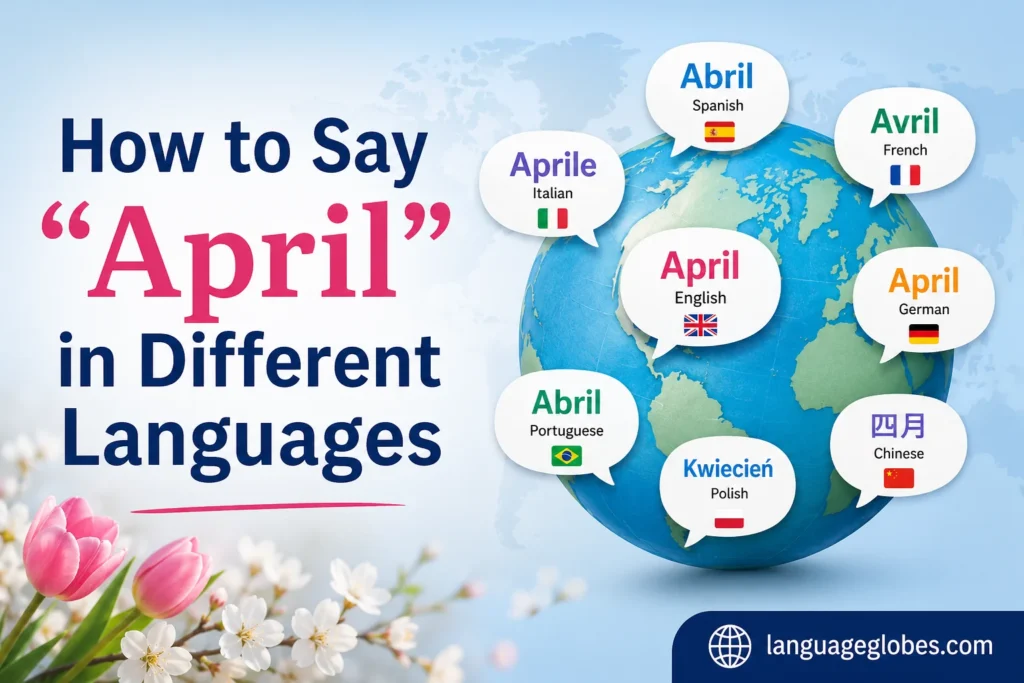
From my own experience, I’ve seen how Language acts as a bridge that connects people, cultures, and countries, and in How to Say “April” in Different Languages, even simple words like the months of the year help you express ideas during travel or study. This month represents spring, growth, and renewal in many parts of the world, making it a perfect time for learning how to say it in different languages, and it truly helps in everyday communication while it deepens your understanding of diverse traditions.
When I started planning international trips, I became curious about each new language and its global value. Knowing these translations is an enriching journey, and this article works like a small guide to learn more than 70 variations with proper pronunciation. You will also find example sentences that make it easier to remember, and as the fourth month, it often brings a vibrant feeling, bringing blooming flowers, longer days, and a fresh sense of life.
The name April is believed to derive from the Latin word aperire, meaning to open, a clear reference to the opening and blossoming of flowers and trees, a common occurrence throughout the season. As you explore how it is pronounced across cultures, you will notice it reflecting a shared recognition of nature’s cycle, full of growth and renewal.
Interesting Facts About How to Say April
- The word “April” comes from the Latin word “Aprilis,” which may have roots in the word “aperire,” meaning “to open,” symbolizing the opening of flowers.
- In many cultures, April is associated with spring festivals and holidays.
- The pronunciation of April varies widely across languages, reflecting unique phonetic patterns.
- Learning months in different languages can improve your language skills and memory.
European Languages
Europe is home to a wide variety of languages, each with its own history and cultural context. From Romance languages in the south to Germanic and Slavic languages in central and eastern Europe, understanding month names is a basic yet essential step in language learning.
| Language | Country/Region | Translation | Pronunciation | Example Sentence |
| English (American) 🇺🇸 | USA | April | /ˈeɪ.prəl/ | My birthday is in April. |
| English (British) 🇬🇧 | UK | April | /ˈeɪ.prəl/ | April showers bring May flowers. |
| English (Australian) 🇦🇺 | Australia | April | /ˈeɪ.prəl/ | We are traveling to Sydney in April. |
| Spanish 🇪🇸 | Spain | abril | /aˈβɾil/ | Mi cumpleaños es en abril. |
| French 🇫🇷 | France | avril | /a.vʁil/ | Nous partons en vacances en avril. |
| German 🇩🇪 | Germany | April | /ˈaːpʁɪl/ | Der April ist der vierte Monat des Jahres. |
| Italian 🇮🇹 | Italy | aprile | /aˈpri.le/ | Il mio compleanno è ad aprile. |
| Portuguese 🇵🇹 | Portugal | abril | /aˈbɾil/ | O meu aniversário é em abril. |
| Dutch 🇳🇱 | Netherlands | april | /ˈaː.prɪl/ | Mijn verjaardag is in april. |
| Swedish 🇸🇪 | Sweden | april | /ˈɑː.prɪl/ | Jag fyller år i april. |
| Russian 🇷🇺 | Russia | апрель | /aˈprʲelʲ/ | Мой день рождения в апреле. |
| Polish 🇵🇱 | Poland | kwiecień | /ˈkfʲɛ.t͡ɕɛɲ/ | Moje urodziny są w kwietniu. |
| Greek 🇬🇷 | Greece | Απρίλιος | /aˈpri.ljos/ | Τα γενέθλιά μου είναι τον Απρίλιο. |
| Norwegian 🇳🇴 | Norway | april | /ˈɑː.prɪl/ | Bursdagen min er i april. |
| Finnish 🇫🇮 | Finland | huhtikuu | /ˈhuhti.kuu/ | Syntymäpäiväni on huhtikuussa. |
| Hungarian 🇭🇺 | Hungary | április | /ˈaːpriːliʃ/ | A születésnapom áprilisban van. |
| Czech 🇨🇿 | Czech Republic | duben | /ˈdu.bɛn/ | Mám narozeniny v dubnu. |
| Slovak 🇸🇰 | Slovakia | apríl | /ˈaːpriːl/ | Moje narodeniny sú v apríli. |
| Romanian 🇷🇴 | Romania | aprilie | /aˈpri.lje/ | Ziua mea de naștere este în aprilie. |
Asian Languages
Asia’s vast linguistic diversity ranges from tonal languages like Chinese to agglutinative languages like Turkish. Learning month names helps navigate calendars, festivals, and seasonal events across the continent.
| Language | Country/Region | Translation | Pronunciation | Example Sentence |
| Mandarin Chinese 🇨🇳 | China | 四月 | Sìyuè | /sɨ⁵¹ yɤ⁵¹/ |
| Cantonese 🇭🇰 | Hong Kong | 四月 | Sei³ jyut⁶ | /sei yut/ |
| Japanese 🇯🇵 | Japan | 4月 (shigatsu) | /ɕi.ɡa.tsɯ/ | 私の誕生日は4月です。 |
| Korean 🇰🇷 | South Korea | 4월 | Sawol | /sa.wʌl/ |
| Hindi 🇮🇳 | India | अप्रैल | Aprail | /ˈæp.reɪl/ |
| Bengali 🇧🇩 | Bangladesh | এপ্রিল | Epril | /eˈpril/ |
| Urdu 🇵🇰 | Pakistan | اپریل | April | /ˈeɪ.prəl/ |
| Thai 🇹🇭 | Thailand | เมษายน | Me-săa-yon | /meː.saː.jon/ |
| Vietnamese 🇻🇳 | Vietnam | Tháng Tư | /taːŋ tɨ̌/ | Sinh nhật của tôi vào tháng Tư. |
| Turkish 🇹🇷 | Turkey | Nisan | /niˈsan/ | Doğum günüm Nisan ayında. |
| Malay 🇲🇾 | Malaysia | April | /ˈeɪ.prɪl/ | Hari jadi saya pada bulan April. |
| Indonesian 🇮🇩 | Indonesia | April | /ˈa.pril/ | Ulang tahun saya pada bulan April. |
| Filipino 🇵🇭 | Philippines | Abril | /aˈbril/ | Ang aking kaarawan ay sa Abril. |
| Persian 🇮🇷 | Iran | آوریل | Āvril | /ɑːˈviːl/ |
| Nepali 🇳🇵 | Nepal | अप्रिल | April | /ˈeɪ.pril/ |
African Languages
Africa is linguistically rich, with over 2000 languages across the continent. From widely spoken languages like Swahili to indigenous dialects, knowing the months can assist with schooling, communication, and cultural understanding.
| Language | Country/Region | Translation | Pronunciation | Example Sentence |
| Swahili 🇰🇪 | Kenya/Tanzania | Aprili | /aˈpri.li/ | Siku yangu ya kuzaliwa ni mwezi wa Aprili. |
| Zulu 🇿🇦 | South Africa | Ephreli | /ɛpˈreːli/ | Usuku lwami lokuzalwa luse-Ephreli. |
| Xhosa 🇿🇦 | South Africa | Epreli | /ɛˈpreli/ | Usuku lwam lokuzalwa luyi-Epreli. |
| Yoruba 🇳🇬 | Nigeria | Oṣù Kẹrin | /ɔʃu kɛrin/ | Ọjọ́ ìbí mi wà ní Oṣù Kẹrin. |
| Hausa 🇳🇬 | Nigeria | Afrilu | /aˈfrilu/ | Ranar haihuwata tana Afrilu. |
| Amharic 🇪🇹 | Ethiopia | ኤፕሪል | /eˈpriːl/ | የበዓመት ቀኔ በኤፕሪል ነው። |
| Somali 🇸🇴 | Somalia | Abriil | /aˈbriːl/ | Dhalashadaydu waa bishii Abriil. |
| Arabic (North Africa) 🇲🇦 | Morocco | أبريل | Abrīl | /ˈæbriːl/ |
Read More: How to Say “Where is The Bathroom” in Different Languages
Middle Eastern Languages
The Middle East has a combination of Semitic and Turkic languages, often with rich literary histories. Learning the month names is helpful for calendars, Islamic holidays, and everyday conversation.
| Language | Country/Region | Translation | Pronunciation | Example Sentence |
| Arabic 🇸🇦 | Saudi Arabia | أبريل | Abrīl | /ˈæbriːl/ |
| Hebrew 🇮🇱 | Israel | אפריל | April | /aˈpʁil/ |
| Kurdish 🇹🇯 | Iraq/Iran | Nîsan | /niˈsan/ | Roja dinyayê min di Nîsan de ye. |
| Persian 🇮🇷 | Iran | آوریل | Āvril | /ɑːˈviːl/ |
| Turkish 🇹🇷 | Turkey | Nisan | /niˈsan/ | Doğum günüm Nisan ayında. |
| Azerbaijani 🇦🇿 | Azerbaijan | Aprel | /aˈprɛl/ | Mənim doğum günüm apreldədir. |
FAQ
1. How do you say “April” in different languages?
“April” is very similar in many languages, like Abril in Spanish and Portuguese, Avril in French, and Aprile in Italian.
2. Why is the word “April” similar in many languages?
Because it comes from the Latin word aperire, many European languages kept a similar form of the word.
3. How do you pronounce “April” in other languages?
Pronunciation changes slightly by language, for example Avril (ah-vreel) in French and Abril (ah-breel) in Spanish.
4. Is “April” the same in all languages?
No, while many languages have similar versions, others like Arabic or Chinese use completely different words.
5. What does the word “April” mean?
It is believed to mean “to open,” referring to flowers opening in spring.
6. Why is April important in different cultures?
April represents spring, growth, and renewal, and many cultures celebrate festivals during this time.
7. How can learning month names help in communication?
Knowing months like April helps in travel, planning events, and basic conversations in different languages.
8. Are there more than 70 ways to say “April”?
Yes, across the world, there are many variations depending on the language and region.
9. What is the origin of the name “April”?
It comes from Latin and is linked to nature and the season of blossoming.
10. Is learning “April” in different languages useful?
Yes, it improves language skills, cultural understanding, and makes global communication easier.
Conclusion
Learning how to say “April” in different languages opens a small but meaningful window into the rich diversity of cultures worldwide. It allows better communication, cultural understanding, and enhances your ability to connect with people globally. Knowing even simple words like months can make travel, study, and cross-cultural interactions more enjoyable and respectful. Start practicing today and enrich your global vocabulary!

Grace Hall is a passionate language enthusiast and writer at LanguageGlobes, dedicated to making global communication simple and accessible. She shares insightful content to help readers explore new languages, cultures, and connections around the world.