
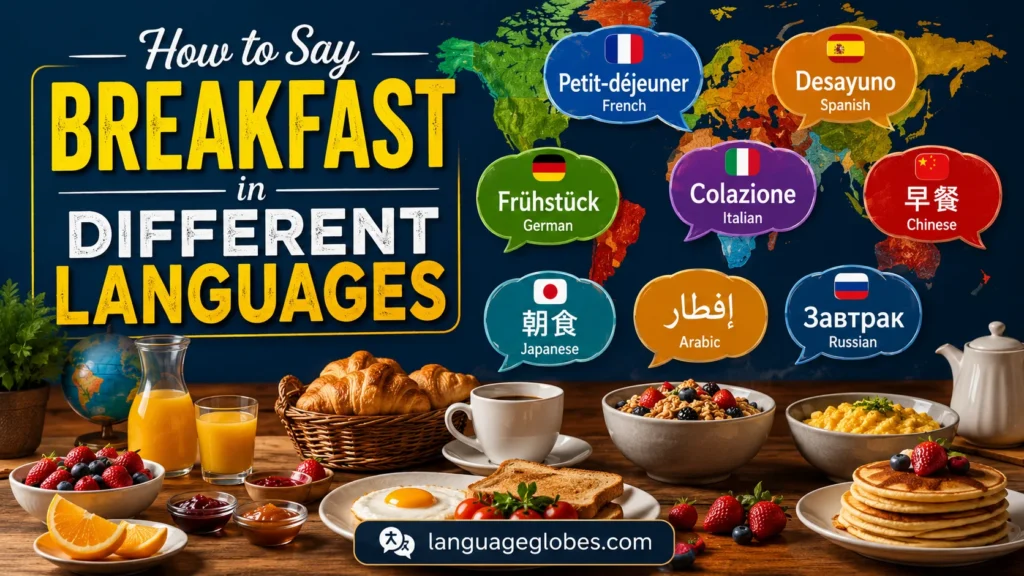
Breakfast is the first meal that starts daily life with energy and meaningful communication. This breakfast language guide explains the breakfast meaning, breakfast translation, and breakfast vocabulary using simple examples.
Learn how to say breakfast across world languages while improving language learning through multilingual vocabulary. You will also explore breakfast pronunciation, language pronunciation, pronunciation guide, and language translation for confident everyday conversations.
Discover breakfast translations with translation examples, language comparison, and breakfast expressions from foreign languages worldwide. Explore breakfast around the world, traditional breakfast, breakfast traditions, and unique food culture across countries, regions, and continents.
Practice ordering food, strengthen travel vocabulary, support international communication, and enjoy richer cultural exchange during traveling abroad. This translation resource also improves language skills, vocabulary building, multilingual communication, and deeper appreciation for world cultures.
Also Read This: How to Say Breath in Different Languages
Interesting Facts About Breakfast
- Breakfast comes from the English phrase “breaking the fast,” meaning the first meal after a night’s sleep.
- Every country has its own unique breakfast traditions and favorite dishes.
- Many languages have a dedicated word for breakfast rather than simply saying “morning meal.”
- Knowing the local word for breakfast can make traveling easier and improve restaurant experiences.
- Breakfast vocabulary is among the first words taught in language learning courses.
- Some cultures eat light breakfasts, while others enjoy large and hearty morning meals.
- Breakfast customs often reflect local agriculture, climate, and history.
- Learning food-related vocabulary helps improve everyday conversations in any language.
How to Say Breakfast in Different Languages
Below are translations of the word breakfast in languages from around the world.
European Languages
Europe is home to hundreds of languages and dialects, representing centuries of history and cultural diversity. Although many European countries share similar customs, breakfast traditions vary greatly from region to region. Learning these translations can be especially helpful for travelers exploring Europe.
| Language | Country/Region | Translation | Pronunciation | Example Sentence |
| 🇺🇸 American English | USA | Breakfast | BREK-fust | I eat breakfast every morning. |
| 🇬🇧 British English | United Kingdom | Breakfast | BREK-fust | Breakfast is ready. |
| 🇦🇺 Australian English | Australia | Breakfast | BREK-fust | Let’s have breakfast together. |
| 🇫🇷 French | France | Petit déjeuner | puh-TEE day-juh-NAY | Je prends le petit déjeuner à huit heures. |
| 🇪🇸 Spanish | Spain | Desayuno | deh-sah-YOO-no | Tomo desayuno temprano. |
| 🇵🇹 Portuguese | Portugal, Brazil | Café da manhã | kah-FEH dah man-YAH | Eu tomo café da manhã cedo. |
| 🇮🇹 Italian | Italy | Colazione | ko-lah-TSYO-neh | Faccio colazione alle sette. |
| 🇩🇪 German | Germany | Frühstück | FROO-shtook | Ich esse Frühstück. |
| 🇳🇱 Dutch | Netherlands | Ontbijt | ont-BITE | Ik eet ontbijt. |
| 🇸🇪 Swedish | Sweden | Frukost | FROO-kost | Jag äter frukost. |
| 🇳🇴 Norwegian | Norway | Frokost | FRO-kost | Jeg spiser frokost. |
| 🇩🇰 Danish | Denmark | Morgenmad | MOR-gen-math | Jeg spiser morgenmad. |
| 🇫🇮 Finnish | Finland | Aamiainen | AA-mee-eye-nen | Syön aamiaisen. |
| 🇮🇸 Icelandic | Iceland | Morgunmatur | MOR-gun-ma-tur | Ég borða morgunmat. |
| 🇵🇱 Polish | Poland | Śniadanie | shnya-DAH-nye | Jem śniadanie. |
| 🇨🇿 Czech | Czech Republic | Snídaně | SNEE-da-nye | Jím snídani. |
| 🇸🇰 Slovak | Slovakia | Raňajky | RAH-nyai-kee | Jem raňajky. |
| 🇭🇺 Hungarian | Hungary | Reggeli | REG-ge-lee | Reggelit eszem. |
| 🇷🇴 Romanian | Romania | Mic dejun | meek deh-ZHOON | Iau micul dejun. |
| 🇬🇷 Greek | Greece | Πρωινό | pro-ee-NO | Τρώω πρωινό. |
| 🇷🇺 Russian | Russia | Завтрак | ZAV-trak | Я ем завтрак. |
| 🇺🇦 Ukrainian | Ukraine | Сніданок | SNEE-da-nok | Я їм сніданок. |
| 🇧🇬 Bulgarian | Bulgaria | Закуска | zah-KOO-ska | Аз ям закуска. |
| 🇷🇸 Serbian | Serbia | Доручак | DO-roo-chak | Једем доручак. |
| 🇭🇷 Croatian | Croatia | Doručak | DO-roo-chak | Jedem doručak. |
| 🇸🇮 Slovenian | Slovenia | Zajtrk | ZAI-trk | Jem zajtrk. |
| 🇱🇹 Lithuanian | Lithuania | Pusryčiai | poos-REE-chay | Valgau pusryčius. |
| 🇱🇻 Latvian | Latvia | Brokastis | BRO-kas-tis | Es ēdu brokastis. |
| 🇪🇪 Estonian | Estonia | Hommikusöök | HOM-mi-ku-suhk | Söön hommikusööki. |
| 🇮🇪 Irish | Ireland | Bricfeasta | BRIK-fas-ta | Ithim bricfeasta. |
| 🏴 Welsh | Wales | Brecwast | BREK-wast | Rwy’n bwyta brecwast. |
Asian Languages
Asia is the world’s largest continent and is home to thousands of languages. Breakfast traditions differ widely across the region, from rice dishes and noodles to bread, tea, and fresh fruits. Learning these words helps you communicate while traveling or studying Asian cultures.
| Language | Country/Region | Translation | Pronunciation | Example Sentence |
| 🇨🇳 Chinese (Mandarin) | China | 早餐 | zao-can | 我吃早餐。 |
| 🇯🇵 Japanese | Japan | 朝ごはん | asa-gohan | 朝ごはんを食べます。 |
| 🇰🇷 Korean | South Korea | 아침식사 | a-chim shik-sa | 아침식사를 먹어요. |
| 🇮🇳 Hindi | India | नाश्ता | NAAS-ta | मैं नाश्ता करता हूँ। |
| 🇵🇰 Urdu | Pakistan | ناشتہ | NASHTA | میں ناشتہ کرتا ہوں۔ |
| 🇧🇩 Bengali | Bangladesh | নাস্তা | NAS-ta | আমি নাস্তা খাই। |
| 🇮🇳 Punjabi | India, Pakistan | ਨਾਸ਼ਤਾ | NASH-ta | ਮੈਂ ਨਾਸ਼ਤਾ ਕਰਦਾ ਹਾਂ। |
| 🇮🇳 Gujarati | India | નાસ્તો | NAS-to | હું નાસ્તો કરું છું. |
| 🇮🇳 Marathi | India | नाश्ता | NAAS-ta | मी नाश्ता करतो. |
| 🇮🇳 Tamil | India | காலை உணவு | kaalai unavu | நான் காலை உணவு சாப்பிடுகிறேன். |
| 🇮🇳 Telugu | India | అల్పాహారం | al-paa-haa-ram | నేను అల్పాహారం తింటాను. |
| 🇮🇳 Kannada | India | ಉಪಾಹಾರ | upa-ha-ra | ನಾನು ಉಪಾಹಾರ ತಿನ್ನುತ್ತೇನೆ. |
| 🇮🇳 Malayalam | India | പ്രഭാതഭക്ഷണം | pra-bha-tha bhak-sha-nam | ഞാൻ പ്രഭാതഭക്ഷണം കഴിക്കുന്നു. |
| 🇳🇵 Nepali | Nepal | बिहानको खाना | bee-HAN-ko kha-na | म बिहानको खाना खान्छु। |
| 🇱🇰 Sinhala | Sri Lanka | උදේ ආහාරය | u-day aa-ha-ra-ya | මම උදේ ආහාරය කනවා. |
| 🇹🇭 Thai | Thailand | อาหารเช้า | aa-han chao | ฉันกินอาหารเช้า. |
| 🇻🇳 Vietnamese | Vietnam | Bữa sáng | boo-ah sang | Tôi ăn bữa sáng. |
| 🇮🇩 Indonesian | Indonesia | Sarapan | sa-ra-pan | Saya makan sarapan. |
| 🇲🇾 Malay | Malaysia | Sarapan | sa-ra-pan | Saya makan sarapan. |
| 🇵🇭 Filipino | Philippines | Almusal | al-moo-sal | Kumain ako ng almusal. |
| 🇰🇭 Khmer | Cambodia | អាហារពេលព្រឹក | aa-ha pail preuk | ខ្ញុំញ៉ាំអាហារពេលព្រឹក។ |
| 🇱🇦 Lao | Laos | ອາຫານເຊົ້າ | aa-han sao | ຂ້ອຍກິນອາຫານເຊົ້າ. |
| 🇲🇲 Burmese | Myanmar | မနက်စာ | ma-net-sa | မနက်စာစားတယ်။ |
| 🇲🇳 Mongolian | Mongolia | Өглөөний цай | ug-luu-nii tsai | Би өглөөний цай ууна. |
African Languages
Africa has incredible linguistic diversity, with more than 2,000 languages spoken across the continent. Each region has its own breakfast customs, influenced by local ingredients, traditions, and history. Learning these translations offers insight into Africa’s rich cultural heritage.
| Language | Country/Region | Translation | Pronunciation | Example Sentence |
| 🇿🇦 Afrikaans | South Africa | Ontbyt | ont-BATE | Ek eet ontbyt. |
| 🇰🇪 Swahili | East Africa | Kifungua kinywa | kee-foo-NGOO-a kee-NYWA | Ninakula kifungua kinywa. |
| 🇪🇹 Amharic | Ethiopia | ቁርስ | koors | ቁርስ እበላለሁ። |
| 🇳🇬 Yoruba | Nigeria | Ounjẹ aarọ | oon-je a-ro | Mo jẹ ounjẹ aarọ. |
| 🇳🇬 Igbo | Nigeria | Nri ụtụtụ | nwee oo-too-too | Ana m eri nri ụtụtụ. |
| 🇳🇬 Hausa | Nigeria | Karin kumallo | ka-rin koo-MAL-lo | Ina cin karin kumallo. |
| 🇿🇦 Zulu | South Africa | Ibhulakufesi | ib-hoo-la-koo-FE-see | Ngidla ibhulakufesi. |
| 🇿🇦 Xhosa | South Africa | Isidlo sakusasa | isi-dlo sa-ku-SA-sa | Nditya isidlo sakusasa. |
Middle Eastern Languages
The Middle East is known for its rich history, hospitality, and flavorful cuisine. Languages in this region belong to several language families, including Semitic, Turkic, and Indo-Iranian. Breakfast often includes bread, cheese, olives, eggs, tea, and fresh vegetables.
| Language | Country/Region | Translation | Pronunciation | Example Sentence |
| 🇸🇦 Arabic | Middle East | إفطار | if-tar | أتناول الإفطار كل صباح. |
| 🇮🇷 Persian (Farsi) | Iran | صبحانه | sob-ha-ne | من صبحانه میخورم. |
| 🇹🇷 Turkish | Türkiye | Kahvaltı | kah-VAL-tu | Kahvaltı yapıyorum. |
| 🇮🇱 Hebrew | Israel | ארוחת בוקר | aru-khat BO-ker | אני אוכל ארוחת בוקר. |
| 🇰🇼 Kurdish | Kurdistan Region | Nanewar | na-ne-war | Ez nanewar dixwim. |
| 🇦🇲 Armenian | Armenia | Նախաճաշ | na-kha-chash | Ես նախաճաշ եմ ուտում։ |
| 🇬🇪 Georgian | Georgia | საუზმე | sauz-me | მე საუზმეს ვჭამ. |
| 🇦🇿 Azerbaijani | Azerbaijan | Səhər yeməyi | sa-har ye-MAY-yi | Mən səhər yeməyi yeyirəm. |
Additional Languages Around the World
Many fascinating languages are spoken outside the regions listed above. These languages represent unique cultures and communities across Oceania, the Americas, and indigenous populations worldwide. Learning even a few words from these languages promotes cross-cultural understanding.
| Language | Country/Region | Translation | Pronunciation | Example Sentence |
| 🇳🇿 Māori | New Zealand | Parakuihi | pa-ra-KOO-ee-hee | Ka kai ahau i te parakuihi. |
| 🇼🇸 Samoan | Samoa | Taeao taumafa | ta-e-ao tau-ma-fa | Ou te ai taeao taumafa. |
| 🇹🇴 Tongan | Tonga | Meʻatokoni pongipongi | may-a-to-ko-ni pon-gee-pon-gee | Oku ou kai meʻatokoni pongipongi. |
| 🇭🇹 Haitian Creole | Haiti | Dejene | deh-ZHEN | Mwen manje dejene. |
| 🇺🇸 Hawaiian | Hawaii | ʻAina kakahiaka | ai-na ka-ka-hee-a-ka | ʻAi au i ka ʻaina kakahiaka. |
| 🇬🇱 Greenlandic | Greenland | Ullaakkorsiorneq | oo-llaak-kor-see-or-neq | Nerivunga ullaakkorsiorneq. |
| 🇨🇦 Inuktitut | Canada | ᐅᓪᓛᒃᑯᑦ ᓂᕆᓂᖅ | ul-laak-kut ni-ri-niq | ᐅᓪᓛᒃᑯᑦ ᓂᕆᓂᖅ ᓂᕆᕗᖓ. |
| 🇪🇸 Basque | Spain | Gosaria | go-SA-ria | Gosaria jaten dut. |
| 🇪🇸 Catalan | Spain | Esmorzar | ez-mor-SAR | Esmorzo cada matí. |
| 🇱🇺 Luxembourgish | Luxembourg | Kaffi | KAF-fee | Ech iessen Kaffi. |
FAQs
What is the breakfast meaning in different world languages?
The breakfast meaning generally refers to the first meal eaten after breaking the fast overnight. While the name changes across world languages and foreign languages, the purpose remains the same in most world cultures.
How do you say breakfast in different languages?
You can say breakfast using different words depending on the language, making breakfast in different languages useful for language learning and international communication. Learning these terms also improves multilingual vocabulary and everyday communication.
Why is breakfast translation useful for traveling abroad?
Knowing the correct breakfast translation helps when ordering food, asking questions, and understanding local menus during traveling abroad. It also supports travel vocabulary, foreign travel, and smoother multilingual communication.
How can I improve breakfast pronunciation in different languages?
Practice breakfast pronunciation by following a reliable language pronunciation guide, listening to breakfast audio, and repeating each word regularly. Frequent pronunciation practice builds confidence and strengthens language skills.
What are some common breakfast translations around the world?
Popular breakfast translations include desayuno in Spanish, asagohan in Japanese, and many other terms across common languages. A good translation collection or translation dictionary makes these words easier to remember.
How does learning breakfast vocabulary help with language learning?
Learning breakfast vocabulary expands your food vocabulary, improves everyday vocabulary, and strengthens vocabulary building. It also supports beginner language learning through familiar meal vocabulary used in daily conversations.
What can I learn about breakfast traditions in different countries?
Exploring breakfast traditions introduces you to traditional breakfast, local breakfast, and unique breakfast foods from different countries, regions, and continents. This builds appreciation for food culture, global traditions, and cultural exchange.
Can a breakfast language guide improve everyday communication?
Yes, a breakfast language guide helps you understand breakfast expressions, breakfast phrases, and useful language examples for real situations. It also improves language education, language practice, and practical international communication.
What foods are commonly served for breakfast in different cultures?
Popular world breakfast choices include full English breakfast, croissants in France, congee in China, parathas in Pakistan, and pancakes in the United States. These meals reflect local breakfast culture, food traditions, and cultural background.
Where can I find a reliable translation resource for breakfast terminology?
A trusted translation resource with translation examples, language reference, and language comparison helps you learn breakfast in over 70 languages or even over 100 languages. It also improves understanding of breakfast terminology, language translation, and spoken languages.
Conclusion
Learning breakfast in different languages helps improve language learning, expand multilingual vocabulary, and build stronger language skills for everyday communication and international communication. By understanding breakfast translation, breakfast pronunciation, breakfast vocabulary, and language translation, you can confidently say breakfast while exploring diverse world languages, world cultures, breakfast traditions, and food culture. This practical breakfast language guide supports travel vocabulary, ordering food, cultural exchange, and meaningful conversations wherever your journey takes you.

Grace Hall is a passionate language enthusiast and writer at LanguageGlobes, dedicated to making global communication simple and accessible. She shares insightful content to help readers explore new languages, cultures, and connections around the world.