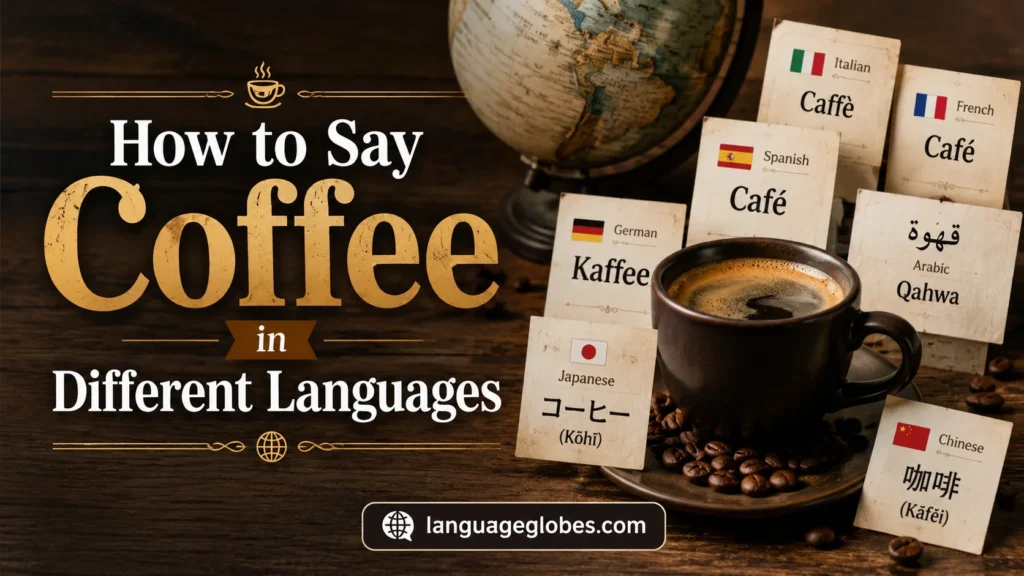
Whether you are a coffee lover, passionate language learner, curious traveler, or devoted culture lover, learning how to say coffee in different languages creates meaningful connections worldwide. This coffee guide explores the coffee word across world languages, helping improve global understanding through practical coffee translation and accurate coffee pronunciation. You will discover useful coffee vocabulary, simple coffee phrases, and a helpful pronunciation guide designed for everyday conversations.
Understanding the local word for coffee supports cultural respect, strengthens cross cultural communication, and enriches memorable travel experiences. Since coffee remains a worldwide beverage with universal appeal, its language reflects unique traditions, values, and social customs. From daily greetings to café conversations, these expressions encourage deeper cultural exchange and lasting connections.
Across Europe, the Middle East, Asia, and the United States, coffee culture plays an important role in daily life, hospitality, friendship, and community gatherings. From an espresso in Italy to Turkish coffee in Istanbul, or a latte enjoyed in Tokyo, every region adds distinctive character to the global coffee scene. Alongside pronunciation support, this guide includes example sentences, valuable cultural insights, and fascinating examples of linguistic diversity found in international languages.
You will also explore coffee drinks, coffee ordering, popular choices from a café menu, and beloved coffee varieties enjoyed worldwide. These insights help create positive interactions while expanding your appreciation for coffee around the world and diverse global cultures. Whether seeking a perfect cup or a richer coffee experience, this guide offers practical knowledge for every coffee enthusiast.
Also read this: How to Say Cheese in Different Languages
Interesting Facts About Coffee in Different Languages
- The English word “coffee” comes from the Arabic word “qahwa.”
- Many European languages use similar versions of the word, such as “café,” “koffie,” or “kaffee.”
- Coffee culture began spreading globally through trade routes connecting the Middle East, Africa, and Europe.
- Ethiopia is widely considered the birthplace of coffee.
- Turkish coffee is recognized by UNESCO as part of the Intangible Cultural Heritage of Humanity.
- In Italy, ordering a “latte” only gives you milk unless you specifically ask for “caffè latte.”
- Finland is one of the world’s highest coffee-consuming countries per person.
- Coffeehouses historically became centers for intellectual discussions, art, and literature.
- Instant coffee is especially popular in several Asian countries.
- Many languages adapted the coffee word directly from Arabic, Turkish, or Dutch influences.
European Languages
Europe has one of the richest café cultures in the world. From elegant Parisian cafés to traditional Italian espresso bars and cozy Scandinavian coffeehouses, coffee is deeply woven into European social life. Many European languages share similar words for coffee because of centuries of trade and cultural exchange.
| Language | Country/Region | Translation | Pronunciation | Example Sentence |
| American English 🇺🇸 | United States | Coffee | KAW-fee | I drink coffee every morning. |
| British English 🇬🇧 | United Kingdom | Coffee | KOF-ee | Would you like a cup of coffee? |
| Australian English 🇦🇺 | Australia | Coffee | KAW-fee | Let’s grab a coffee after work. |
| French 🇫🇷 | France | Café | ka-FAY | Je bois du café tous les matins. |
| Spanish 🇪🇸 | Spain | Café | ka-FEH | Me gusta el café caliente. |
| Italian 🇮🇹 | Italy | Caffè | kaf-FEH | Vorrei un caffè, per favore. |
| German 🇩🇪 | Germany | Kaffee | KAH-feh | Ich trinke gern Kaffee. |
| Portuguese 🇵🇹 | Portugal | Café | ka-FEH | Eu adoro café forte. |
| Dutch 🇳🇱 | Netherlands | Koffie | KOF-fee | Ik wil graag koffie. |
| Swedish 🇸🇪 | Sweden | Kaffe | KAH-feh | Jag dricker kaffe varje dag. |
| Norwegian 🇳🇴 | Norway | Kaffe | KAH-feh | Kan jeg få kaffe? |
| Danish 🇩🇰 | Denmark | Kaffe | KAH-feh | Jeg elsker kaffe. |
| Finnish 🇫🇮 | Finland | Kahvi | KAH-vee | Juon kahvia aamulla. |
| Icelandic 🇮🇸 | Iceland | Kaffi | KAF-fee | Ég drekk kaffi á morgnana. |
| Polish 🇵🇱 | Poland | Kawa | KAH-vah | Lubię gorącą kawę. |
| Czech 🇨🇿 | Czech Republic | Káva | KAA-vah | Dám si kávu. |
| Slovak 🇸🇰 | Slovakia | Káva | KAA-vah | Pijem kávu každý deň. |
| Hungarian 🇭🇺 | Hungary | Kávé | KAA-vay | Szeretem a kávét. |
| Romanian 🇷🇴 | Romania | Cafea | ka-FEH-ah | Beau cafea dimineața. |
| Greek 🇬🇷 | Greece | Καφές | ka-FES | Θέλω έναν καφέ. |
| Russian 🇷🇺 | Russia | Кофе | KO-feh | Я люблю кофе. |
| Ukrainian 🇺🇦 | Ukraine | Кава | KAH-va | Я п’ю каву щодня. |
| Bulgarian 🇧🇬 | Bulgaria | Кафе | ka-FEH | Обичам кафе. |
| Serbian 🇷🇸 | Serbia | Kafa | KAH-fah | Volim jaku kafu. |
| Croatian 🇭🇷 | Croatia | Kava | KAH-vah | Pijem kavu ujutro. |
| Slovenian 🇸🇮 | Slovenia | Kava | KAH-vah | Rad pijem kavo. |
| Latvian 🇱🇻 | Latvia | Kafija | ka-FEE-ya | Es dzeru kafiju. |
| Lithuanian 🇱🇹 | Lithuania | Kava | KAH-va | Aš mėgstu kavą. |
| Estonian 🇪🇪 | Estonia | Kohv | KOHV | Ma joon kohvi hommikul. |
| Irish 🇮🇪 | Ireland | Caife | KAF-yeh | Ólaim caife gach maidin. |
| Welsh 🏴 | Wales | Coffi | KOF-fee | Rwy’n hoffi coffi. |
| Maltese 🇲🇹 | Malta | Kafè | ka-FEH | Inħobb nixrob kafè. |
| Albanian 🇦🇱 | Albania | Kafe | ka-FEH | Pi kafe çdo ditë. |
| Bosnian 🇧🇦 | Bosnia | Kafa | KAH-fah | Volim domaću kafu. |
Asian Languages
Asia is home to a wide variety of coffee traditions, from Vietnamese iced coffee to Japanese specialty cafés and Indian filter coffee. The continent’s languages are incredibly diverse, reflecting thousands of years of culture and history. Coffee continues to grow in popularity throughout Asia, especially among younger generations.
| Language | Country/Region | Translation | Pronunciation | Example Sentence |
| Chinese (Mandarin) 🇨🇳 | China | 咖啡 | ka-FAY | 我喜欢喝咖啡。 |
| Japanese 🇯🇵 | Japan | コーヒー | KOH-hee | 毎朝コーヒーを飲みます。 |
| Korean 🇰🇷 | South Korea | 커피 | KOH-pee | 저는 커피를 좋아해요. |
| Hindi 🇮🇳 | India | कॉफी | KAW-fee | मुझे कॉफी पसंद है। |
| Urdu 🇵🇰 | Pakistan | کافی | KAA-fee | مجھے کافی پسند ہے۔ |
| Bengali 🇧🇩 | Bangladesh | কফি | KO-fi | আমি কফি পছন্দ করি। |
| Tamil 🇮🇳 | South India | காபி | KAA-pee | எனக்கு காபி பிடிக்கும். |
| Telugu 🇮🇳 | India | కాఫీ | KAA-fee | నాకు కాఫీ ఇష్టం. |
| Marathi 🇮🇳 | India | कॉफी | KAW-fee | मला कॉफी आवडते. |
| Gujarati 🇮🇳 | India | કોફી | KO-fee | મને કોફી ગમે છે. |
| Punjabi 🇵🇰 | Punjab | ਕਾਫੀ | KAA-fee | ਮੈਨੂੰ ਕਾਫੀ ਪਸੰਦ ਹੈ। |
| Thai 🇹🇭 | Thailand | กาแฟ | gaa-FAE | ฉันชอบกาแฟ. |
| Vietnamese 🇻🇳 | Vietnam | Cà phê | kah-FEH | Tôi thích cà phê sữa đá. |
| Indonesian 🇮🇩 | Indonesia | Kopi | KO-pee | Saya suka kopi panas. |
| Malay 🇲🇾 | Malaysia | Kopi | KO-pee | Saya minum kopi setiap pagi. |
| Filipino 🇵🇭 | Philippines | Kape | ka-PEH | Mahilig ako sa kape. |
| Sinhala 🇱🇰 | Sri Lanka | කෝපි | KOH-pee | මම කෝපි බොනවා. |
| Nepali 🇳🇵 | Nepal | कफी | KAH-fee | मलाई कफी मन पर्छ। |
| Khmer 🇰🇭 | Cambodia | កាហ្វេ | ka-FEH | ខ្ញុំចូលចិត្តកាហ្វេ។ |
| Lao 🇱🇦 | Laos | ກາເຟ | gaa-FEH | ຂ້ອຍມັກກາເຟ. |
| Burmese 🇲🇲 | Myanmar | ကော်ဖီ | KAW-fee | ကျွန်တော် ကော်ဖီကြိုက်တယ်။ |
| Mongolian 🇲🇳 | Mongolia | Кофе | KO-feh | Би кофе уудаг. |
| Kazakh 🇰🇿 | Kazakhstan | Кофе | KO-feh | Мен кофе жақсы көремін. |
| Uzbek 🇺🇿 | Uzbekistan | Qahva | QAH-va | Men qahva ichaman. |
| Armenian 🇦🇲 | Armenia | Սուրճ | SOORCH | Ես սիրում եմ սուրճ։ |
| Georgian 🇬🇪 | Georgia | ყავა | QA-va | მე ყავა მიყვარს. |
| Azerbaijani 🇦🇿 | Azerbaijan | Qəhvə | QAH-va | Mən qəhvə içirəm. |
| Hebrew 🇮🇱 | Israel | קפה | ka-FEH | אני אוהב קפה. |
| Turkish 🇹🇷 | Turkey | Kahve | KAH-veh | Türk kahvesi çok ünlü. |
| Persian 🇮🇷 | Iran | قهوه | GAH-veh | من قهوه دوست دارم. |
African Languages
Africa has a deep connection to coffee history because coffee is believed to have originated in Ethiopia. Across the continent, coffee remains an important agricultural product and cultural tradition. African languages are rich and diverse, representing thousands of ethnic groups and communities.
| Language | Country/Region | Translation | Pronunciation | Example Sentence |
| Swahili 🇰🇪 | East Africa | Kahawa | ka-HA-wa | Ninapenda kahawa moto. |
| Amharic 🇪🇹 | Ethiopia | ቡና | BOO-na | ቡና እወዳለሁ። |
| Afrikaans 🇿🇦 | South Africa | Koffie | KOF-fee | Ek drink koffie elke oggend. |
| Zulu 🇿🇦 | South Africa | Ikhofi | ee-KHO-fee | Ngithanda ikhofi. |
| Xhosa 🇿🇦 | South Africa | Ikofu | ee-KOH-foo | Ndithanda ikofu. |
| Yoruba 🇳🇬 | Nigeria | Kọfi | KOH-fee | Mo fẹ kọfi. |
| Igbo 🇳🇬 | Nigeria | Kọfị | KOH-fee | A hụrụ m kọfị n’anya. |
| Hausa 🇳🇬 | Nigeria | Kofi | KOH-fee | Ina son kofi. |
| Somali 🇸🇴 | Somalia | Qaxwo | QAX-wo | Waxaan jeclahay qaxwo. |
| Shona 🇿🇼 | Zimbabwe | Kofi | KOH-fee | Ndinoda kofi. |
| Malagasy 🇲🇬 | Madagascar | Kafe | ka-FEH | Tiako ny misotro kafe. |
| Kinyarwanda 🇷🇼 | Rwanda | Ikawa | ee-KA-wa | Nkunda ikawa. |
| Oromo 🇪🇹 | Ethiopia | Buna | BOO-na | Buna nan jaalladha. |
| Lingala 🇨🇩 | Congo | Kafɛ | ka-FEH | Nalingi kafɛ. |
| Sesotho 🇱🇸 | Lesotho | Kofi | KOH-fee | Ke rata kofi. |
Middle Eastern Languages
The Middle East played a major role in the global spread of coffee culture. Traditional coffee ceremonies, strong Arabic coffee, and social coffee gatherings remain important parts of daily life throughout the region. Many words for coffee used around the world can be traced back to Arabic origins.
| Language | Country/Region | Translation | Pronunciation | Example Sentence |
| Arabic 🇸🇦 | Saudi Arabia | قهوة | QAH-wa | أحب شرب القهوة العربية. |
| Kurdish 🇮🇶 | Kurdistan Region | Qehwe | QEH-weh | Ez qehwe dixwim. |
| Pashto 🇦🇫 | Afghanistan | کافي | KAA-fee | زه کافي خوښوم. |
| Dari 🇦🇫 | Afghanistan | قهوه | QAH-wa | من قهوه دوست دارم. |
| Azerbaijani 🇦🇿 | Azerbaijan | Qəhvə | QAH-va | Mən qəhvə sevirəm. |
| Turkish 🇹🇷 | Turkey | Kahve | KAH-veh | Bir fincan kahve lütfen. |
| Persian 🇮🇷 | Iran | قهوه | GAH-veh | قهوه بسیار خوشمزه است. |
| Hebrew 🇮🇱 | Israel | קפה | ka-FEH | אני שותה קפה בבוקר. |
| Armenian 🇦🇲 | Armenia | Սուրճ | SOORCH | Ես ամեն օր սուրճ եմ խմում։ |
| Georgian 🇬🇪 | Georgia | ყავა | QA-va | დილით ყავას ვსვამ. |
How to Say “The End” in Different Languages
Many people are curious about how to say “The End” in different languages because the phrase appears in books, films, storytelling traditions, and theater around the world. Below is a collection of translations in more than 70 languages.
| Language | Translation of “The End” |
| English | The End |
| French | La Fin |
| Spanish | El Fin |
| Italian | La Fine |
| German | Das Ende |
| Portuguese | O Fim |
| Dutch | Het Einde |
| Swedish | Slutet |
| Norwegian | Slutten |
| Danish | Slutningen |
| Finnish | Loppu |
| Icelandic | Endirinn |
| Polish | Koniec |
| Czech | Konec |
| Slovak | Koniec |
| Hungarian | A Vége |
| Romanian | Sfârșitul |
| Greek | Το Τέλος |
| Russian | Конец |
| Ukrainian | Кінець |
| Bulgarian | Край |
| Serbian | Kraj |
| Croatian | Kraj |
| Slovenian | Konec |
| Latvian | Beigas |
| Lithuanian | Pabaiga |
| Estonian | Lõpp |
| Irish | An Deireadh |
| Welsh | Y Diwedd |
| Albanian | Fundi |
| Maltese | It-Tmiem |
| Turkish | Son |
| Arabic | النهاية |
| Persian | پایان |
| Hebrew | הסוף |
| Kurdish | Dawî |
| Pashto | پای |
| Dari | پایان |
| Hindi | अंत |
| Urdu | اختتام |
| Bengali | শেষ |
| Punjabi | ਅੰਤ |
| Tamil | முடிவு |
| Telugu | ముగింపు |
| Marathi | शेवट |
| Gujarati | અંત |
| Nepali | अन्त्य |
| Sinhala | අවසානය |
| Chinese (Mandarin) | 结束 |
| Japanese | 終わり |
| Korean | 끝 |
| Thai | จุดจบ |
| Vietnamese | Kết thúc |
| Indonesian | Akhir |
| Malay | Tamat |
| Filipino | Wakas |
| Khmer | ចប់ |
| Lao | ຈົບ |
| Burmese | အဆုံး |
| Mongolian | Төгсгөл |
| Kazakh | Соңы |
| Uzbek | Oxiri |
| Armenian | Վերջ |
| Georgian | დასასრული |
| Swahili | Mwisho |
| Amharic | መጨረሻ |
| Afrikaans | Die Einde |
| Zulu | Isiphetho |
| Xhosa | Isiphelo |
| Yoruba | Ipari |
| Igbo | Ọgwụgwụ |
| Hausa | Ƙarshe |
| Somali | Dhammaad |
| Shona | Magumo |
| Malagasy | Farany |
| Kinyarwanda | Iherezo |
Why Coffee Words Are Similar Across Languages
One interesting thing language learners notice is that the word for coffee sounds very similar in many countries. This happened because coffee spread globally through trade and travel. Merchants carried coffee beans from the Middle East into Europe, Asia, and Africa, and the original Arabic word influenced many modern terms.
For example:
- Arabic: Qahwa
- Turkish: Kahve
- Dutch: Koffie
- English: Coffee
- French: Café
- German: Kaffee
Even though the spelling changes slightly, the connection between the words is still easy to recognize. This shared linguistic history shows how cultures influence one another over time.
Coffee Culture Around the World
Italy
Italy is famous for espresso culture. Italians often drink quick espresso shots while standing at café counters. Cappuccino is usually enjoyed in the morning.
Turkey
Turkish coffee is prepared slowly in a special pot called a cezve. It is strong, rich, and often served with sweets.
Ethiopia
Ethiopia has traditional coffee ceremonies where coffee beans are roasted, ground, and brewed in front of guests.
Japan
Japan is known for its attention to detail in coffee brewing. Specialty cafés and canned coffee are both extremely popular.
United States
American coffee culture includes everything from large takeaway cups to artisanal specialty cafés.
Vietnam
Vietnamese coffee is often served with sweetened condensed milk and ice, creating a bold and delicious flavor.
Benefits of Learning Words in Different Languages
Learning simple words like “coffee” can provide many advantages:
- Helps travelers communicate more easily.
- Creates positive interactions with local people.
- Improves language-learning confidence.
- Increases cultural understanding.
- Makes travel experiences more enjoyable.
- Expands vocabulary naturally.
- Encourages curiosity about global cultures.
- Helps people appreciate linguistic diversity.
Even learning one word in another language can open the door to meaningful conversations.
FAQs
Why is it useful to learn how to say coffee in different languages?
Learning how to say coffee in different languages helps language learners, travelers, and culture lovers communicate more confidently. It improves global understanding, encourages cultural respect, and creates better opportunities for cross cultural communication during worldwide travel.
How does coffee translation help when traveling internationally?
Knowing the correct coffee translation, coffee phrases, and local word for coffee makes coffee ordering easier in international languages. It can lead to smoother interactions in a local coffee shop, better travel experiences, and more meaningful cultural exchange.
What can I learn about coffee culture around the world?
Exploring coffee culture reveals how coffee around the world connects people through hospitality, friendship, conversation, and community. Different regions have unique coffee traditions, café culture, and social customs that reflect diverse global cultures.
Which popular coffee drinks should I know when visiting other countries?
Many coffee lovers enjoy learning about popular coffee drinks such as espresso, latte, flat white, cortado, lungo, ristretto, café au lait, cold brew, nitro cold brew, and Turkish coffee. Understanding these types of coffee drinks helps you choose the right drink from any café menu.
Can learning coffee vocabulary improve language learning?
Yes, learning coffee vocabulary, coffee pronunciation, and example sentences is a practical way to support language learning. It helps learners understand linguistic nuances, appreciate linguistic diversity, and build stronger cultural connections through a universally loved worldwide beverage.
Conclusion
In the end, learning how to say coffee in different languages is more than memorizing a coffee word because it builds global understanding, encourages cultural respect, and strengthens cross cultural communication. By exploring coffee translation, coffee pronunciation, coffee vocabulary, and unique coffee culture traditions, language learners, travelers, and coffee lovers can enjoy richer travel experiences and meaningful cultural exchange. Whether ordering coffee drinks from a café menu or discovering coffee around the world, this knowledge deepens your connection with diverse global cultures and the thriving global coffee scene.

James Anderson is a passionate language enthusiast and content creator at LanguageGlobes. With a keen interest in global cultures and communication, he shares insightful and engaging content to help readers explore and master new languages.