
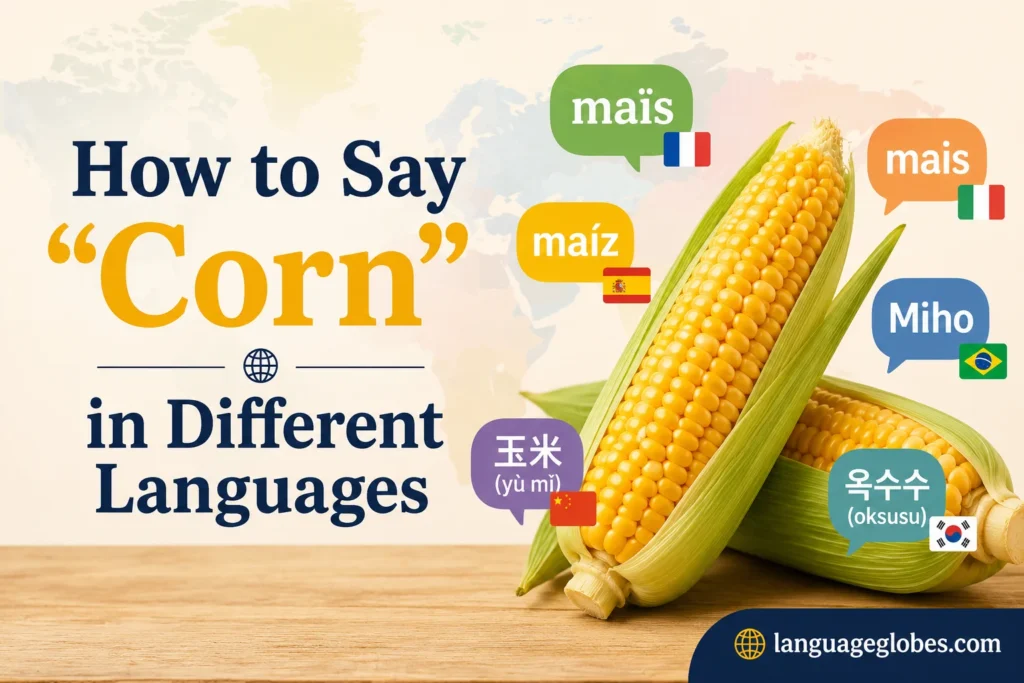
How to Say “Corn” in Different Languages helps readers discover global names, meanings, pronunciations, and cultural uses of corn.
Corn is a staple food connected with many cultures, often representing sustenance, prosperity, and the harvest season. During my travels through farming regions, I noticed how this essential crop is referred to by different names in different languages, making every conversation more fascinating. This guide shares a clear and practical list of 70 languages, helping every traveler, student, and language enthusiast in learning useful translations, meanings, pronunciations, and examples to communicate better and understand global food culture through one simple word.
From agricultural landscapes across the globe to busy cities around the world, corn remains one of the world’s most important staple foods. The crop is widely known for its golden kernels, versatility, and connection to both meals and fuel. In many places, maize is part of daily food and other farming products, making it a truly vital crop. Many people search for corn in different languages to discover how this widely consumed crops item is recognized globally through a rich linguistic journey.
As someone interested in studying languages and local farming traditions, I always admired how one simple crop carries deep identity across global communities. These 70 translations help readers explore the diversity of the world’s tongues, while reflecting unique cultural and linguistic identity. The agricultural history, cultural identity, and importance of essential staple foods in human life make corn more than a source of nutrition. Its golden kernels symbolize connection between people, traditions, and beautiful landscapes, helping readers recognize local names and appreciate the unique beauty of every language and its tongues.
Interesting Facts About “Corn”
- Corn is also called maize in many countries.
- It originated thousands of years ago in Central America.
- Corn is used to make flour, popcorn, tortillas, cereals, and cooking oil.
- Different cultures have unique dishes made from corn.
- The United States is one of the largest corn producers in the world.
- In some languages, the word for corn is closely connected to the word “grain” or “maize.”
- Corn appears in many cultural festivals and harvest celebrations worldwide.
European Languages
Europe is home to dozens of fascinating languages with rich histories and cultural traditions. Corn is widely consumed throughout Europe in breads, soups, snacks, and traditional meals. While some European languages use words similar to “maize,” others have completely unique names for corn.
| Language | Country/Region | Translation | Pronunciation | Example Sentence |
| 🇺🇸 American English | United States | Corn | Korn | I bought fresh corn at the market. |
| 🇬🇧 British English | United Kingdom | Maize/Corn | Mayz/Korn | The farmer grows maize every summer. |
| 🇦🇺 Australian English | Australia | Corn | Korn | We grilled corn at the barbecue. |
| 🇪🇸 Spanish | Spain | Maíz | Mah-ees | El maíz es muy popular en México. |
| 🇫🇷 French | France | Maïs | Mah-ees | Le maïs pousse dans les champs. |
| 🇩🇪 German | Germany | Mais | Mाइस | Der Mais ist reif. |
| 🇮🇹 Italian | Italy | Mais | Mah-ees | Il mais è giallo. |
| 🇵🇹 Portuguese | Portugal | Milho | Meel-yoo | O milho é delicioso. |
| 🇳🇱 Dutch | Netherlands | Maïs | Mah-ees | Ik eet graag maïs. |
| 🇷🇺 Russian | Russia | Кукуруза | Koo-koo-roo-zah | Я люблю кукурузу. |
| 🇵🇱 Polish | Poland | Kukurydza | Koo-koo-rid-zah | Kukurydza jest słodka. |
| 🇸🇪 Swedish | Sweden | Majs | Mाइस | Majs är gott. |
| 🇳🇴 Norwegian | Norway | Mais | Mाइस | Jeg liker mais. |
| 🇩🇰 Danish | Denmark | Majs | Mाइस | Majs vokser hurtigt. |
| 🇫🇮 Finnish | Finland | Maissi | My-see | Maissi on herkullista. |
| 🇬🇷 Greek | Greece | Καλαμπόκι | Kah-lam-bo-kee | Το καλαμπόκι είναι φρέσκο. |
| 🇨🇿 Czech | Czech Republic | Kukuřice | Koo-koo-rzhee-tseh | Kukuřice je chutná. |
| 🇸🇰 Slovak | Slovakia | Kukurica | Koo-koo-ree-tsa | Kukurica rastie na poli. |
| 🇭🇺 Hungarian | Hungary | Kukorica | Koo-ko-ree-tsa | A kukorica sárga. |
| 🇷🇴 Romanian | Romania | Porumb | Poh-roomb | Porumbul este dulce. |
| 🇺🇦 Ukrainian | Ukraine | Кукурудза | Koo-koo-rood-zah | Кукурудза смачна. |
| 🇧🇬 Bulgarian | Bulgaria | Царевица | Tsah-reh-vee-tsa | Царевицата е вкусна. |
| 🇭🇷 Croatian | Croatia | Kukuruz | Koo-koo-rooz | Kukuruz je svjež. |
| 🇷🇸 Serbian | Serbia | Кукуруз | Koo-koo-rooz | Кукуруз је укусан. |
| 🇸🇮 Slovenian | Slovenia | Koruza | Koh-roo-zah | Koruza je rumena. |
| 🇱🇹 Lithuanian | Lithuania | Kukurūzai | Koo-koo-roo-zai | Kukurūzai yra geri. |
| 🇱🇻 Latvian | Latvia | Kukurūza | Koo-koo-roo-zah | Kukurūza ir salda. |
| 🇪🇪 Estonian | Estonia | Mais | Mाइस | Mais on maitsev. |
| 🇮🇸 Icelandic | Iceland | Maís | Mah-ees | Maís er gott. |
| 🇮🇪 Irish | Ireland | Arbhar Indiach | Ar-var in-dee-akh | Tá arbhar Indiach blasta. |
Asian Languages
Asia is the largest and most linguistically diverse continent in the world. Corn is an important food ingredient in many Asian cuisines, from soups and noodles to roasted street snacks and desserts. Each language reflects unique cultural traditions and culinary practices connected to agriculture and farming.
| Language | Country/Region | Translation | Pronunciation | Example Sentence |
| 🇨🇳 Chinese (Mandarin) | China | 玉米 | Yoo-mee | 我喜欢吃玉米。 |
| 🇯🇵 Japanese | Japan | トウモロコシ | Toh-mo-ro-ko-shi | トウモロコシは甘いです。 |
| 🇰🇷 Korean | South Korea | 옥수수 | Ok-soo-soo | 옥수수를 먹어요. |
| 🇮🇳 Hindi | India | मक्का | Muck-kah | मुझे मक्का पसंद है। |
| 🇵🇰 Urdu | Pakistan | مکئی | Muk-kai | مجھے مکئی پسند ہے۔ |
| 🇧🇩 Bengali | Bangladesh | ভুট্টা | Voot-ta | আমি ভুট্টা খাই। |
| 🇮🇳 Punjabi | Punjab | ਮੱਕੀ | Muk-kee | ਮੈਨੂੰ ਮੱਕੀ ਪਸੰਦ ਹੈ। |
| 🇮🇳 Tamil | Tamil Nadu | சோளம் | So-lam | சோளம் ஆரோக்கியமானது. |
| 🇮🇳 Telugu | Andhra Pradesh | మొక్కజొన్న | Mok-ka-jon-na | మొక్కజొన్న రుచికరంగా ఉంది. |
| 🇮🇳 Marathi | Maharashtra | मका | Muh-kah | मका पिवळा आहे. |
| 🇮🇳 Gujarati | Gujarat | મકાઈ | Muh-kai | મકાઈ મીઠી છે. |
| 🇮🇳 Kannada | Karnataka | ಜೋಳ | Jol | ಜೋಳ ರುಚಿಯಾಗಿದೆ. |
| 🇮🇳 Malayalam | Kerala | ചോളം | Cho-lam | ചോളം നല്ലതാണ്. |
| 🇹🇭 Thai | Thailand | ข้าวโพด | Khao-pod | ฉันชอบข้าวโพด |
| 🇻🇳 Vietnamese | Vietnam | Ngô/Bắp | Ngo/Bup | Tôi thích ăn ngô. |
| 🇮🇩 Indonesian | Indonesia | Jagung | Jah-goong | Jagung itu manis. |
| 🇲🇾 Malay | Malaysia | Jagung | Jah-goong | Jagung sedap dimakan. |
| 🇵🇭 Filipino | Philippines | Mais | Mah-ees | Kumakain ako ng mais. |
| 🇳🇵 Nepali | Nepal | मकै | Muh-kai | मकै मिठो छ। |
| 🇱🇰 Sinhala | Sri Lanka | බඩ ඉරිඟු | Bah-da i-ring-goo | බඩ ඉරිඟු රසයි. |
| 🇰🇭 Khmer | Cambodia | ពោត | Poet | ខ្ញុំចូលចិត្តពោត។ |
| 🇱🇦 Lao | Laos | ສາລີ | Sah-lee | ຂ້ອຍມັກສາລີ. |
| 🇲🇲 Burmese | Myanmar | ပြောင်းဖူး | Pyaung-boo | ပြောင်းဖူးချိုပါတယ်။ |
| 🇲🇳 Mongolian | Mongolia | Эрдэнэ шиш | Er-de-ni shish | Эрдэнэ шиш амттай. |
| 🇹🇷 Turkish | Turkey | Mısır | Muh-sur | Mısır çok lezzetli. |
African Languages
Africa has incredible linguistic diversity with thousands of languages spoken across the continent. Corn, often called maize in Africa, is a staple food in many countries and is used in porridges, breads, and traditional dishes. Learning these translations offers insight into local traditions and daily life.
| Language | Country/Region | Translation | Pronunciation | Example Sentence |
| 🇿🇦 Zulu | South Africa | Ummbila | Oom-bee-la | Ummbila mnandi. |
| 🇿🇦 Xhosa | South Africa | Umbona | Oom-boh-na | Umbona umnandi. |
| 🇰🇪 Swahili | East Africa | Mahindi | Mah-hin-dee | Ninapenda mahindi. |
| 🇪🇹 Amharic | Ethiopia | በቆሎ | Beh-ko-lo | በቆሎ ጣፋጭ ነው። |
| 🇳🇬 Yoruba | Nigeria | Àgbàdo | Ag-bah-do | Àgbàdo dùn. |
| 🇳🇬 Igbo | Nigeria | Ọka | Aw-kah | Ọka dị ụtọ. |
| 🇳🇬 Hausa | Nigeria | Masara | Mah-sah-rah | Masara tana da dadi. |
| 🇿🇼 Shona | Zimbabwe | Chibage | Chi-bah-geh | Chibage chinonaka. |
| 🇧🇼 Tswana | Botswana | Lefela | Leh-feh-la | Lefela le monate. |
| 🇸🇴 Somali | Somalia | Galley | Gal-lay | Galley waa macaan. |
| 🇲🇬 Malagasy | Madagascar | Katsaka | Kat-sah-ka | Matsiro ny katsaka. |
| 🇷🇼 Kinyarwanda | Rwanda | Ibigori | Ee-bee-go-ree | Ibigori biraryoshye. |
| 🇺🇬 Luganda | Uganda | Kasooli | Kah-so-lee | Kasooli mulungi. |
| 🇲🇼 Chichewa | Malawi | Chimanga | Chi-man-ga | Chimanga ndi chokoma. |
| 🇪🇷 Tigrinya | Eritrea | ዑፍኒ | Oof-nee | ዑፍኒ ጥዑም እዩ። |
Middle Eastern Languages
The Middle East is rich in history, trade, and agricultural traditions. Corn is commonly used in snacks, breads, soups, and roasted street foods throughout the region. The languages here belong to several ancient language families, including Semitic and Indo-Iranian traditions.
| Language | Country/Region | Translation | Pronunciation | Example Sentence |
| 🇸🇦 Arabic | Middle East | ذرة | Zurr-ah | الذرة لذيذة |
| 🇮🇷 Persian (Farsi) | Iran | ذرت | Zor-rat | ذرت خوشمزه است |
| 🇮🇱 Hebrew | Israel | תירס | Tee-rass | תירס טעים מאוד |
| 🇦🇫 Pashto | Afghanistan | جوار | Jaw-ar | جوار خوندور دی |
| 🇹🇯 Tajik | Tajikistan | Ҷуворимакка | Ju-vo-ri-mak-ka | Ҷуворимакка ширин аст |
| 🇰🇬 Kyrgyz | Kyrgyzstan | Жүгөрү | Zhu-go-roo | Жүгөрү даамдуу. |
| 🇺🇿 Uzbek | Uzbekistan | Makkajo’xori | Mak-ka-jori | Makkajo’xori mazali. |
| 🇰🇿 Kazakh | Kazakhstan | Жүгері | Zhu-ge-ree | Жүгері тәтті. |
| 🇦🇿 Azerbaijani | Azerbaijan | Qarğıdalı | Gar-ghuh-dah-luh | Qarğıdalı dadlıdır. |
| 🇹🇲 Turkmen | Turkmenistan | Mekgejöwen | Mek-ge-jo-wen | Mekgejöwen tagamly. |
Read More: How to Say “Come Here” in Different Languages
More Languages Around the World
| Language | Country/Region | Translation | Pronunciation | Example Sentence |
| 🇧🇷 Brazilian Portuguese | Brazil | Milho | Meel-yoo | O milho é popular no Brasil. |
| 🇲🇽 Mexican Spanish | Mexico | Elote/Maíz | Eh-lo-teh | El elote está delicioso. |
| 🇭🇹 Haitian Creole | Haiti | Mayi | Mah-yee | Mayi a bon anpil. |
| 🇬🇪 Georgian | Georgia | სიმინდი | See-min-dee | სიმინდი გემრიელია. |
| 🇦🇲 Armenian | Armenia | Եգիպտացորեն | Yeh-gip-ta-tso-ren | Եգիպտացորենը համեղ է։ |
| 🇦🇱 Albanian | Albania | Misër | Mee-sur | Misri është i shijshëm. |
| 🇲🇹 Maltese | Malta | Qamħirrun | Aam-hee-roon | Il-qamħirrun tajjeb. |
| 🇱🇺 Luxembourgish | Luxembourg | Mais | Mah-ees | Mais ass lecker. |
| 🇧🇾 Belarusian | Belarus | Кукуруза | Koo-koo-roo-zah | Кукуруза смачная. |
| 🇲🇰 Macedonian | North Macedonia | Пченка | Pchehn-ka | Пченката е вкусна. |
Why Learning Food Words in Different Languages Matters
Learning food-related words like “corn” can improve your communication while traveling or interacting with people from different cultures. Food is one of the easiest and most enjoyable ways to connect with others. Knowing the local word for common ingredients can help you:
- Order meals confidently
- Shop in local markets
- Understand cultural dishes
- Improve language-learning skills
- Connect with native speakers
- Explore global cuisines more deeply
Even a single word can create a meaningful cultural connection.
FAQs
1. What is another English word for corn?
Another common English word for corn is maize.
2. Which countries use the word “maize” more often?
Countries such as the United Kingdom, South Africa, and many African nations commonly use “maize.”
3. How do you say corn in Spanish?
Corn in Spanish is maíz.
4. What is corn called in Hindi?
In Hindi, corn is called मक्का (Makka).
5. Is corn popular worldwide?
Yes, corn is one of the most widely grown and consumed crops in the world.
6. What is the Japanese word for corn?
The Japanese word for corn is トウモロコシ (Toumorokoshi).
7. How do you say corn in Arabic?
In Arabic, corn is called ذرة (Zurra).
8. Why do some languages have similar words for corn?
Many languages borrowed terms from neighboring cultures or agricultural trade routes.
9. What is the difference between corn and maize?
In many countries, the words mean the same thing. “Maize” is often used in formal or international English.
10. How can learning food vocabulary help language learners?
Food vocabulary is practical, memorable, and useful for daily communication and travel.
11. Which language has the most unique word for corn?
Many people find Japanese “トウモロコシ” and Georgian “სიმინდი” especially unique.
12. Is corn an ancient crop?
Yes, corn has been cultivated for thousands of years, especially in the Americas.
Conclusion
Learning how to say “corn” in different languages is a fun and educational way to explore global cultures. From Europe and Asia to Africa and the Middle East, every language reflects a unique relationship with food, farming, and tradition. Corn is more than just a crop—it is part of history, identity, and daily life for millions of people around the world.
By learning simple words in different languages, you build stronger cultural awareness and communication skills. Whether you are traveling, studying languages, teaching students, or simply curious about world cultures, understanding multilingual vocabulary can make your experiences richer and more meaningful.
The next time you enjoy popcorn, tortillas, roasted maize, or sweet corn soup, you’ll also remember how people across the globe describe this amazing food in their own beautiful languages.

Grace Hall is a passionate language enthusiast and writer at LanguageGlobes, dedicated to making global communication simple and accessible. She shares insightful content to help readers explore new languages, cultures, and connections around the world.