
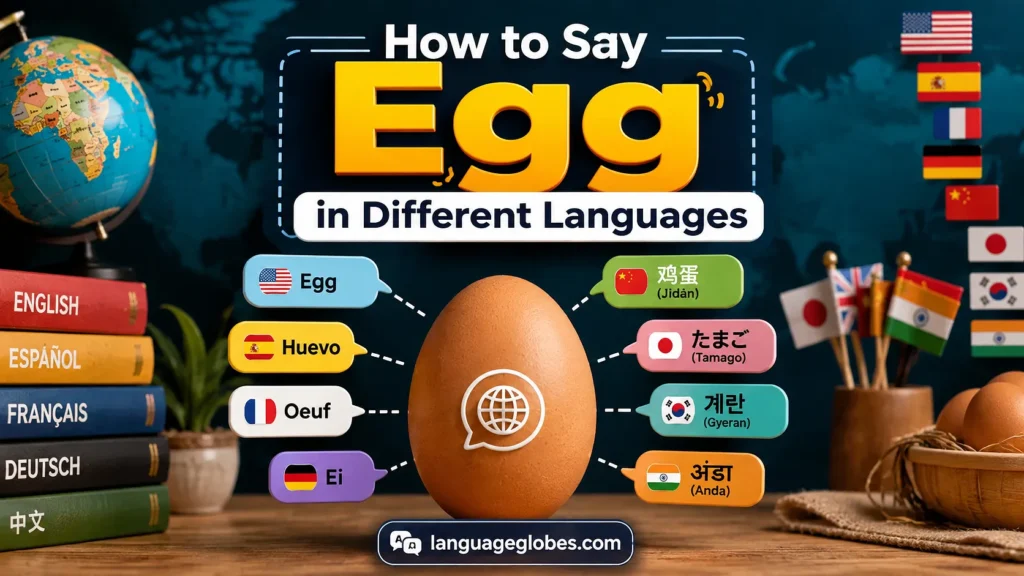
Egg is a fundamental ingredient found in countless dishes and remains a common food worldwide. As a symbol of life, eggs appear across cultures, culinary traditions, and linguistic traditions, making their names interesting to explore.
Learning how to say egg in different languages reveals diversity while connecting everyday vocabulary with history, traditions, and lifestyles. Whether you are traveling, studying a foreign language, or exploring global cuisines, these translations offer useful cultural insight.
This comprehensive guide explores egg translations across Europe, Asia, Africa, the Middle East, and other regions. You will discover pronunciations, example sentences, interesting facts, and familiar words such as huevo in Spanish, œuf in French, Ei in German, and 卵 (tamago) in Japanese.
Understanding these translations can make language learning more practical while helping you appreciate cultural diversity, linguistic connections, and the common roots shared across countries and regions.
Also Read This: How to Say Edit in Different Languages
Interesting Facts About Egg
- Eggs are considered one of the most nutritious foods in the world.
- The word “egg” comes from Old Norse influences in the English language.
- Different cultures use eggs in symbolic celebrations, including Easter and many spring festivals.
- Eggs are a common ingredient in cuisines on every continent.
- Many languages have unique expressions and idioms involving eggs.
- Chicken eggs are the most commonly consumed eggs worldwide.
- Eggs symbolize fertility, renewal, and new beginnings in numerous cultures.
- Learning food-related vocabulary is one of the fastest ways to communicate while traveling.
- The word for egg often reflects the linguistic history of a region.
- Some languages have multiple words for eggs depending on context and species.
How to Say Egg in Different Languages
Below are translations of the word “egg” in more than 70 languages from around the world.
European Languages
Europe is home to many of the world’s most influential language families, including Germanic, Romance, Slavic, Celtic, and Baltic languages. While these languages share some historical connections, their vocabulary often differs significantly. Learning how to say “egg” in European languages is useful for travelers, language learners, and anyone interested in European culture and cuisine.
| Language | Country/Region | Translation | Pronunciation | Example Sentence |
| 🇺🇸 American English | USA | Egg | Eg | I ate an egg for breakfast. |
| 🇬🇧 British English | United Kingdom | Egg | Eg | I boiled an egg this morning. |
| 🇦🇺 Australian English | Australia | Egg | Eg | She cooked an egg sandwich. |
| 🇫🇷 French | France | Œuf | Uf | Je mange un œuf. |
| 🇪🇸 Spanish | Spain | Huevo | WEH-voh | Como un huevo. |
| 🇵🇹 Portuguese | Portugal | Ovo | OH-vo | Eu como um ovo. |
| 🇮🇹 Italian | Italy | Uovo | WOH-vo | Mangio un uovo. |
| 🇩🇪 German | Germany | Ei | Eye | Ich esse ein Ei. |
| 🇳🇱 Dutch | Netherlands | Ei | Eye | Ik eet een ei. |
| 🇸🇪 Swedish | Sweden | Ägg | Egg | Jag äter ett ägg. |
| 🇳🇴 Norwegian | Norway | Egg | Egg | Jeg spiser et egg. |
| 🇩🇰 Danish | Denmark | Æg | Egg | Jeg spiser et æg. |
| 🇫🇮 Finnish | Finland | Muna | MOO-na | Syön munan. |
| 🇮🇸 Icelandic | Iceland | Egg | Egg | Ég borða egg. |
| 🇵🇱 Polish | Poland | Jajko | YAI-ko | Jem jajko. |
| 🇨🇿 Czech | Czech Republic | Vejce | VAY-tseh | Jím vejce. |
| 🇸🇰 Slovak | Slovakia | Vajce | VAI-tse | Jem vajce. |
| 🇭🇺 Hungarian | Hungary | Tojás | TO-yash | Eszem egy tojást. |
| 🇷🇴 Romanian | Romania | Ou | Oo | Mănânc un ou. |
| 🇧🇬 Bulgarian | Bulgaria | Яйце | YAI-tse | Ям яйце. |
| 🇷🇺 Russian | Russia | Яйцо | Yait-so | Я ем яйцо. |
| 🇺🇦 Ukrainian | Ukraine | Яйце | YAI-tse | Я їм яйце. |
| 🇧🇾 Belarusian | Belarus | Яйка | YAI-ka | Я ем яйка. |
| 🇭🇷 Croatian | Croatia | Jaje | YA-ye | Jedem jaje. |
| 🇷🇸 Serbian | Serbia | Јаје | YA-ye | Једем јаје. |
| 🇸🇮 Slovenian | Slovenia | Jajce | YAI-tseh | Jem jajce. |
| 🇬🇷 Greek | Greece | Αυγό | Av-go | Τρώω ένα αυγό. |
| 🇮🇪 Irish | Ireland | Ubh | OOV | Ithim ubh. |
| 🇲🇹 Maltese | Malta | Bajda | BYE-da | Niekol bajda. |
Asian Languages
Asia is the largest continent and contains thousands of languages spoken by billions of people. From East Asia to South Asia and Southeast Asia, language diversity is immense. Food plays a central role in Asian cultures, making everyday words like “egg” especially useful for communication and travel.
| Language | Country/Region | Translation | Pronunciation | Example Sentence |
| 🇨🇳 Chinese (Mandarin) | China | 鸡蛋 | Jee-dan | 我吃鸡蛋。 |
| 🇯🇵 Japanese | Japan | 卵 | Tamago | 卵を食べます。 |
| 🇰🇷 Korean | South Korea | 계란 | Gye-ran | 계란을 먹어요. |
| 🇮🇳 Hindi | India | अंडा | Un-da | मैं अंडा खाता हूँ। |
| 🇵🇰 Urdu | Pakistan | انڈا | Un-da | میں انڈا کھاتا ہوں۔ |
| 🇧🇩 Bengali | Bangladesh | ডিম | Deem | আমি ডিম খাই। |
| 🇵🇰 Punjabi | Punjab | ਅੰਡਾ | Un-da | ਮੈਂ ਅੰਡਾ ਖਾਂਦਾ ਹਾਂ। |
| 🇮🇳 Gujarati | India | ઈંડું | Een-doo | હું ઈંડું ખાઉં છું. |
| 🇮🇳 Marathi | India | अंडे | Un-day | मी अंडे खातो. |
| 🇳🇵 Nepali | Nepal | अण्डा | Un-da | म अण्डा खान्छु। |
| 🇱🇰 Sinhala | Sri Lanka | බිත්තර | Bith-thara | මම බිත්තර කනවා. |
| 🇮🇳 Tamil | India | முட்டை | Moot-tai | நான் முட்டை சாப்பிடுகிறேன். |
| 🇮🇳 Telugu | India | గుడ్డు | Good-doo | నేను గుడ్డు తింటాను. |
| 🇮🇳 Kannada | India | ಮೊಟ್ಟೆ | Mot-tay | ನಾನು ಮೊಟ್ಟೆ ತಿನ್ನುತ್ತೇನೆ. |
| 🇮🇳 Malayalam | India | മുട്ട | Moot-ta | ഞാൻ മുട്ട കഴിക്കുന്നു. |
| 🇹🇭 Thai | Thailand | ไข่ | Khai | ฉันกินไข่ |
| 🇻🇳 Vietnamese | Vietnam | Trứng | Choong | Tôi ăn trứng. |
| 🇮🇩 Indonesian | Indonesia | Telur | Teh-lur | Saya makan telur. |
| 🇲🇾 Malay | Malaysia | Telur | Teh-lur | Saya makan telur. |
| 🇵🇭 Filipino | Philippines | Itlog | It-log | Kumakain ako ng itlog. |
| 🇰🇭 Khmer | Cambodia | ស៊ុត | Sut | ខ្ញុំញ៉ាំស៊ុត។ |
| 🇱🇦 Lao | Laos | ໄຂ່ | Khai | ຂ້ອຍກິນໄຂ່. |
| 🇲🇳 Mongolian | Mongolia | Өндөг | Un-dug | Би өндөг иддэг. |
| 🇲🇲 Burmese | Myanmar | ဥ | Oo | ကျွန်ုပ်ဥစားသည်။ |
African Languages
Africa is home to extraordinary linguistic diversity, with more than 2,000 languages spoken across the continent. These languages belong to several major language families and represent rich cultural traditions. Learning simple words like “egg” can help build connections and appreciation for African cultures and communities.
| Language | Country/Region | Translation | Pronunciation | Example Sentence |
| 🇿🇦 Swahili | East Africa | Yai | YAH-ee | Ninakula yai. |
| 🇿🇦 Zulu | South Africa | Iqanda | Ee-KAN-da | Ngidla iqanda. |
| 🇿🇦 Xhosa | South Africa | Iqanda | Ee-KAN-da | Nditya iqanda. |
| 🇿🇦 Afrikaans | South Africa | Eier | AY-er | Ek eet ‘n eier. |
| 🇳🇬 Yoruba | Nigeria | Ẹyin | EH-yin | Mo jẹ ẹyin. |
| 🇳🇬 Igbo | Nigeria | Àkwá | Ah-kwa | Ana m eri àkwá. |
| 🇳🇬 Hausa | Nigeria | Kwai | Kwai | Ina cin kwai. |
| 🇪🇹 Amharic | Ethiopia | እንቁላል | In-ku-lal | እንቁላል እበላለሁ። |
| 🇸🇴 Somali | Somalia | Ukun | Oo-koon | Waxaan cunayaa ukun. |
| 🇰🇪 Kinyarwanda | Rwanda | Igi | Ee-ghee | Ndya igi. |
| 🇲🇬 Malagasy | Madagascar | Atody | A-too-dee | Mihinana atody aho. |
| 🇧🇼 Tswana | Botswana | Lee | Leh | Ke ja lee. |
Middle Eastern Languages
The Middle East has a long history of trade, scholarship, and cultural exchange. Languages from this region have influenced many others around the world. Food remains a vital part of social life, and knowing common vocabulary such as “egg” can be particularly useful when visiting the region.
| Language | Country/Region | Translation | Pronunciation | Example Sentence |
| 🇸🇦 Arabic | Middle East | بيضة | Bay-da | أكلت بيضة. |
| 🇮🇷 Persian (Farsi) | Iran | تخم مرغ | Tokhm Morgh | من تخم مرغ میخورم. |
| 🇹🇷 Turkish | Turkey | Yumurta | Yoo-moor-ta | Yumurta yiyorum. |
| 🇮🇱 Hebrew | Israel | ביצה | Bey-tsa | אני אוכל ביצה. |
| 🇰🇼 Kurdish | Kurdistan Region | Hêk | Hek | Ez hêk dixwim. |
| 🇴🇲 Omani Arabic | Oman | بيضة | Bay-da | أكلت بيضة. |
| 🇶🇦 Qatari Arabic | Qatar | بيضة | Bay-da | أكلت بيضة. |
| 🇦🇪 Emirati Arabic | UAE | بيضة | Bay-da | أكلت بيضة. |
Additional Languages Around the World
Beyond Europe, Asia, Africa, and the Middle East, many fascinating languages are spoken throughout the Americas and Pacific regions. These languages represent unique histories and cultural identities. Exploring their vocabulary offers a deeper understanding of the world’s linguistic richness.
| Language | Country/Region | Translation | Pronunciation | Example Sentence |
| 🇭🇹 Haitian Creole | Haiti | Ze | Zay | Mwen manje ze. |
| 🇳🇿 Maori | New Zealand | Hua | Hoo-ah | Ka kai ahau i te hua. |
| 🇼🇸 Samoan | Samoa | Fuamoa | Foo-ah-mo-ah | Ou te ai fuamoa. |
| 🇹🇴 Tongan | Tonga | Moa | Mo-ah | Oku ou kai moa. |
| 🇫🇯 Fijian | Fiji | Yaqona | Yah-ko-na | Au kana yaqona. |
| 🇬🇱 Greenlandic | Greenland | Mannik | Man-nik | Mannik nerivara. |
| 🇨🇦 Inuktitut | Arctic Canada | ᒪᓂᒃ | Ma-nik | ᒪᓂᒃ ᓂᕆᕗᖓ. |
| 🇲🇽 Nahuatl | Mexico | Tetlaxcal | Tet-lash-cal | Niccua tetlaxcal. |
| 🇵🇾 Guarani | Paraguay | Ryguasu Rupi’a | Roo-pya | Akaru ryguasu rupi’a. |
| 🇵🇪 Quechua | Peru | Runtu | Roon-too | Runtuta mikuni. |
FAQs
How do you say egg in different languages?
The word egg has different forms across different languages and cultures. Common examples include huevo in Spanish, œuf in French, Ei in German, and tamago in Japanese.
What is the Spanish word for egg?
The Spanish translation for egg is huevo. It is a common food word used in daily life, cooking, breakfasts, and many traditional dishes.
How do you say egg in French?
In French, egg is translated as œuf. This word is commonly used when discussing cooking, baking, global cuisines, and everyday foods.
What is egg called in German?
The German word for egg is Ei. Learning this simple vocabulary word can be useful for traveling, language learning, and understanding German culinary traditions.
How do you say egg in Japanese?
In Japanese, egg is written as 卵 and commonly pronounced tamago. This translation offers a useful connection to Japanese culinary traditions and language learning.
Why are egg translations interesting across cultures?
Egg translations show linguistic diversity and reveal connections between language, history, traditions, and lifestyles. Exploring these words can improve understanding of the world and cultural diversity.
How is egg used in different culinary traditions?
Egg is a fundamental ingredient used in countless dishes, including baking, cooking, breakfasts, and traditional dishes. Its widespread use makes it an important part of global cuisines.
Where can I learn egg translations from different regions?
You can explore egg translations across Europe, Asia, Africa, the Middle East, and other regions. Comparing translations, pronunciations, and example sentences makes learning more practical.
Does learning the word egg help with foreign language learning?
Yes, learning everyday vocabulary such as egg can make language learning easier and more practical. Familiar food words are especially useful when traveling or exploring global cuisines.
What can egg translations teach us about world cultures?
Comparing the word egg across languages highlights common roots, linguistic connections, and cultural identity. It also shows how important foods become part of language and everyday communication.
Conclusion
Learning how to say egg in different languages offers a simple way to explore cultural diversity and linguistic connections. From huevo in Spanish to œuf in French, Ei in German, and tamago in Japanese, these translations reveal fascinating links between language, culinary traditions, and global cuisines. Exploring these everyday words can make language learning more practical while deepening your understanding of world cultures.

Lucy Carter is a curious mind and language lover who writes for Language Globes. She enjoys discovering new languages and sharing simple, helpful ideas that make learning fun and accessible for everyone.