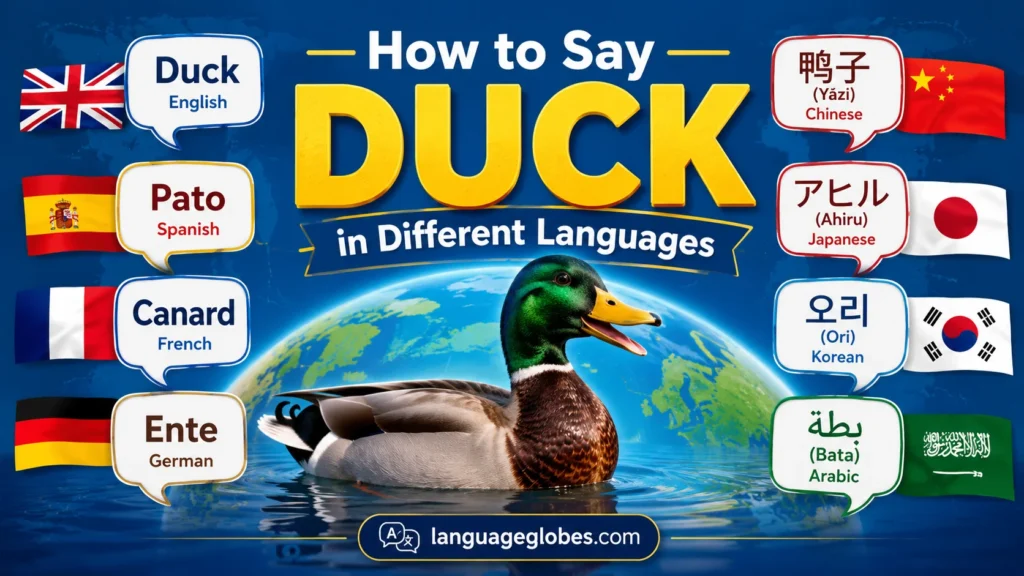
Learning how to say duck across world languages improves communication and deepens cultural understanding every day. This comprehensive guide explains duck in different languages with accurate duck translation, duck pronunciation, and duck meaning.
Whether you are a language learner, student, teacher, writer, or traveler, this language guide supports confident language learning and vocabulary building. You will discover duck translations, example sentences, spelling, and a clear pronunciation guide for common vocabulary used in daily conversations.
The duck word appears across many foreign languages, reflecting language diversity, different cultures, and fascinating linguistic variety worldwide. Explore animal vocabulary, animal names, bird names, and common animal words while learning about this familiar bird and waterfowl.
From Spanish, French, German, Portuguese, Russian, Arabic, Korean, and Mandarin Chinese, each translation adds unique cultural flavor and supports language exploration. This language reference helps you translate duck, say duck, practice pronunciation practice, and strengthen international vocabulary with useful language examples.
Also Read This: How to Say Day in Different Languages
Interesting Facts About Duck
- Ducks belong to the waterfowl family and are closely related to geese and swans.
- There are over 120 species of ducks found worldwide.
- Ducks can live in freshwater and saltwater environments.
- Many duck species migrate thousands of miles every year.
- A male duck is called a drake.
- A baby duck is known as a duckling.
- Ducks are featured in folklore, stories, and children’s books around the world.
- Duck sounds vary by species, and not all ducks make the classic “quack.”
- Ducks play an important role in wetland ecosystems.
- Learning animal names like “duck” is a great way to build vocabulary in new languages.
How to Say Duck in Different Languages
Below you will find translations of the word “duck” in languages from around the world.
European Languages
Europe is home to hundreds of languages belonging to several major language families, including Romance, Germanic, Slavic, Celtic, and Baltic languages. Many European languages share historical connections, but each has developed unique vocabulary and pronunciation patterns. Learning how to say “duck” in European languages provides insight into the rich linguistic heritage of the continent.
| Language | Country/Region | Translation | Pronunciation | Example Sentence |
| 🇺🇸 American English | USA | Duck | Duhk | The duck is swimming in the pond. |
| 🇬🇧 British English | UK | Duck | Duhk | The duck is near the lake. |
| 🇦🇺 Australian English | Australia | Duck | Duhk | We saw a duck at the park. |
| 🇫🇷 French | France | Canard | Kah-nar | Le canard nage dans l’eau. |
| 🇪🇸 Spanish | Spain | Pato | Pah-toh | El pato nada en el lago. |
| 🇵🇹 Portuguese | Portugal | Pato | Pah-too | O pato está nadando. |
| 🇮🇹 Italian | Italy | Anatra | Ah-nah-trah | L’anatra è nel lago. |
| 🇩🇪 German | Germany | Ente | En-tuh | Die Ente schwimmt. |
| 🇳🇱 Dutch | Netherlands | Eend | Aynt | De eend zwemt. |
| 🇸🇪 Swedish | Sweden | Anka | Ahn-kah | Ankan simmar i sjön. |
| 🇳🇴 Norwegian | Norway | And | Ahn | Anden svømmer. |
| 🇩🇰 Danish | Denmark | And | Ahn | Anden svømmer i søen. |
| 🇫🇮 Finnish | Finland | Ankka | Ahn-kah | Ankka ui järvessä. |
| 🇮🇸 Icelandic | Iceland | Önd | Und | Öndin syndir. |
| 🇵🇱 Polish | Poland | Kaczka | Kach-kah | Kaczka pływa w stawie. |
| 🇨🇿 Czech | Czech Republic | Kachna | Kahkh-nah | Kachna plave. |
| 🇸🇰 Slovak | Slovakia | Kačica | Kah-chee-tsa | Kačica pláva. |
| 🇭🇺 Hungarian | Hungary | Kacsa | Kah-cha | A kacsa úszik. |
| 🇷🇴 Romanian | Romania | Rață | Rah-tsuh | Rața înoată. |
| 🇧🇬 Bulgarian | Bulgaria | Патица | Patitsa | Патицата плува. |
| 🇷🇺 Russian | Russia | Утка | Oot-kah | Утка плавает в озере. |
| 🇺🇦 Ukrainian | Ukraine | Качка | Kach-kah | Качка плаває. |
| 🇧🇾 Belarusian | Belarus | Качка | Kach-kah | Качка плавае. |
| 🇸🇮 Slovenian | Slovenia | Raca | Rah-tsa | Raca plava. |
| 🇭🇷 Croatian | Croatia | Patka | Paht-kah | Patka pliva. |
| 🇷🇸 Serbian | Serbia | Патка | Paht-kah | Патка плива. |
| 🇧🇦 Bosnian | Bosnia | Patka | Paht-kah | Patka pliva u vodi. |
| 🇲🇰 Macedonian | North Macedonia | Патка | Paht-kah | Патката плива. |
| 🇬🇷 Greek | Greece | Πάπια | Pap-ya | Η πάπια κολυμπά. |
| 🇮🇪 Irish | Ireland | Lacha | Lah-kha | Tá an lacha san uisce. |
| 🏴 Welsh | Wales | Hwyaden | Hoo-ah-den | Mae’r hwyaden yn nofio. |
| 🇱🇹 Lithuanian | Lithuania | Antis | Ahn-tis | Antis plaukia. |
| 🇱🇻 Latvian | Latvia | Pīle | Pee-leh | Pīle peld. |
| 🇪🇪 Estonian | Estonia | Part | Part | Part ujub. |
Asian Languages
Asia is the world’s largest continent and contains an incredible variety of languages and cultures. From East Asia to South Asia and Southeast Asia, language traditions have evolved over thousands of years. Ducks are commonly found throughout Asia, making the word an important part of everyday vocabulary in many languages.
| Language | Country/Region | Translation | Pronunciation | Example Sentence |
| 🇨🇳 Chinese (Mandarin) | China | 鸭子 | Yah-zuh | 鸭子在池塘里游泳。 |
| 🇹🇼 Chinese (Traditional) | Taiwan | 鴨子 | Yah-zuh | 鴨子在池塘裡游泳。 |
| 🇯🇵 Japanese | Japan | アヒル | Ah-hee-roo | アヒルが泳いでいます。 |
| 🇰🇷 Korean | South Korea | 오리 | Oh-ree | 오리가 호수에서 수영합니다. |
| 🇮🇳 Hindi | India | बत्तख | But-takh | बत्तख तालाब में तैर रही है। |
| 🇵🇰 Urdu | Pakistan | بطخ | Batakh | بطخ تالاب میں تیر رہی ہے۔ |
| 🇧🇩 Bengali | Bangladesh | হাঁস | Hans | হাঁস পুকুরে সাঁতার কাটছে। |
| 🇵🇰 Punjabi | Punjab | ਬੱਤਖ | Battakh | ਬੱਤਖ ਪਾਣੀ ਵਿੱਚ ਤੈਰਦੀ ਹੈ। |
| 🇳🇵 Nepali | Nepal | हाँस | Hans | हाँस पोखरीमा पौडिन्छ। |
| 🇱🇰 Sinhala | Sri Lanka | තාරාවා | Tha-ra-va | තාරාවා වැවේ පිහිනයි. |
| 🇮🇳 Tamil | India | வாத்து | Vaa-thu | வாத்து குளத்தில் நீந்துகிறது. |
| 🇮🇳 Telugu | India | బాతు | Baa-thu | బాతు చెరువులో ఈదుతోంది. |
| 🇮🇳 Kannada | India | ಬಾತುಕೋಳಿ | Baa-too-ko-li | ಬಾತುಕೋಳಿ ನೀರಿನಲ್ಲಿ ಈಜುತ್ತಿದೆ. |
| 🇮🇳 Malayalam | India | താറാവ് | Thaa-raav | താറാവ് കുളത്തിൽ നീന്തുന്നു. |
| 🇲🇲 Burmese | Myanmar | ဘဲ | Beh | ဘဲ ရေကန်တွင် ရေကူးသည်။ |
| 🇹🇭 Thai | Thailand | เป็ด | Ped | เป็ดกำลังว่ายน้ำ. |
| 🇻🇳 Vietnamese | Vietnam | Vịt | Veet | Con vịt đang bơi. |
| 🇰🇭 Khmer | Cambodia | ទា | Tia | ទាកំពុងហែលទឹក។ |
| 🇱🇦 Lao | Laos | ເປັດ | Ped | ເປັດກຳລັງລອຍນ້ຳ. |
| 🇮🇩 Indonesian | Indonesia | Bebek | Beh-bek | Bebek berenang di kolam. |
| 🇲🇾 Malay | Malaysia | Itik | Ee-tik | Itik berenang di tasik. |
| 🇵🇭 Filipino | Philippines | Pato | Pah-to | Ang pato ay lumalangoy. |
| 🇲🇳 Mongolian | Mongolia | Нугас | Noo-gas | Нугас усанд сэлж байна. |
African Languages
Africa is home to more than 2,000 languages, making it one of the most linguistically diverse regions in the world. These languages reflect the continent’s rich history, traditions, and cultural identities. Learning animal names such as “duck” helps learners appreciate the incredible diversity of African communication systems.
| Language | Country/Region | Translation | Pronunciation | Example Sentence |
| 🇿🇦 Afrikaans | South Africa | Eend | Aynt | Die eend swem. |
| 🇪🇹 Amharic | Ethiopia | ዳክዬ | Dak-ye | ዳክዬው እየዋኘ ነው። |
| 🇰🇪 Swahili | East Africa | Bata | Bah-tah | Bata anaogelea. |
| 🇳🇬 Yoruba | Nigeria | Pepeye | Peh-peh-yeh | Pepeye n we ninu omi. |
| 🇳🇬 Igbo | Nigeria | Ọbọgwụ | O-bo-gwoo | Ọbọgwụ na-egwu mmiri. |
| 🇿🇦 Zulu | South Africa | Idada | Ee-dah-dah | Idada liyabhukuda. |
| 🇿🇦 Xhosa | South Africa | Idada | Ee-dah-dah | Idada liyadada. |
| 🇸🇴 Somali | Somalia | Shinbir badeed | Shin-bir | Shinbir badeed way dabaalanaysaa. |
| 🇷🇼 Kinyarwanda | Rwanda | Imbata | Im-bah-ta | Imbata irimo koga. |
| 🇲🇬 Malagasy | Madagascar | Gana | Gah-na | Gana milomano. |
Middle Eastern Languages
The Middle East has a long history of trade, culture, literature, and linguistic development. Languages in this region belong to several language families, including Semitic, Turkic, and Indo-Iranian. Many of these languages have influenced neighboring regions through centuries of cultural exchange.
| Language | Country/Region | Translation | Pronunciation | Example Sentence |
| 🇸🇦 Arabic | Middle East | بطة | Battah | البطة تسبح في الماء. |
| 🇮🇷 Persian (Farsi) | Iran | اردک | Ordak | اردک در آب شنا میکند. |
| 🇹🇷 Turkish | Turkey | Ördek | Ur-dek | Ördek gölde yüzüyor. |
| 🇮🇱 Hebrew | Israel | ברווז | Bar-vaz | הברווז שוחה באגם. |
| 🇰🇷 Kurdish | Kurdistan Region | Ördek | Ur-dek | Ördek di avê de ye. |
| 🇦🇲 Armenian | Armenia | Բադ | Bad | Բադը լողում է։ |
| 🇬🇪 Georgian | Georgia | იხვი | Ikh-vee | იხვი ტბაში ცურავს. |
| 🇦🇿 Azerbaijani | Azerbaijan | Ördək | Ur-dak | Ördək göldə üzür. |
Additional Languages Around the World
The world contains thousands of languages spoken across islands, indigenous communities, and multicultural societies. These languages represent unique traditions, histories, and ways of understanding nature. Exploring more translations of “duck” highlights the incredible richness of human communication.
| Language | Country/Region | Translation | Pronunciation | Example Sentence |
| 🇳🇿 Maori | New Zealand | Pārera | Paa-re-ra | Kei te kauhoe te pārera. |
| 🇼🇸 Samoan | Samoa | Pato | Pah-to | O loo aau le pato. |
| 🇹🇴 Tongan | Tonga | Pato | Pah-to | Oku kaukau a e pato. |
| 🇭🇹 Haitian Creole | Haiti | Kanna | Kah-nah | Kanna a ap naje. |
| 🇬🇱 Greenlandic | Greenland | Qeerlutooq | Kehr-loo-tok | Qeerlutooq imaaniippoq. |
| 🇱🇺 Luxembourgish | Luxembourg | Int | Int | D’Int schwëmmt. |
| 🇲🇹 Maltese | Malta | Papra | Pap-ra | Il-papra qed tgħum. |
| 🇦🇱 Albanian | Albania | Rosë | Roh-suh | Rosa noton në liqen. |
| 🇧🇷 Brazilian Portuguese | Brazil | Pato | Pah-too | O pato está nadando. |
FAQs
What is the duck meaning in different world languages?
The duck meaning stays similar across most world languages, referring to a familiar bird and waterfowl. However, pronunciation, spelling, and cultural usage may differ depending on the language.
How do you say duck in different languages?
You can say duck by learning its correct translation in different languages through a trusted language guide. Practicing the local pronunciation helps you communicate more naturally.
Why is duck pronunciation important when learning a new language?
Correct duck pronunciation improves communication and helps language learners avoid misunderstandings. It also builds confidence during daily conversations and travel.
What are the most common duck translations around the world?
Popular duck translations include pato in Spanish, canard in French, Ente in German, utka in Russian, batta in Arabic, ori in Korean, and 鸭子 in Mandarin Chinese. Each translation reflects local language traditions.
How does learning the duck word improve vocabulary building?
Learning the duck word expands animal vocabulary, common vocabulary, and bird names. It also strengthens language learning by introducing useful everyday words.
Can duck translation help during international travel?
Yes, knowing the correct duck translation is useful for travelers when reading menus, visiting parks, discussing wildlife, or having daily conversations in foreign languages.
Are there example sentences for using the duck word?
Most language reference resources include example sentences showing how the duck word fits naturally into conversations. These examples improve understanding and pronunciation practice.
Why do duck translations vary across different cultures?
Different duck translations reflect language diversity, different cultures, and unique linguistic development. Each language adds its own pronunciation, spelling, and cultural flavor to the word.
Who can benefit from learning duck in different languages?
Students, teachers, writers, travelers, and every language learner can benefit from learning duck in different languages. It supports language exploration, international vocabulary, and better cultural understanding.
How can I translate duck accurately in multiple languages?
Use a reliable language reference or comprehensive guide that includes translate duck, pronunciation guide, language examples, and accurate translations across many global languages. This approach improves language skills and confidence.
Conclusion
By learning how to say duck, exploring duck in different languages, and practicing accurate duck translation, duck pronunciation, and duck meaning, you build stronger communication and lasting vocabulary building skills. This comprehensive guide helps every language learner, traveler, student, teacher, and writer understand world languages, appreciate language diversity, and connect with different cultures through meaningful language learning. Keep using this language reference to translate duck, improve international vocabulary, and enjoy confident conversations across the world.

James Anderson is a passionate language enthusiast and content creator at LanguageGlobes. With a keen interest in global cultures and communication, he shares insightful and engaging content to help readers explore and master new languages.