
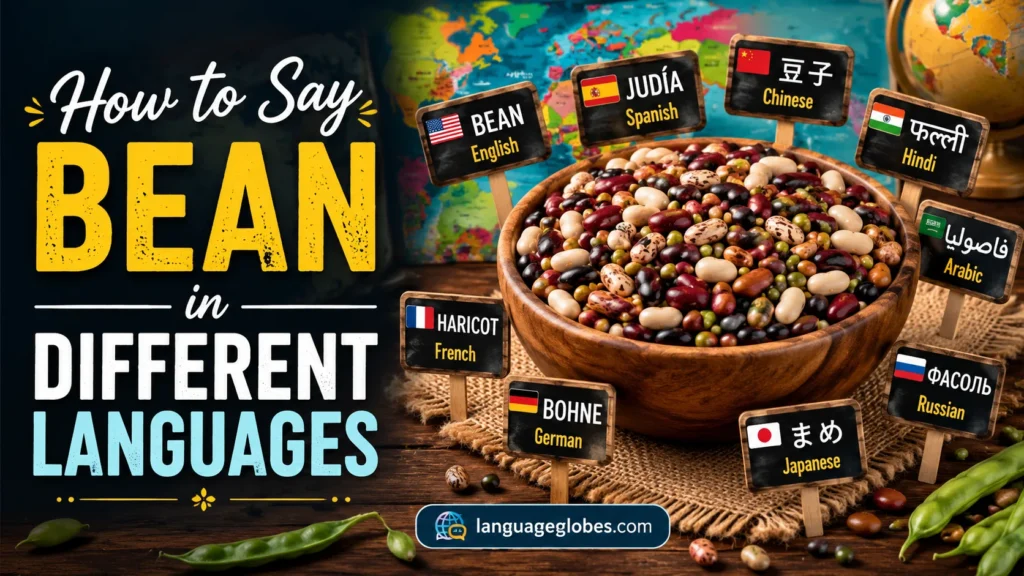
Learning how to say Bean in different languages opens a small window into the way people connect food, culture, and communication. This guide explores bean translations and the word bean across global languages, helping readers understand this common staple food found in many cuisines and cultures.
As a nutritious ingredient, beans appear in traditional dishes worldwide and remain an essential food item in many regions. From black beans in Latin America to soybeans in Asia and broad beans in Europe, beans represent shared traditions and everyday life.
This translation guide is useful for travelers, language learners, students, and food enthusiasts exploring new cultures. Understanding food related words, vocabulary, and pronunciations can improve communication during international travel and conversations about recipes, menus, and markets.
Through local customs, foreign language learning, and multilingual content, you can discover how beans connect people around the world. Explore 70 languages, major languages, and regional expressions to gain cultural insights into the history, traditions, and language diversity surrounding this popular food.
Also Read This: How to Say Beer in Different Languages
Interesting Facts About Bean
- Beans have been cultivated by humans for thousands of years.
- They are a major source of protein in many countries.
- Different cultures use beans in soups, stews, salads, desserts, and beverages.
- The word for bean often has ancient linguistic roots that date back centuries.
- Many languages have separate words for different types of beans.
- Beans are considered a staple food in Africa, Asia, Europe, and the Americas.
- Soybeans are especially important in East Asian cuisines.
- Kidney beans, black beans, and chickpeas are among the world’s most popular legumes.
- Learning food vocabulary is one of the fastest ways to build language skills.
- Bean-related dishes often play a role in cultural celebrations and traditional meals.
How to Say Bean in Different Languages
The word “bean” changes significantly across languages, reflecting unique linguistic histories and cultural influences. Below are translations from around the world along with pronunciations and example sentences.
European Languages
Europe is home to dozens of languages from Germanic, Romance, Slavic, Celtic, and other language families. Beans have long been part of European agriculture and cuisine, making this a useful vocabulary word across the continent. Whether you are visiting local markets, reading recipes, or learning a new language, these translations can help.
| Language | Country/Region | Translation | Pronunciation | Example Sentence |
| 🇺🇸 American English | USA | Bean | Been | I cooked a bean soup today. |
| 🇬🇧 British English | UK | Bean | Been | The bean is fresh from the garden. |
| 🇦🇺 Australian English | Australia | Bean | Been | We added bean salad to lunch. |
| Spanish | 🇪🇸 Spain | Frijol | Free-hol | El frijol es nutritivo. |
| French | 🇫🇷 France | Haricot | Ah-ree-koh | J’aime le haricot. |
| German | 🇩🇪 Germany | Bohne | Boh-nuh | Die Bohne ist frisch. |
| Italian | 🇮🇹 Italy | Fagiolo | Fah-joh-lo | Il fagiolo è delizioso. |
| Portuguese | 🇵🇹 Portugal | Feijão | Fay-zhaow | O feijão é saudável. |
| Dutch | 🇳🇱 Netherlands | Boon | Bone | De boon is lekker. |
| Swedish | 🇸🇪 Sweden | Böna | Bur-na | Bönan är god. |
| Norwegian | 🇳🇴 Norway | Bønne | Burn-neh | Bønnen er fersk. |
| Danish | 🇩🇰 Denmark | Bønne | Burn-eh | Bønnen er sund. |
| Finnish | 🇫🇮 Finland | Papu | Pah-poo | Papu on terveellinen. |
| Icelandic | 🇮🇸 Iceland | Baun | Boyn | Baunin er góð. |
| Polish | 🇵🇱 Poland | Fasola | Fah-so-la | Fasola jest zdrowa. |
| Czech | 🇨🇿 Czech Republic | Fazole | Fah-zoh-leh | Fazole je chutná. |
| Slovak | 🇸🇰 Slovakia | Fazuľa | Fah-zoo-lya | Fazuľa je zdravá. |
| Hungarian | 🇭🇺 Hungary | Bab | Bahb | A bab finom. |
| Romanian | 🇷🇴 Romania | Fasole | Fah-so-le | Fasolea este gustoasă. |
| Bulgarian | 🇧🇬 Bulgaria | Bob | Bob | Bobът е вкусен. |
| Serbian | 🇷🇸 Serbia | Pasulj | Pah-sooly | Pasulj je ukusan. |
| Croatian | 🇭🇷 Croatia | Grah | Grah | Grah je zdrav. |
| Slovenian | 🇸🇮 Slovenia | Fižol | Fee-zhol | Fižol je okusen. |
| Greek | 🇬🇷 Greece | Fasoli | Fah-so-lee | Το φασόλι είναι νόστιμο. |
| Russian | 🇷🇺 Russia | Фасоль | Fah-sol | Фасоль полезна. |
| Ukrainian | 🇺🇦 Ukraine | Квасоля | Kvah-so-lya | Квасоля смачна. |
| Belarusian | 🇧🇾 Belarus | Фасоля | Fah-so-lya | Фасоля карысная. |
| Irish | 🇮🇪 Ireland | Pónaire | Poh-na-ra | Tá an phónaire maith. |
| Welsh | 🏴 Wales | Ffa | Fah | Mae’r ffa yn dda. |
| Albanian | 🇦🇱 Albania | Fasule | Fah-soo-le | Fasulja është e mirë. |
Asian Languages
Asia contains some of the world’s oldest civilizations and linguistic traditions. Beans are an essential ingredient in many Asian dishes, including soybean products, curries, soups, and desserts. The following translations showcase the diversity of Asian languages.
| Language | Country/Region | Translation | Pronunciation | Example Sentence |
| Chinese (Mandarin) | 🇨🇳 China | 豆子 | Doh-dzuh | 我喜欢豆子。 |
| Cantonese | 🇭🇰 Hong Kong | 豆 | Dau | 我鍾意豆。 |
| Japanese | 🇯🇵 Japan | 豆 | Mah-meh | 豆は健康です。 |
| Korean | 🇰🇷 South Korea | 콩 | Kong | 콩은 건강에 좋다. |
| Hindi | 🇮🇳 India | सेम | Sem | सेम पौष्टिक है। |
| Urdu | 🇵🇰 Pakistan | لوبیا | Loh-bee-ya | لوبیا صحت بخش ہے۔ |
| Bengali | 🇧🇩 Bangladesh | শিম | Shim | শিম খুব ভালো। |
| Punjabi | 🇮🇳 India | ਫਲੀ | Pha-lee | ਫਲੀ ਸਿਹਤਮੰਦ ਹੈ। |
| Gujarati | 🇮🇳 India | શીમ | Sheem | શીમ સ્વાદિષ્ટ છે. |
| Marathi | 🇮🇳 India | शेंग | Sheng | शेंग चांगली आहे. |
| Tamil | 🇮🇳 India | பீன்ஸ் | Beans | பீன்ஸ் ஆரோக்கியமானது. |
| Telugu | 🇮🇳 India | బీన్స్ | Beans | బీన్స్ మంచివి. |
| Kannada | 🇮🇳 India | ಬೀನ್ಸ್ | Beans | ಬೀನ್ಸ್ ಆರೋಗ್ಯಕರ. |
| Malayalam | 🇮🇳 India | ബീൻസ് | Beans | ബീൻസ് നല്ലതാണ്. |
| Sinhala | 🇱🇰 Sri Lanka | බෝංචි | Bon-chi | බෝංචි රසයි. |
| Thai | 🇹🇭 Thailand | ถั่ว | Thua | ถั่วมีประโยชน์. |
| Vietnamese | 🇻🇳 Vietnam | Đậu | Dow | Đậu rất ngon. |
| Khmer | 🇰🇭 Cambodia | សណ្តែក | San-daik | សណ្តែកល្អ។ |
| Lao | 🇱🇦 Laos | ຖົ່ວ | Thua | ຖົ່ວດີ. |
| Indonesian | 🇮🇩 Indonesia | Kacang | Kah-chang | Kacang itu enak. |
| Malay | 🇲🇾 Malaysia | Kacang | Kah-chang | Kacang ini sedap. |
| Filipino | 🇵🇭 Philippines | Sitaw | See-tow | Masarap ang sitaw. |
| Mongolian | 🇲🇳 Mongolia | Шош | Shosh | Шош амттай. |
| Nepali | 🇳🇵 Nepal | सिमी | See-mee | सिमी स्वादिष्ट छ। |
| Burmese | 🇲🇲 Myanmar | ပဲ | Peh | ပဲ ကောင်းတယ်။ |
African Languages
Africa is linguistically diverse, with thousands of languages spoken across the continent. Beans are an important source of nutrition in many African countries and feature prominently in traditional dishes. Learning these translations can help travelers and language enthusiasts appreciate the continent’s cultural richness.
| Language | Country/Region | Translation | Pronunciation | Example Sentence |
| Swahili | 🇹🇿 Tanzania | Maharage | Mah-ha-rah-geh | Maharage ni mazuri. |
| Zulu | 🇿🇦 South Africa | Ubhontshisi | Oo-bhon-tshee-see | Ubhontshisi umnandi. |
| Xhosa | 🇿🇦 South Africa | Imbotyi | Im-bo-tee | Imbotyi ilungile. |
| Afrikaans | 🇿🇦 South Africa | Boontjie | Boon-key | Die boontjie is lekker. |
| Yoruba | 🇳🇬 Nigeria | Ẹwa | Eh-wa | Ẹwa dun pupọ. |
| Igbo | 🇳🇬 Nigeria | Agwa | Ah-gwah | Agwa dị ụtọ. |
| Hausa | 🇳🇬 Nigeria | Wake | Wah-keh | Wake yana da kyau. |
| Amharic | 🇪🇹 Ethiopia | ባቄላ | Bah-keh-la | ባቄላ ጥሩ ነው። |
| Somali | 🇸🇴 Somalia | Digir | Dee-gir | Digir waa fiican. |
| Shona | 🇿🇼 Zimbabwe | Bhinzi | Bheen-zee | Bhinzi rinonaka. |
| Kinyarwanda | 🇷🇼 Rwanda | Ibishyimbo | Ee-bee-sheem-bo | Ibishyimbo ni byiza. |
| Sesotho | 🇱🇸 Lesotho | Linaoa | Lee-na-wa | Linaoa le monate. |
Middle Eastern Languages
The Middle East has a rich history of agriculture, trade, and culinary traditions. Beans are frequently used in regional dishes such as ful medames, stews, and salads. These languages represent some of the most influential linguistic traditions in the region.
| Language | Country/Region | Translation | Pronunciation | Example Sentence |
| Arabic | 🌍 Middle East | فاصوليا | Fah-soo-lee-ya | الفاصوليا مفيدة للصحة. |
| Persian (Farsi) | 🇮🇷 Iran | لوبیا | Loo-bee-ya | لوبیا خوشمزه است. |
| Turkish | 🇹🇷 Türkiye | Fasulye | Fah-sool-yeh | Fasulye çok lezzetli. |
| Hebrew | 🇮🇱 Israel | שעועית | Sha-oo-eet | השעועית טעימה. |
| Kurdish | 🌍 Kurdistan Region | Fasulye | Fah-sool-yeh | Fasulye baş e. |
| Azerbaijani | 🇦🇿 Azerbaijan | Lobya | Lob-ya | Lobya dadlıdır. |
Additional Languages Around the World
Languages from Oceania, the Americas, and indigenous communities add even more diversity to the global vocabulary for bean. These translations demonstrate how cultures around the world describe this common food.
| Language | Country/Region | Translation | Pronunciation | Example Sentence |
| Hawaiian | 🌺 Hawaii | Pī | Pee | He mea maikaʻi ka pī. |
| Maori | 🇳🇿 New Zealand | Pīni | Pee-nee | He pai te pīni. |
| Samoan | 🇼🇸 Samoa | Pi | Pee | E lelei le pi. |
| Tongan | 🇹🇴 Tonga | Piini | Pee-ee-nee | ʻOku lelei ʻa e piini. |
| Tahitian | 🇵🇫 Tahiti | Pīni | Pee-nee | E maitai te pīni. |
| Haitian Creole | 🇭🇹 Haiti | Pwa | Pwah | Pwa bon anpil. |
| Quechua | 🇵🇪 Peru | Purutu | Poo-roo-too | Purutu allinmi. |
| Guarani | 🇵🇾 Paraguay | Kumanda | Koo-man-da | Kumanda porã. |
| Nahuatl | 🇲🇽 Mexico | Etl | Etl | Etl cualli. |
| Inuit (Inuktitut) | 🇨🇦 Arctic | Bean | Been | Bean niqiujuq. |
FAQs
What is the translation of the word bean in different languages?
The word bean has unique bean translations across global languages, showing how this common food connects different cultures and communities. These translations help learners explore language and food traditions.
How do you say bean in different languages around the world?
You can learn how to say bean in different languages through a translation guide covering various major languages and regions. It helps with communication and understanding language diversity.
Why is learning bean translations useful for travelers and language learners?
Learning bean translations helps travelers, language learners, and students communicate better when exploring markets, menus, and recipes in a foreign language.
How are beans connected to cultures and traditional dishes worldwide?
Beans are a staple food and nutritious ingredient used in traditional dishes across worldwide cuisines. They reflect the history and traditions of many global cultures.
What are some popular types of beans used in different regions?
Common varieties include black beans from Latin America, soybeans from Asia, and broad beans from Europe. These are important food related words in many regions.
How can bean vocabulary improve language learning skills?
Learning vocabulary, pronunciations, and food terms like bean can make learning languages easier. It also provides useful knowledge for daily conversations and cultural exchanges.
How do beans represent global communication and cultural connections?
Beans are an essential food item shared by people around the world, creating connections through food, language, and traditions. Understanding these terms supports global communication.
What can you discover about beans through multilingual content?
Multilingual content about beans reveals how different societies describe this ingredient through their own languages. It offers valuable cultural insights into food and communication.
How are beans used in cooking across different cultures?
Beans are widely used in cooking, from local meals to international recipes. Their role in cuisines shows the importance of food in everyday life and customs.
How many languages can you explore for bean translations?
A complete guide can include 70 languages, 40 languages, or more to explore language diversity. These examples help readers discover how people name beans across different regions.
Conclusion
Exploring bean translations across different languages helps reveal the connection between food, cultures, and global communication. This translation guide makes it easier for travelers, students, and language learners to understand the word bean in various global languages. From traditional dishes to daily life, beans remain a valuable staple food and nutritious ingredient across global cultures. Discovering these terms offers meaningful cultural insights and celebrates the language diversity found around the world.

Joshua Lewis is a passionate language enthusiast and content creator at LanguageGlobes.com. He specializes in exploring global languages, cultures, and communication trends, helping readers connect with the world through words.