
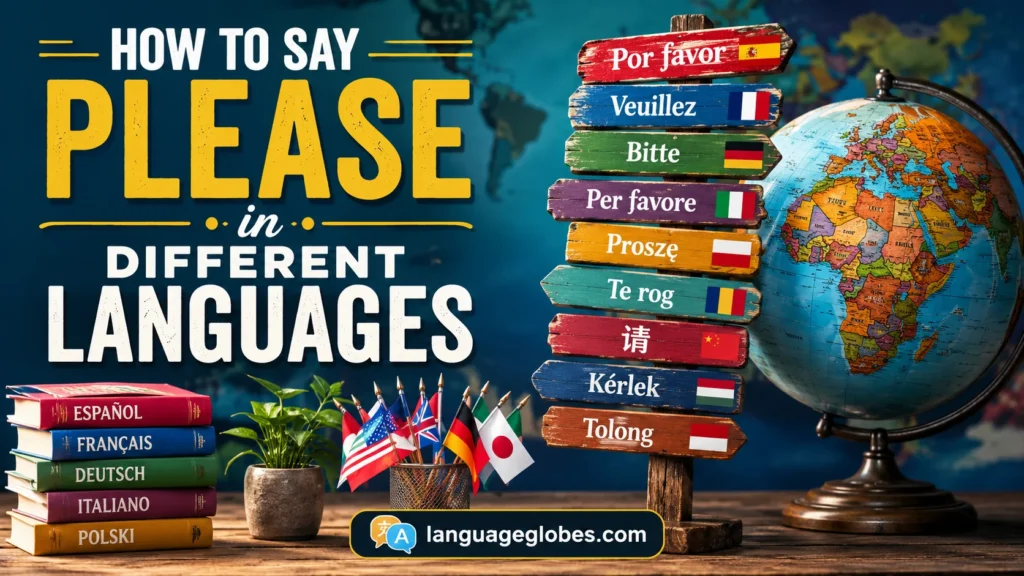
Learning how to say please in different languages improves global communication skills. The word please represents politeness, respect, and courteous request in communication. Understanding translation helps travelers use polite expressions across global cultures.
A proper pronunciation guide supports learners in mastering respectful spoken language. Cultural awareness improves etiquette differences and prevents misunderstandings during travel. This language guide enhances global communication through simple polite expressions.
Travelers benefit from language learning and multilingual communication skills worldwide. Business professionals rely on formal language and polite communication daily. Everyday interactions require polite expressions and respectful social interaction habits.
A strong language pronunciation audio guide improves speaking clarity and confidence. Global travelers use language phrases guide for ordering food and traveling abroad. Respectful communication etiquette fosters kindness, respectfulness, and smoother cross cultural communication.
Also read this: How to Say Queen in Different Languages
Interesting Facts About Please
- The word please comes from the idea of giving satisfaction or pleasure to another person.
- Many languages have multiple ways to say please depending on formality.
- Some cultures use body language along with polite words to show respect.
- In certain languages, the direct translation of “please” may not exist, and politeness is expressed through sentence structure.
- Learning polite words is often one of the first steps in language education.
- Travelers who use local polite expressions are usually welcomed more warmly.
- The word “please” is among the most frequently used courtesy words worldwide.
- Using polite language can improve professional, social, and personal relationships.
- Children around the world are taught equivalents of “please” as part of basic manners.
- Knowing how to say please in different languages helps create positive first impressions.
How to Say Please in Different Languages
Below are translations, pronunciations, and examples from languages spoken across the globe.
European Languages
Europe is home to hundreds of languages belonging to several language families, including Romance, Germanic, Slavic, and Celtic languages. Politeness is highly valued throughout Europe, although expressions differ from country to country. Learning these phrases can be useful for travel, education, and cultural appreciation.
| Language | Country/Region | Translation | Pronunciation | Example Sentence |
| 🇺🇸 American English | USA | Please | pleez | Please help me. |
| 🇬🇧 British English | UK | Please | pleez | Please pass the tea. |
| 🇦🇺 Australian English | Australia | Please | pleez | Please open the door. |
| 🇫🇷 French | France | S’il vous plaît | seel voo pleh | S’il vous plaît, aidez-moi. |
| 🇪🇸 Spanish | Spain | Por favor | por fa-vor | Por favor, ayúdame. |
| 🇵🇹 Portuguese | Portugal | Por favor | por fa-vor | Por favor, ajude-me. |
| 🇮🇹 Italian | Italy | Per favore | per fa-vo-ray | Per favore, aiutami. |
| 🇩🇪 German | Germany | Bitte | bit-tuh | Bitte helfen Sie mir. |
| 🇳🇱 Dutch | Netherlands | Alsjeblieft | al-shuh-bleeft | Alsjeblieft, help mij. |
| 🇸🇪 Swedish | Sweden | Snälla | snell-ah | Snälla hjälp mig. |
| 🇳🇴 Norwegian | Norway | Vær så snill | vair so snill | Vær så snill, hjelp meg. |
| 🇩🇰 Danish | Denmark | Vær venlig | vair ven-lee | Vær venlig at hjælpe mig. |
| 🇫🇮 Finnish | Finland | Ole hyvä | o-leh hoo-va | Ole hyvä ja auta minua. |
| 🇵🇱 Polish | Poland | Proszę | pro-sheh | Proszę, pomóż mi. |
| 🇨🇿 Czech | Czech Republic | Prosím | pro-seem | Prosím, pomozte mi. |
| 🇸🇰 Slovak | Slovakia | Prosím | pro-seem | Prosím, pomôžte mi. |
| 🇭🇺 Hungarian | Hungary | Kérem | kay-rem | Kérem, segítsen. |
| 🇷🇴 Romanian | Romania | Vă rog | vuh rog | Vă rog, ajutați-mă. |
| 🇬🇷 Greek | Greece | Parakaló | pa-ra-ka-lo | Parakaló, voithíste me. |
| 🇷🇺 Russian | Russia | Pozhaluysta | pa-zha-loo-sta | Pozhaluysta, pomogite mne. |
| 🇺🇦 Ukrainian | Ukraine | Bud laska | bood las-ka | Bud laska, dopomozhit meni. |
| 🇧🇬 Bulgarian | Bulgaria | Molya | mo-lya | Molya, pomognete mi. |
| 🇭🇷 Croatian | Croatia | Molim | mo-leem | Molim, pomozite mi. |
| 🇷🇸 Serbian | Serbia | Molim | mo-leem | Molim, pomozite mi. |
| 🇸🇮 Slovenian | Slovenia | Prosim | pro-seem | Prosim, pomagajte mi. |
| 🇱🇹 Lithuanian | Lithuania | Prašau | pra-shau | Prašau, padėkite man. |
| 🇱🇻 Latvian | Latvia | Lūdzu | lood-zoo | Lūdzu, palīdziet man. |
| 🇪🇪 Estonian | Estonia | Palun | pa-lun | Palun aidake mind. |
| 🇮🇸 Icelandic | Iceland | Vinsamlegast | vin-sam-le-gast | Vinsamlegast hjálpaðu mér. |
| 🇮🇪 Irish | Ireland | Le do thoil | leh duh hull | Le do thoil, cuidigh liom. |
| 🏴 Welsh | Wales | Os gwelwch yn dda | os gwe-looch un tha | Os gwelwch yn dda, helpwch fi. |
Asian Languages
Asia is the world’s largest continent and contains thousands of languages spoken by billions of people. Respect and politeness are deeply rooted in many Asian cultures. Using the correct polite expression often reflects good manners and cultural awareness.
| Language | Country/Region | Translation | Pronunciation | Example Sentence |
| 🇨🇳 Chinese (Mandarin) | China | 请 | ching | 请帮助我。 |
| 🇯🇵 Japanese | Japan | お願いします | o-ne-gai shi-mas | お願いします、手伝ってください。 |
| 🇰🇷 Korean | South Korea | 제발 | je-bal | 제발 도와주세요. |
| 🇮🇳 Hindi | India | कृपया | kri-pa-ya | कृपया मेरी मदद करें। |
| 🇵🇰 Urdu | Pakistan | براہ کرم | ba-ra-e karam | براہ کرم میری مدد کریں۔ |
| 🇧🇩 Bengali | Bangladesh | অনুগ্রহ করে | o-nu-gro-ho ko-re | অনুগ্রহ করে সাহায্য করুন। |
| 🇮🇳 Punjabi | India/Pakistan | ਕਿਰਪਾ ਕਰਕੇ | kir-pa kar-ke | ਕਿਰਪਾ ਕਰਕੇ ਮਦਦ ਕਰੋ। |
| 🇮🇳 Gujarati | India | કૃપા કરીને | kri-pa ka-ri-ne | કૃપા કરીને મદદ કરો. |
| 🇮🇳 Marathi | India | कृपया | kri-pa-ya | कृपया मदत करा. |
| 🇮🇳 Tamil | India | தயவுசெய்து | tha-ya-vu sei-thu | தயவுசெய்து உதவுங்கள். |
| 🇮🇳 Telugu | India | దయచేసి | da-ya che-si | దయచేసి సహాయం చేయండి. |
| 🇮🇳 Kannada | India | ದಯವಿಟ್ಟು | da-ya-vit-tu | ದಯವಿಟ್ಟು ಸಹಾಯ ಮಾಡಿ. |
| 🇮🇳 Malayalam | India | ദയവായി | da-ya-va-yi | ദയവായി സഹായിക്കുക. |
| 🇳🇵 Nepali | Nepal | कृपया | kri-pa-ya | कृपया मद्दत गर्नुहोस्। |
| 🇱🇰 Sinhala | Sri Lanka | කරුණාකර | ka-ru-na-kar | කරුණාකර උදව් කරන්න. |
| 🇹🇭 Thai | Thailand | โปรด | prot | โปรดช่วยฉัน |
| 🇻🇳 Vietnamese | Vietnam | Làm ơn | lam un | Làm ơn giúp tôi. |
| 🇮🇩 Indonesian | Indonesia | Tolong | to-long | Tolong bantu saya. |
| 🇲🇾 Malay | Malaysia | Sila | see-la | Sila bantu saya. |
| 🇵🇭 Filipino | Philippines | Pakiusap | pa-ki-u-sap | Pakiusap, tulungan mo ako. |
| 🇰🇭 Khmer | Cambodia | សូម | sohm | សូមជួយខ្ញុំ។ |
| 🇱🇦 Lao | Laos | ກະລຸນາ | ka-lu-na | ກະລຸນາຊ່ວຍຂ້ອຍ. |
| 🇲🇳 Mongolian | Mongolia | Гуйя | goo-ya | Гуйя надад туслаач. |
| 🇹🇷 Turkish | Turkey | Lütfen | loot-fen | Lütfen yardım edin. |
African Languages
Africa is one of the most linguistically diverse continents in the world, with more than 2,000 languages spoken across its nations. Courtesy and respectful communication play a significant role in many African societies. Learning these expressions can deepen cultural understanding and show appreciation for local traditions.
| Language | Country/Region | Translation | Pronunciation | Example Sentence |
| 🇿🇦 Swahili | East Africa | Tafadhali | ta-fa-tha-lee | Tafadhali nisaidie. |
| 🇿🇦 Zulu | South Africa | Ngiyacela | ngi-ya-ce-la | Ngiyacela, ngisize. |
| 🇿🇦 Xhosa | South Africa | Ndicela | ndi-ce-la | Ndicela uncedo. |
| 🇿🇦 Afrikaans | South Africa | Asseblief | as-se-bleef | Asseblief help my. |
| 🇳🇬 Yoruba | Nigeria | Jọ̀wọ́ | jo-wo | Jọ̀wọ́ ran mi lọwọ. |
| 🇳🇬 Igbo | Nigeria | Biko | bee-ko | Biko nyere m aka. |
| 🇳🇬 Hausa | Nigeria | Don Allah | don al-lah | Don Allah taimake ni. |
| 🇪🇹 Amharic | Ethiopia | እባክህ | i-ba-kih | እባክህ እርዳኝ። |
| 🇸🇴 Somali | Somalia | Fadlan | fad-lan | Fadlan i caawi. |
| 🇲🇬 Malagasy | Madagascar | Azafady | a-za-fa-di | Azafady ampio aho. |
| 🇷🇼 Kinyarwanda | Rwanda | Nyabuneka | nya-boo-ne-ka | Nyabuneka mfasha. |
| 🇧🇼 Tswana | Botswana | Tswee-tswee | tswee tswee | Tswee-tswee nthuse. |
Middle Eastern Languages
The Middle East has a rich linguistic heritage influenced by ancient civilizations, trade routes, and religious traditions. Polite expressions are highly valued throughout the region, and using them correctly can demonstrate respect and cultural sensitivity.
| Language | Country/Region | Translation | Pronunciation | Example Sentence |
| 🇸🇦 Arabic | Middle East | من فضلك | min fad-lak | من فضلك ساعدني |
| 🇮🇷 Persian (Farsi) | Iran | لطفاً | lot-fan | لطفاً به من کمک کنید |
| 🇮🇱 Hebrew | Israel | בבקשה | be-va-ka-sha | בבקשה תעזור לי |
| 🇰🇼 Kurdish | Kurdistan Region | Tkaye | ti-ka-ye | Tkaye alikari min bike. |
| 🇦🇲 Armenian | Armenia | Խնդրում եմ | khn-droom yem | Խնդրում եմ օգնեք ինձ։ |
| 🇬🇪 Georgian | Georgia | გთხოვთ | g-tkhovt | გთხოვთ დამეხმარეთ. |
Additional Languages Around the World
The world contains countless languages beyond the major regions listed above. These languages reflect unique histories, traditions, and cultures. Learning even a single polite expression in another language can help create meaningful connections wherever you go.
| Language | Country/Region | Translation | Pronunciation | Example Sentence |
| 🇳🇿 Maori | New Zealand | Tēnā koa | te-na ko-a | Tēnā koa, āwhinatia ahau. |
| 🇼🇸 Samoan | Samoa | Faamolemole | fa-a-mo-le-mo-le | Faamolemole fesoasoani mai. |
| 🇹🇴 Tongan | Tonga | Kataki | ka-ta-ki | Kataki tokoni mai. |
| 🇭🇹 Haitian Creole | Haiti | Tanpri | tan-pree | Tanpri ede mwen. |
| 🇬🇱 Greenlandic | Greenland | Qinnuigina | kin-nui-gi-na | Qinnuigina ikiortinga. |
| 🇵🇼 Palauan | Palau | Ngii diak | ngi di-ak | Ngii diak, help me. |
| 🇫🇯 Fijian | Fiji | Yalovinaka | ya-lo-vi-na-ka | Yalovinaka vukei au. |
| 🇵🇬 Tok Pisin | Papua New Guinea | Plis | plees | Plis helpim mi. |
| 🇻🇺 Bislama | Vanuatu | Plis | plees | Plis helpem mi. |
| 🇱🇺 Luxembourgish | Luxembourg | Wann ech glift | van esh glift | Wann ech glift, hëllef mir. |
FAQs
What Does the Word Please Mean in Different Languages?
The word please is a universal expression of politeness, respect, and a courteous request. While the translation varies across different languages, its purpose remains the same, promoting positive communication and respectful interactions.
Why Is Learning How to Say Please Important for Travelers?
Knowing how to say please helps during traveling abroad, improves global travel communication, and shows appreciation for local customs. It also supports better social interaction and reduces misunderstandings in unfamiliar environments.
How Can a Pronunciation Guide Help With Saying Please Correctly?
A reliable pronunciation guide helps learners understand reading pronunciation, learn pronunciation, and improve speaking confidence. Many resources also include audio pronunciation and language pronunciation audio guide features for accurate learning.
How Does Please Improve Cross Cultural Communication?
Using please correctly strengthens cross cultural communication by demonstrating respectfulness and awareness of cultural communication differences. It helps build trust and encourages smoother conversations across global cultures.
Are There Formal and Informal Ways to Say Please?
Yes, many spoken languages have both formal language and informal language forms of polite expressions. The correct choice often depends on tone, context, local traditions, and social relationships.
Can Learning Please Improve Language Learning Skills?
Absolutely. Learning simple polite words like please supports language learning, vocabulary learning, and better conversation skills. It also helps language learners understand everyday communication patterns more naturally.
How Does Please Help in Business Communication?
In business communication and international communication, using please promotes respectful communication and professional interactions. It helps maintain proper communication etiquette while creating positive relationships with colleagues and clients.
What Role Does Please Play in Everyday Interactions?
The powerful word please encourages kindness during everyday interactions, requesting help, and making a polite request. It reflects good manners, strengthens relationships, and supports respectful conversations.
Can Regional Variations Affect How Please Is Used?
Yes, regional variations and local communication styles can influence how please is expressed. Understanding these cultural insights helps speakers use appropriate politeness expressions in different communities.
Where Can I Find a Complete Language Guide for Please?
A comprehensive language guide, language translation guide, or language reference page often includes a translation list, example sentences, pronunciation learning, and useful language translation phrases. These resources support multilingual communication and deeper understanding of linguistic diversity.
Conclusion
In conclusion, learning how to say please in different languages is a simple yet powerful step toward better global communication and meaningful human connection. It reflects true politeness, respect, and a natural way of making a courteous request in any conversation. Understanding translation and linguistic etiquette strengthens confidence in travel language, language learning, and everyday multilingual interactions across global cultures. A clear pronunciation guide and awareness of cultural insights help reduce misunderstandings and highlight important etiquette differences in social interaction. Ultimately, using polite expressions supports stronger cross cultural communication and improves every language guide and language phrases guide for better global etiquette.

Lucy Carter is a curious mind and language lover who writes for Language Globes. She enjoys discovering new languages and sharing simple, helpful ideas that make learning fun and accessible for everyone.