
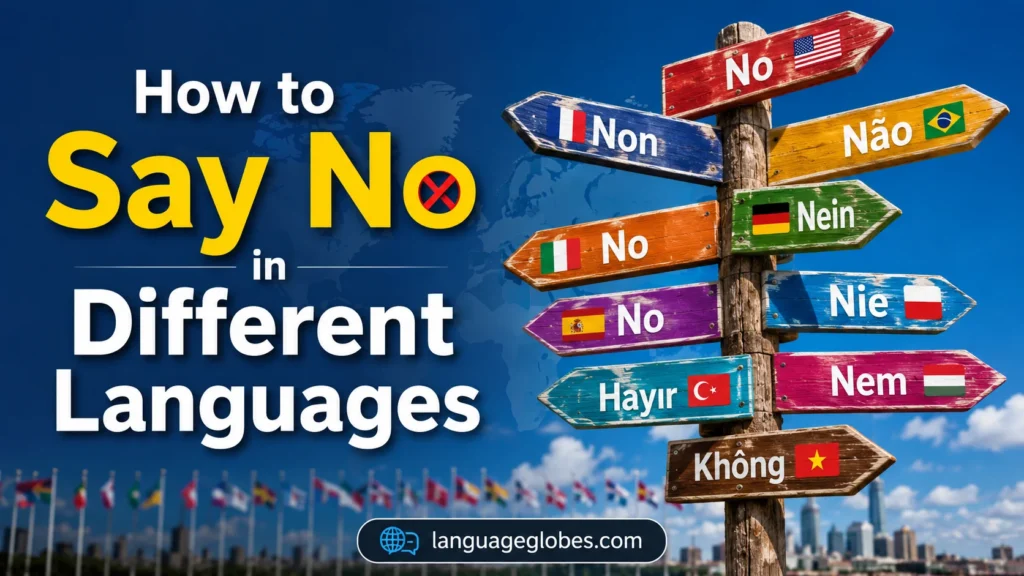
Learning how to say no varies across linguistic diversity and cultures worldwide. Understanding refusal and acceptance improves global communication and reduces misunderstanding between people. Different languages show unique linguistic nuances and communication styles for expressing disagreement. Travel abroad often requires learning polite ways to decline offers or invitations.
Cultural diversity shapes how people express refusal with politeness and confidence. Language learning helps develop communication skills and better understanding of cultural differences. Saying no is important for setting boundaries and expressing personal choices clearly. Respectful communication helps maintain harmony during disagreement and cross-cultural relationships.
Direct communication and indirect approach vary across cultural values and social etiquette. Examples of expression variations include French, German, Italian, and Swahili phrases usage. Global understanding improves communication strategies for travelers and language enthusiasts alike. Clear pronunciation guide and vocabulary strengthen linguistic abilities across world languages.
Also read this: How to Say Love in Different Languages
Interesting Facts About No
- The word “No” is among the first words learned in most languages.
- Many languages have multiple ways to say no depending on formality.
- Some cultures prefer indirect refusals rather than a direct no.
- The Spanish word “No” and the Italian word “No” are almost identical.
- Japanese speakers often avoid saying a direct no in formal situations.
- Arabic has several expressions for refusal depending on the context.
- Many European languages share similar words for no because of historical linguistic connections.
- Learning how to refuse politely is often more important than simply learning the word itself.
- Travelers frequently use “no” when declining services, offers, or purchases.
- Understanding cultural differences in refusal can prevent misunderstandings during international communication.
How to Say No in Different Languages
The tables below show translations, pronunciations, and examples from around the world.
European Languages
Europe is home to hundreds of languages belonging to several language families. Many European languages share common roots, which is why some translations for “no” look similar. Learning these expressions can help travelers, students, and language enthusiasts communicate effectively throughout Europe.
| Language | Country/Region | Translation | Pronunciation | Example Sentence |
| 🇺🇸 American English | USA | No | Noh | No, thank you. |
| 🇬🇧 British English | UK | No | Noh | No, I don’t think so. |
| 🇦🇺 Australian English | Australia | No | Noh | No, mate. |
| Spanish | 🇪🇸 Spain | No | Noh | No quiero café. |
| French | 🇫🇷 France | Non | Nohn | Non, merci. |
| German | 🇩🇪 Germany | Nein | Nine | Nein, danke. |
| Italian | 🇮🇹 Italy | No | Noh | No, grazie. |
| Portuguese | 🇵🇹 Portugal | Não | Nowng | Não, obrigado. |
| Dutch | 🇳🇱 Netherlands | Nee | Nay | Nee, bedankt. |
| Swedish | 🇸🇪 Sweden | Nej | Nay | Nej, tack. |
| Norwegian | 🇳🇴 Norway | Nei | Nay | Nei, takk. |
| Danish | 🇩🇰 Denmark | Nej | Nye | Nej, tak. |
| Finnish | 🇫🇮 Finland | Ei | Ay | Ei, kiitos. |
| Polish | 🇵🇱 Poland | Nie | Nyeh | Nie, dziękuję. |
| Czech | 🇨🇿 Czech Republic | Ne | Neh | Ne, děkuji. |
| Slovak | 🇸🇰 Slovakia | Nie | Nyeh | Nie, ďakujem. |
| Hungarian | 🇭🇺 Hungary | Nem | Nem | Nem, köszönöm. |
| Romanian | 🇷🇴 Romania | Nu | Noo | Nu, mulțumesc. |
| Greek | 🇬🇷 Greece | Όχι | Ohee | Όχι, ευχαριστώ. |
| Croatian | 🇭🇷 Croatia | Ne | Neh | Ne, hvala. |
| Serbian | 🇷🇸 Serbia | Ne | Neh | Ne, hvala. |
| Slovenian | 🇸🇮 Slovenia | Ne | Neh | Ne, hvala. |
| Ukrainian | 🇺🇦 Ukraine | Ні | Nee | Ні, дякую. |
| Russian | 🇷🇺 Russia | Нет | Nyet | Нет, спасибо. |
| Belarusian | 🇧🇾 Belarus | Не | Nye | Не, дзякуй. |
| Latvian | 🇱🇻 Latvia | Nē | Nay | Nē, paldies. |
| Lithuanian | 🇱🇹 Lithuania | Ne | Neh | Ne, ačiū. |
| Estonian | 🇪🇪 Estonia | Ei | Ay | Ei, aitäh. |
| Icelandic | 🇮🇸 Iceland | Nei | Nay | Nei, takk. |
| Irish | 🇮🇪 Ireland | Níl | Neel | Níl, go raibh maith agat. |
Asian Languages
Asia contains incredible linguistic diversity, with thousands of languages spoken across the continent. Many Asian cultures place a strong emphasis on politeness and respect, which often influences how people express refusal or disagreement.
| Language | Country/Region | Translation | Pronunciation | Example Sentence |
| Chinese (Mandarin) | 🇨🇳 China | 不 | Boo | 不,谢谢。 |
| Cantonese | 🇭🇰 Hong Kong | 唔 | Mm | 唔該,不用了。 |
| Japanese | 🇯🇵 Japan | いいえ | Ee-eh | いいえ、ありがとうございます。 |
| Korean | 🇰🇷 South Korea | 아니요 | Ah-ni-yo | 아니요, 감사합니다. |
| Hindi | 🇮🇳 India | नहीं | Na-heen | नहीं, धन्यवाद। |
| Urdu | 🇵🇰 Pakistan | نہیں | Naheen | نہیں، شکریہ۔ |
| Bengali | 🇧🇩 Bangladesh | না | Na | না, ধন্যবাদ। |
| Punjabi | India/Pakistan | ਨਹੀਂ | Naheen | ਨਹੀਂ, ਧੰਨਵਾਦ। |
| Tamil | 🇮🇳 India | இல்லை | Illai | இல்லை, நன்றி. |
| Telugu | 🇮🇳 India | కాదు | Kaadu | కాదు, ధన్యవాదాలు. |
| Kannada | 🇮🇳 India | ಇಲ್ಲ | Illa | ಇಲ್ಲ, ಧನ್ಯವಾದಗಳು. |
| Malayalam | 🇮🇳 India | ഇല്ല | Illa | ഇല്ല, നന്ദി. |
| Marathi | 🇮🇳 India | नाही | Nahee | नाही, धन्यवाद. |
| Gujarati | 🇮🇳 India | ના | Naa | ના, આભાર. |
| Nepali | 🇳🇵 Nepal | होइन | Hoina | होइन, धन्यवाद। |
| Sinhala | 🇱🇰 Sri Lanka | නැහැ | Neha | නැහැ, ස්තුතියි. |
| Thai | 🇹🇭 Thailand | ไม่ | Mai | ไม่, ขอบคุณ. |
| Vietnamese | 🇻🇳 Vietnam | Không | Khong | Không, cảm ơn. |
| Indonesian | 🇮🇩 Indonesia | Tidak | Tee-dak | Tidak, terima kasih. |
| Malay | 🇲🇾 Malaysia | Tidak | Tee-dak | Tidak, terima kasih. |
| Filipino | 🇵🇭 Philippines | Hindi | Hin-dee | Hindi, salamat. |
| Mongolian | 🇲🇳 Mongolia | Үгүй | Oo-goo-ee | Үгүй, баярлалаа. |
| Khmer | 🇰🇭 Cambodia | ទេ | Te | ទេ, អរគុណ។ |
| Lao | 🇱🇦 Laos | ບໍ່ | Bor | ບໍ່, ຂອບໃຈ. |
| Burmese | 🇲🇲 Myanmar | မဟုတ် | Ma-hote | မဟုတ်ပါဘူး။ |
African Languages
Africa is one of the most linguistically diverse continents in the world, with thousands of languages spoken across its regions. African languages reflect rich cultural traditions, community values, and unique communication styles.
| Language | Country/Region | Translation | Pronunciation | Example Sentence |
| Swahili | 🇹🇿 Tanzania/Kenya | Hapana | Ha-pa-na | Hapana, asante. |
| Zulu | 🇿🇦 South Africa | Cha | Cha | Cha, ngiyabonga. |
| Xhosa | 🇿🇦 South Africa | Hayi | Ha-yee | Hayi, enkosi. |
| Afrikaans | 🇿🇦 South Africa | Nee | Nee | Nee, dankie. |
| Yoruba | 🇳🇬 Nigeria | Rárá | Rah-rah | Rárá, o ṣe. |
| Igbo | 🇳🇬 Nigeria | Mba | Mba | Mba, daalụ. |
| Hausa | 🇳🇬 Nigeria | A’a | Aa-ah | A’a, na gode. |
| Amharic | 🇪🇹 Ethiopia | አይ | Eye | አይ, አመሰግናለሁ. |
| Somali | 🇸🇴 Somalia | Maya | Ma-ya | Maya, mahadsanid. |
| Shona | 🇿🇼 Zimbabwe | Kwete | Kwe-te | Kwete, ndatenda. |
| Kinyarwanda | 🇷🇼 Rwanda | Oya | O-ya | Oya, murakoze. |
| Luganda | 🇺🇬 Uganda | Nedda | Neh-da | Nedda, webale. |
Middle Eastern Languages
The Middle East is known for its rich history, cultural heritage, and influential languages. Communication in many Middle Eastern cultures often emphasizes respect, hospitality, and politeness, making context important when saying no.
| Language | Country/Region | Translation | Pronunciation | Example Sentence |
| Arabic | 🌍 Middle East | لا | La | لا، شكراً. |
| Persian (Farsi) | 🇮🇷 Iran | نه | Na | نه، متشکرم. |
| Turkish | 🇹🇷 Türkiye | Hayır | Ha-yur | Hayır, teşekkür ederim. |
| Hebrew | 🇮🇱 Israel | לא | Lo | לא, תודה. |
| Kurdish | Iraq/Türkiye | Na | Na | Na, spas. |
| Azerbaijani | 🇦🇿 Azerbaijan | Yox | Yokh | Yox, təşəkkür edirəm. |
| Armenian | 🇦🇲 Armenia | Ոչ | Voch | Ոչ, շնորհակալություն։ |
| Georgian | 🇬🇪 Georgia | არა | Ara | არა, გმადლობთ. |
Additional Languages Around the World
Many fascinating languages are spoken outside the regions above. Learning a few words from these languages can help broaden cultural understanding and make travel experiences more meaningful.
| Language | Country/Region | Translation | Pronunciation | Example Sentence |
| Hawaiian | 🇺🇸 Hawaii | ʻAʻole | Ah-oh-leh | ʻAʻole, mahalo. |
| Maori | 🇳🇿 New Zealand | Kāo | Kaao | Kāo, tēnā koe. |
| Samoan | 🇼🇸 Samoa | Leai | Leh-eye | Leai, faafetai. |
| Tongan | 🇹🇴 Tonga | Ikai | Ee-kai | Ikai, malo. |
| Fijian | 🇫🇯 Fiji | Sega | Seng-ga | Sega, vinaka. |
| Tahitian | 🇵🇫 Tahiti | Aita | Eye-ta | Aita, māuruuru. |
| Greenlandic | 🇬🇱 Greenland | Naamik | Naa-mik | Naamik, qujanaq. |
| Luxembourgish | 🇱🇺 Luxembourg | Nee | Nay | Nee, merci. |
| Maltese | 🇲🇹 Malta | Le | Leh | Le, grazzi. |
| Basque | 🇪🇸 Spain | Ez | Es | Ez, eskerrik asko. |
| Welsh | 🏴 Wales | Na | Na | Na, diolch. |
| Breton | 🇫🇷 France | Ket | Ket | Ket, trugarez. |
FAQs
How to say no in different languages?
Saying no varies across languages and reflects strong linguistic diversity. In global communication, the word no is often adapted through translation and linguistic expression to fit different cultures. This helps avoid misunderstanding during international interaction.
Why is learning no important in cultural diversity?
Learning no supports understanding of cultural diversity and improves communication skills. It helps people express refusal and disagreement respectfully across different cultures. This builds stronger global understanding and smoother interactions.
How does refusal vary across different cultures?
Refusal changes based on cultural context and social etiquette. Some cultures prefer indirect communication styles, while others use direct disagreement. This variation reflects deep cultural values and linguistic nuances.
What are polite ways to decline invitations?
Polite ways to decline invitations involve respectful communication and clear decline offers language. People often use politeness, harmony, and soft expression variations to avoid conflict. This ensures better cross-cultural relationships.
How is disagreement expressed in global communication?
Disagreement in global communication can be direct or indirect depending on cultures. Using proper communication strategies helps maintain clarity and conviction. This improves communication improvement across different world languages.
What role does pronunciation guide play in saying no?
A pronunciation guide helps learners correctly express no in different languages. It improves language learning, vocabulary, and linguistic abilities. This ensures accurate linguistic expression in real conversations.
Can you give examples of saying no in French, German, Italian, and Swahili?
In French, German, Italian, and Swahili, the word no changes with languages and cultural context. These examples show linguistic diversity and global phrase guide usage. They support better travelers communication and understanding.
How does setting boundaries relate to saying no?
Setting boundaries is directly linked to expressing no and making clear personal choices. It strengthens confidence, clarity, and respectful communication in daily life. This is essential for healthy cross-cultural relationships.
What is the difference between direct and indirect communication?
Direct communication expresses no clearly, while indirect approach softens refusal. Different communication styles depend on cultural differences and social etiquette. Both methods support effective global communication.
How does language learning improve refusal skills?
Language learning improves ability to express refusal, acceptance, and agreement effectively. It enhances language skills, linguistic abilities, and communication strategies. This helps in better international business and travel abroad interactions.
Conclusion
In conclusion, understanding how to say no across different languages strengthens global communication and supports meaningful cultural diversity. It improves awareness of linguistic nuances, helping people handle refusal, disagreement, and acceptance with confidence. Learning these expressions enhances communication skills, builds better cross-cultural relationships, and respects different cultures and social etiquette. It also supports language learning, improves pronunciation guide usage, and strengthens linguistic expression in real-life situations. Overall, mastering no contributes to clearer communication strategies and stronger global understanding.

James Anderson is a passionate language enthusiast and content creator at LanguageGlobes. With a keen interest in global cultures and communication, he shares insightful and engaging content to help readers explore and master new languages.