
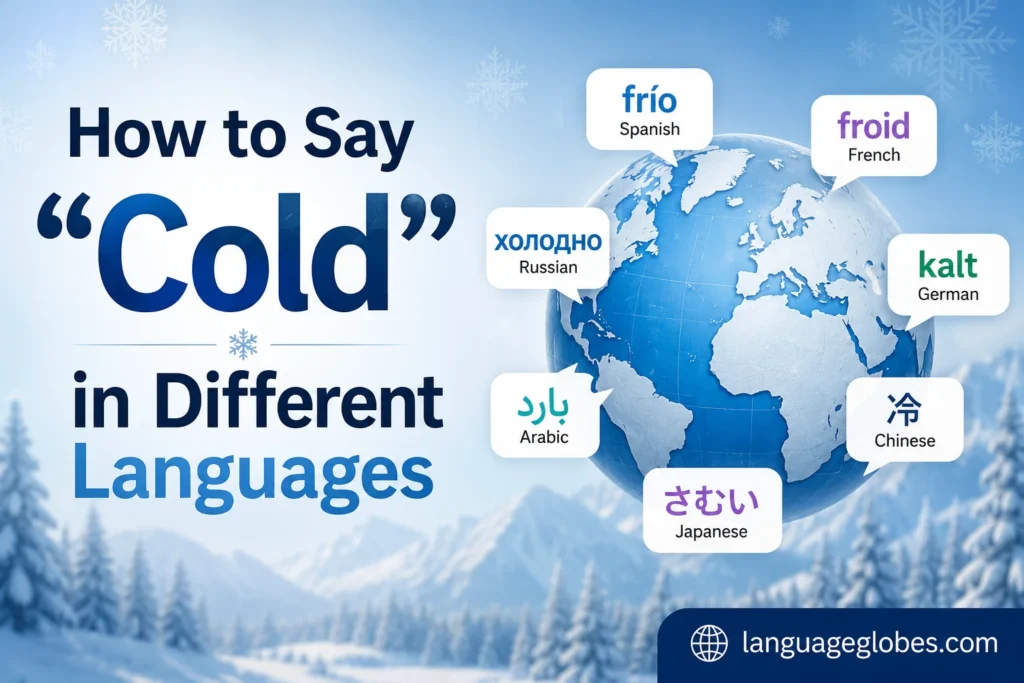
How to Say “Cold” in Different Languages helps readers discover a simple word used in weather, emotions, travel, and daily talks worldwide.
The Cold term often evokes a specific physical sensation that is universally experienced and described in different languages and cultures. From brisk winds in winter to the chill of an air-conditioned room, or the refreshing coolness of a cold drink, this expression can describe many daily situations. As we explore how to say cold in 70 languages, we get a glimpse into linguistic diversity that exists globally. During my own traveling experience, hearing this simple expression made it much easier to connect with local people and better understand their culture and everyday life.
For travelers, language learners, and anyone interested in global communication, understanding cold in other languages is very useful. Whether you are describing the weather, talking about health, or sharing emotions, this word carries important meaning almost everywhere. This guide helps readers discover pronunciation tips, meanings, examples, and easy translations for real-life conversations. The main goal of learning is to make speaking more practical so people can confidently use these expressions during travel, talks, or while studying a new language. I still remember using one of these words on a freezing evening abroad, and that small moment felt naturally memorable.
This worldwide table and the sentences included can help learners speak more effectively and expand their vocabulary naturally. The word cold is commonly used when discussing temperature, drinks, a person’s emotion, or the feeling of a crisp breeze that sends a shiver down the spine. It is a universal experience that everyone understands, even though the words may vary between countries. These foreign expressions give deeper insight into how societies perceive, express, and value comfort and climate. For curious enthusiasts and learners, these translations can enrich communication on a more cultural and personal level while helping them communicate with greater confidence.
Interesting Facts About “The Cold” ❄️
- Some languages differentiate between cold as a temperature and cold as a feeling, while English uses one word for both.
- In Scandinavian countries, where winters are harsh, there are multiple words for different types of cold.
- “The Cold” often appears in idioms — for example, in French, avoir froid literally means “to have cold,” but is used for “to feel cold.”
- Certain cultures connect coldness with health, personality, or even emotions, giving the word deeper context.
European Languages 🌍
Europe is home to a rich variety of languages, many of which have long literary traditions and unique ways of describing nature, including weather. From the Nordic chill to the Mediterranean breeze, Europeans have diverse expressions for coldness.
| Language | Country/Region | Translation | Pronunciation | Example Sentence |
| English (American) 🇺🇸 | USA | The Cold | /ðə koʊld/ | I can feel the cold through my jacket. |
| English (British) 🇬🇧 | UK | The Cold | /ðə kəʊld/ | Winter brings the cold to London. |
| English (Australian) 🇦🇺 | Australia | The Cold | /ðə koʊld/ | Surfers enjoy the sun, but the cold water is freezing. |
| French 🇫🇷 | France | Le froid | /lə frwa/ | Le froid hivernal est intense cette année. (The winter cold is intense this year.) |
| German 🇩🇪 | Germany | Die Kälte | /diː ˈkɛltə/ | Ich spüre die Kälte im Winter. (I feel the cold in winter.) |
| Spanish 🇪🇸 | Spain | El frío | /el ˈfɾio/ | El frío de la mañana me despierta. (The morning cold wakes me up.) |
| Italian 🇮🇹 | Italy | Il freddo | /il ˈfred.do/ | Non sopporto il freddo dell’inverno. (I cannot stand the winter cold.) |
| Portuguese 🇵🇹 | Portugal | O frio | /u ˈfɾiu/ | O frio da noite chegou cedo. (The cold of the night arrived early.) |
| Russian 🇷🇺 | Russia | Холод (Kholod) | /xɐˈlot/ | Зимой холод бывает очень сильным. (In winter, the cold can be very strong.) |
| Swedish 🇸🇪 | Sweden | Kylan | /ˈɕyːlan/ | Jag känner kylan i luften. (I feel the cold in the air.) |
| Norwegian 🇳🇴 | Norway | Kulden | /ˈkʉldə/ | Kulden er hård om vinteren. (The cold is harsh in winter.) |
| Dutch 🇳🇱 | Netherlands | De kou | /də ˈkɑu/ | De kou maakt de lucht fris. (The cold makes the air fresh.) |
| Polish 🇵🇱 | Poland | Zimno | /ˈʑim.nɔ/ | Zimno w grudniu jest powszechne. (The cold in December is common.) |
| Greek 🇬🇷 | Greece | Το κρύο (To krýo) | /to ˈkri.o/ | Νιώθω το κρύο όταν φυσάει. (I feel the cold when the wind blows.) |
| Finnish 🇫🇮 | Finland | Kylmä | /ˈkylmæ/ | Kylmä talvi on tavallinen täällä. (A cold winter is normal here.) |
Asian Languages 🌏
Asia’s linguistic diversity is immense. From tonal languages in East Asia to complex scripts in South Asia, the word for “cold” can reveal much about cultural experiences with weather and nature.
| Language | Country/Region | Translation | Pronunciation | Example Sentence |
| Chinese (Mandarin) 🇨🇳 | China | 寒冷 (Hánlěng) | /hán lěng/ | 我感到寒冷。 (I feel the cold.) |
| Japanese 🇯🇵 | Japan | 寒さ (Samusa) | /sa.mu.sa/ | 冬の寒さは厳しい。 (The winter cold is severe.) |
| Korean 🇰🇷 | South Korea | 추위 (Chuwi) | /tɕʰuːwi/ | 추위 때문에 밖에 나가기 싫어요. (I don’t want to go outside because of the cold.) |
| Hindi 🇮🇳 | India | ठंड (Thand) | /ʈʰəɳɖ/ | मुझे ठंड लग रही है। (I feel cold.) |
| Bengali 🇧🇩 | Bangladesh | ঠাণ্ডা (Thanda) | /ʈʰaɳɖa/ | আজ সকালে অনেক ঠাণ্ডা। (It’s very cold this morning.) |
| Thai 🇹🇭 | Thailand | ความหนาว (Khwam Nao) | /kʰwām nǎːw/ | ฉันรู้สึกถึงความหนาว. (I feel the cold.) |
| Vietnamese 🇻🇳 | Vietnam | Lạnh | /lǎŋ/ | Tôi cảm thấy lạnh. (I feel cold.) |
| Arabic (Modern Standard) 🇸🇦 | Saudi Arabia | البرد (Al-bard) | /al-bard/ | أشعر بالبرد. (I feel the cold.) |
| Turkish 🇹🇷 | Turkey | Soğuk | /soˈɰuk/ | Soğuk kış günleri başladı. (The cold winter days have begun.) |
| Malay 🇲🇾 | Malaysia | Sejuk | /səˈdʒuk/ | Saya rasa sejuk hari ini. (I feel cold today.) |
| Urdu 🇵🇰 | Pakistan | سردی (Sardi) | /sərdi/ | آج بہت سردی ہے۔ (It’s very cold today.) |
| Indonesian 🇮🇩 | Indonesia | Dingin | /diˈŋin/ | Udara terasa dingin pagi ini. (The air feels cold this morning.) |
| Tamil 🇮🇳 | India | குளிர் (Kuzhir) | /kuɭir/ | நான் குளிர் அனுபவிக்கிறேன். (I feel the cold.) |
African Languages 🌍
African languages reflect a wide spectrum of climates, from the deserts of North Africa to the southern regions with colder winters. Many languages have unique words capturing not just cold, but seasonal and bodily sensations of chill.
| Language | Country/Region | Translation | Pronunciation | Example Sentence |
| Swahili 🇰🇪 | Kenya | Baridi | /baˈridi/ | Ninahisi baridi leo. (I feel cold today.) |
| Zulu 🇿🇦 | South Africa | Ubanda | /uˈbanda/ | Ngizwa ubanda ebusika. (I feel cold in winter.) |
| Xhosa 🇿🇦 | South Africa | Ubushushu obubandayo | /uˈbuʃuʃu oˈbuβandajo/ | Ndiyavuya ngenxa yeubushushu obubandayo. (I feel cold.) |
| Amharic 🇪🇹 | Ethiopia | ቀዝቃዛ (Qezik’aza) | /k’əzɨk’azä/ | ዛሬ ቀዝቃዛ ነው። (It is cold today.) |
| Hausa 🇳🇬 | Nigeria | Sanyi | /sàn.ji/ | Ina jin sanyi a yau. (I feel cold today.) |
| Arabic (Egyptian) 🇪🇬 | Egypt | البرد (El-bard) | /el-bɑrd/ | الجو اليوم برد. (The weather today is cold.) |
| Somali 🇸🇴 | Somalia | Qabow | /qaˈbow/ | Waxaan dareemayaa qabow. (I feel cold.) |
| Malagasy 🇲🇬 | Madagascar | Mangatsiaka | /maŋˈgatsiaka/ | Mangatsiaka ny andro. (The day is cold.) |
| Berber 🇲🇦 | Morocco | Axxam | /axxam/ | ⴰⵅⵅⴰⵎ (It is cold.) |
| Yoruba 🇳🇬 | Nigeria | Tutu | /tuˈtu/ | Mo n rí tutu loni. (I feel cold today.) |
Read More: How to Say “Candy” in Different Languages
Middle Eastern Languages 🌍
The Middle East is known for hot deserts, but many countries experience cold winters and have rich vocabularies for cold weather. Arabic, Hebrew, Persian, and Turkish express these temperatures with distinct words and idioms.
| Language | Country/Region | Translation | Pronunciation | Example Sentence |
| Arabic (Gulf) 🇸🇦 | Saudi Arabia | البرد (Al-bard) | /al-bard/ | أشعر بالبرد اليوم. (I feel cold today.) |
| Hebrew 🇮🇱 | Israel | הקור (Ha-kor) | /haˈkor/ | אני מרגיש את הקור בחוץ. (I feel the cold outside.) |
| Persian 🇮🇷 | Iran | سرما (Sarma) | /særˈmæ/ | امروز سرما خیلی زیاد است. (The cold is very strong today.) |
| Kurdish 🇹🇯 | Tajikistan | Sarma | /sar.ma/ | Ez sarma hîs dikim. (I feel cold.) |
| Armenian 🇦🇲 | Armenia | ցուրտ (Ts’urt) | /tsʰuɹt/ | Արտադրությունը ցուրտ է այսօր։ (It is cold today.) |
| Azerbaijani 🇦🇿 | Azerbaijan | Soyuq | /soˈjuk/ | Bu gün soyuqdur. (It is cold today.) |
| Georgian 🇬🇪 | Georgia | სიცივე (Sitsive) | /siˈtsʰive/ | დღეს სიცივეა. (It is cold today.) |
| Arabic (Levantine) 🇱🇧 | Lebanon | البرد (El-bard) | /el-bard/ | الجو اليوم برد. (The weather today is cold.) |
| Turkish 🇹🇷 | Turkey | Soğuk | /soˈɰuk/ | Bugün hava soğuk. (The weather is cold today.) |
FAQs
1. What does the word “cold” mean in different languages?
The word “cold” usually describes low temperature, chilly weather, or a cool feeling, but every language has its own pronunciation and expression.
2. Why should I learn how to say “cold” in different languages?
Learning this common word helps during travel, daily conversations, weather discussions, and communication with people from different cultures.
3. Is the meaning of “cold” the same in every language?
The basic meaning is similar worldwide, but some cultures also use the word to describe emotions, personality, or atmosphere.
4. How can travelers use the word “cold” abroad?
Travelers can use it to talk about weather, request warm clothes, describe drinks, or explain how they feel in cold temperatures.
5. Can the word “cold” describe emotions too?
Yes, many languages use the word “cold” to describe emotions such as distance, sadness, or lack of warmth in behavior.
6. What is the easiest way to remember cold in other languages?
Using pronunciation guides, example sentences, and real-life practice can make learning easier and more memorable.
7. Are pronunciation tips important when learning foreign words?
Yes, correct pronunciation helps learners communicate clearly and understand native speakers more effectively.
8. How many languages can I learn the word “cold” in?
You can learn it in dozens of languages, including popular global and regional languages spoken around the world.
9. Is “cold” a commonly used word in daily conversations?
Yes, it is a practical and frequently used word for discussing weather, health, drinks, emotions, and comfort.
10. Can learning simple words improve language skills?
Absolutely. Learning everyday words like “cold” helps build vocabulary, confidence, and better communication skills naturally.
Conclusion 🌟
Learning how to say “cold” in different languages is a simple yet meaningful way to improve communication and understand cultures around the world. Whether you use the word while traveling, talking about the weather, describing emotions, or learning a new language, it remains a practical expression used in everyday life. Exploring these translations also helps learners expand vocabulary, practice pronunciation, and connect more naturally with people from different countries.
Even one common word like “cold” can open the door to deeper cultural understanding and more confident real-life conversations.

Grace Hall is a passionate language enthusiast and writer at LanguageGlobes, dedicated to making global communication simple and accessible. She shares insightful content to help readers explore new languages, cultures, and connections around the world.