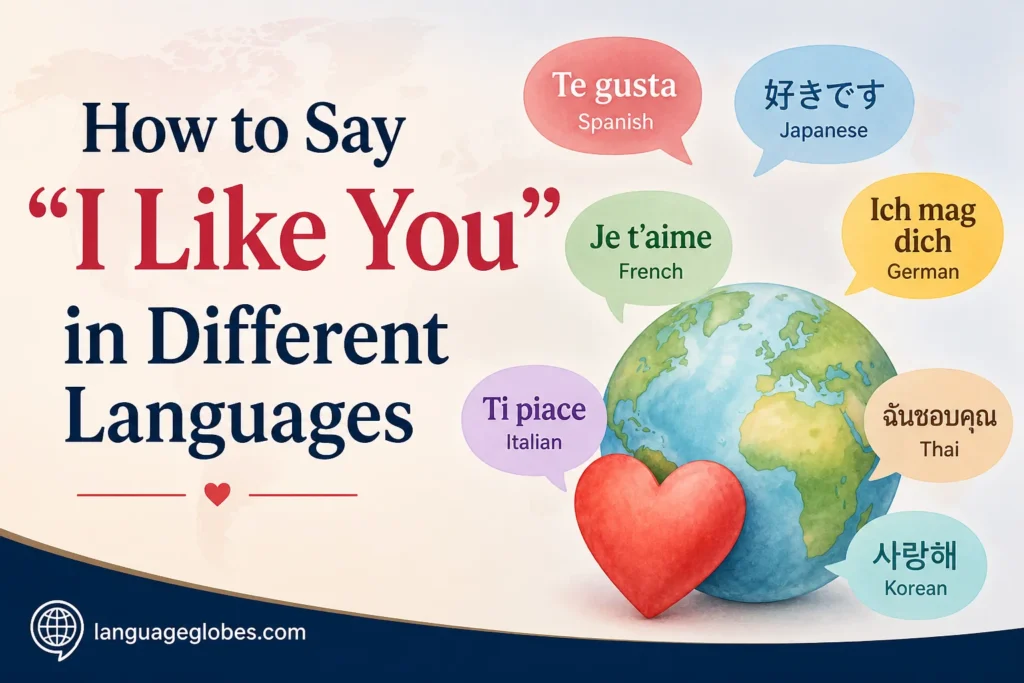
How to Say “I Like You” in Different Languages shows expressing human feelings, warm affection and universal romantic connection, joy sentiment Expressing human experience feelings can feel very meaningful when it comes to affection and admiration. The joy behind a warm and friendly phrase like “I like you” is simple, yet it carries a deep sentiment. It is romantic, sometimes light, and feeling universal. It is not just words, it shows a small expression and a big impact on human connection.
Different cultural cultures and languages change how we share emotions. English speakers find it simple, while the world shows variations in expressing care. Exploring languages and languages helps international friendships grow beyond boundaries. The feeling transcends across different ways of speaking, and across every language, where word choice is unique, equally fascinating, enlightening, and full of experience. Each expression helps in understanding how people are representing emotions in their own style.
learning say and use words to convey emotions helps in building connections and deepen respect for other people. A small act can spark warmth in a person while speaking, traveling, or simply around the world. We start knowing that both fun and emotion exist in every language. liking someone feels like a pleasant gesture, explored through a shared feeling. A simple yes of the heart, an act of conveying fondness towards others, becomes a journey of enriching experience. especially, we notice how every idea connects back to 52 expressing moments of human emotion.
Interesting Facts About How to Say “I Like You” Languages
- Different cultures have unique ways of expressing affection, sometimes using indirect expressions or gestures.
- Romance languages like French, Spanish, and Italian often have more nuanced ways to express feelings, differentiating between friendship and romantic interest.
- In some Asian languages, direct expressions of liking or love are less common and may be considered bold or forward.
- Learning to express feelings in someone’s native language can improve communication and show cultural sensitivity.
European Languages
Europe is home to a rich variety of languages, each with its own way of expressing emotion. From the romance languages of France, Italy, and Spain to the Germanic languages of Germany and the UK, Europe offers diverse linguistic flavors that make saying “I like you” uniquely charming.
| Language | Country/Region | Translation | Pronunciation | Example Sentence |
| English (American) 🇺🇸 | USA | I like you | /aɪ laɪk juː/ | I like you, and I hope we can spend more time together. |
| English (British) 🇬🇧 | UK | I like you | /aɪ laɪk juː/ | I like you a lot; would you like to join me for tea? |
| English (Australian) 🇦🇺 | Australia | I like you | /aɪ laɪk juː/ | I like you, mate, let’s hang out this weekend. |
| French 🇫🇷 | France | Je t’aime bien | /ʒə tɛm bjɛ̃/ | Je t’aime bien, tu es une personne fantastique. |
| Spanish 🇪🇸 | Spain | Me gustas | /me ˈɡustas/ | Me gustas mucho y me encantaría conocerte mejor. |
| Italian 🇮🇹 | Italy | Mi piaci | /mi ˈpja.tʃi/ | Mi piaci davvero, vuoi uscire con me? |
| German 🇩🇪 | Germany | Ich mag dich | /ɪç maːk dɪç/ | Ich mag dich und möchte dich besser kennenlernen. |
| Portuguese 🇵🇹 | Portugal | Gosto de ti | /ˈɡoʃtu d(ɨ) ti/ | Gosto de ti, vamos sair algum dia? |
| Dutch 🇳🇱 | Netherlands | Ik vind je leuk | /ɪk vɪnt jə lœyk/ | Ik vind je leuk en wil graag meer tijd met je doorbrengen. |
| Swedish 🇸🇪 | Sweden | Jag gillar dig | /jɑːɡ ˈɡɪlar deɪ/ | Jag gillar dig och vill gärna träffa dig mer. |
| Russian 🇷🇺 | Russia | Ты мне нравишься | /ty mnye nravʲɪʂsʲə/ | Ты мне нравишься, давай проведем время вместе. |
| Greek 🇬🇷 | Greece | Μου αρέσεις | /mu aˈresis/ | Μου αρέσεις πολύ, θέλεις να πάμε για καφέ; |
Asian Languages
Asia hosts thousands of languages and diverse cultures. Expressing feelings often depends on context, hierarchy, and cultural norms. In many Asian countries, subtlety is appreciated, and phrases like “I like you” may be used cautiously.
| Language | Country/Region | Translation | Pronunciation | Example Sentence |
| Mandarin Chinese 🇨🇳 | China | 我喜欢你 | /wǒ xǐ huān nǐ/ | 我喜欢你,我们可以一起吃饭吗? (I like you, can we have dinner together?) |
| Japanese 🇯🇵 | Japan | 好きです | /suki desu/ | 君が好きです、一緒に遊びませんか? (I like you, shall we hang out together?) |
| Korean 🇰🇷 | South Korea | 좋아해요 | /joa-hae-yo/ | 나는 너를 좋아해요, 우리 같이 영화 볼래요? (I like you, do you want to watch a movie together?) |
| Hindi 🇮🇳 | India | मुझे तुम पसंद हो | /mujhe tum pasand ho/ | मुझे तुम पसंद हो, क्या हम साथ में समय बिता सकते हैं? (I like you, can we spend time together?) |
| Bengali 🇧🇩 | Bangladesh | আমি তোমায় পছন্দ করি | /ami t̪omay pɔcʰɔnd kori/ | আমি তোমায় পছন্দ করি, তুমি কি আমার সাথে চা খাবে? (I like you, will you have tea with me?) |
| Thai 🇹🇭 | Thailand | ฉันชอบคุณ | /chǎn chôrp khun/ | ฉันชอบคุณ เราไปทานข้าวด้วยกันไหม? (I like you, shall we go eat together?) |
| Vietnamese 🇻🇳 | Vietnam | Tôi thích bạn | /tɔj tʰɪk ɓan/ | Tôi thích bạn, chúng ta đi dạo không? (I like you, shall we go for a walk?) |
| Malay 🇲🇾 | Malaysia | Saya suka awak | /saja suka awak/ | Saya suka awak, mahu pergi minum bersama? (I like you, want to go for a drink together?) |
| Indonesian 🇮🇩 | Indonesia | Saya suka kamu | /saja suka kamu/ | Saya suka kamu, mau jalan bareng? (I like you, want to hang out?) |
| Filipino 🇵🇭 | Philippines | Gusto kita | /gusto kita/ | Gusto kita, gusto mo bang magkape? (I like you, do you want to grab coffee?) |
African Languages
Africa has a rich tapestry of languages with deep cultural roots. In many African societies, expressions of affection are often intertwined with proverbs, respect, and social norms.
| Language | Country/Region | Translation | Pronunciation | Example Sentence |
| Swahili 🇰🇪 | Kenya/Tanzania | Nakupenda kidogo | /na-ku-pen-da ki-do-go/ | Nakupenda kidogo, ungependa tuchukue kahawa pamoja? (I like you a bit, would you like to have coffee together?) |
| Zulu 🇿🇦 | South Africa | Ngiyakuthanda | /ŋi-ja-ku-ˈtan-da/ | Ngiyakuthanda, ungathanda ukuya nami emdlalweni? (I like you, would you like to come to the game with me?) |
| Yoruba 🇳🇬 | Nigeria | Mo feran re | /mo fe-ran re/ | Mo feran re, se o fe lo jeun po? (I like you, do you want to eat together?) |
| Amharic 🇪🇹 | Ethiopia | እኔ እወድሃለሁ | /ʔɨne ʔɨwädhälu/ | እኔ እወድሃለሁ, ከእኔ ጋር መጠጋት ትፈልጋለህ? (I like you, do you want to have a drink with me?) |
| Hausa 🇳🇬 | Nigeria | Ina son ku | /ina son ku/ | Ina son ku, za mu je kasuwa tare? (I like you, shall we go to the market together?) |
Read More: How to Say “Shut Up” in Different Languages
Middle Eastern Languages
Middle Eastern cultures often value respect, family ties, and modesty. Expressions of affection are meaningful, and knowing how to say “I like you” can strengthen friendships and relationships.
| Language | Country/Region | Translation | Pronunciation | Example Sentence |
| Arabic 🇸🇦 | Saudi Arabia | أنا معجب بك | /ana mu’jib bik/ | أنا معجب بك، هل ترغب في تناول القهوة معي؟ (I like you, do you want to have coffee with me?) |
| Hebrew 🇮🇱 | Israel | אני אוהב אותך | /ani ohev otcha/ | אני אוהב אותך, רוצה ללכת לטיול יחד? (I like you, want to go for a walk together?) |
| Turkish 🇹🇷 | Turkey | Senden hoşlanıyorum | /sen-den hɔʃ-la-nɯ-yo-rum/ | Senden hoşlanıyorum, birlikte kahve içelim mi? (I like you, shall we have coffee together?) |
| Persian 🇮🇷 | Iran | من تو را دوست دارم | /man to ra dust daram/ | من تو را دوست دارم، میخواهی با هم قدم بزنیم؟ (I like you, do you want to go for a walk?) |
| Kurdish 🇹🇯 | Kurdistan | Ez hej te dikim | /ɛz hɛj te di-kim/ | Ez hej te dikim, ma tu dixwazî bi min re derkevin? (I like you, do you want to go out with me?) |
FAQs
1. How do I say “I like you” in a romantic way?
- In many languages, the context and tone matter. For example, in French “Je t’aime bien” is friendly, while “Je t’aime” is romantic.
2. Can I say “I like you” to a friend in other languages?
- Yes! Phrases like “I like you” can be adapted for platonic relationships. In Japanese, you might use “好きです” with friends but clarify the context.
3. Are there non-verbal ways to show liking someone?
- Absolutely. Gestures, smiles, and acts of kindness are universal ways to express affection when words are not enough.
4. How do I pronounce “I like you” correctly in another language?
- Using pronunciation guides and audio resources online can help. Start slowly, break the phrase into syllables, and practice consistently.
5. Why is it important to learn phrases in someone else’s language?
- It shows cultural respect, builds stronger connections, and can make your message more heartfelt and memorable.
Conclusion
Learning how to say “I like you” in different languages is more than just memorizing words; it is an entry point into understanding cultures, emotions, and human connections. Whether you’re traveling, making new friends, or expressing love, using another language can show sincerity, respect, and care. By exploring these phrases, you not only expand your vocabulary but also open doors to meaningful relationships across the globe. Express your feelings, embrace linguistic diversity, and let kindness speak in every language.

Grace Hall is a passionate language enthusiast and writer at LanguageGlobes, dedicated to making global communication simple and accessible. She shares insightful content to help readers explore new languages, cultures, and connections around the world.